Get Full Government Meeting Transcripts, Videos, & Alerts Forever!
Get email alerts on the Assisted Living Rate Protection topic
No spam. Unsubscribe anytime.
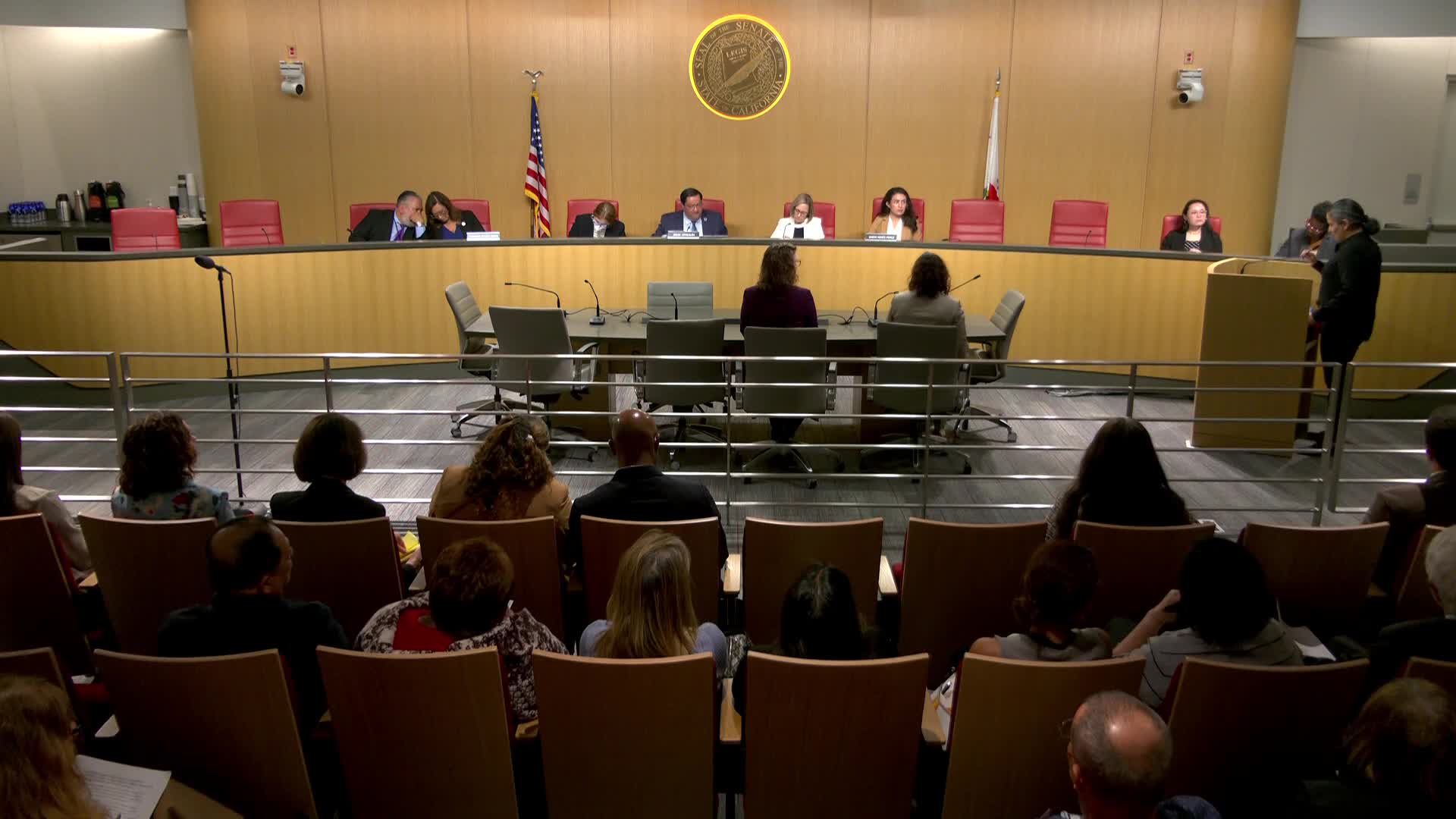
Committee backs SB 433 to cap room-and-board charges for Medi-Cal assisted living participants
Summary
SB 433 would extend a rate cap to Medi-Cal participants in assisted living waiver and CalAIM community supports so they retain a personal-needs allowance and avoid eviction from affordable facilities.
The Senate Human Services Committee on Thursday voted to send SB 433 to the Appropriations Committee after hearing testimony that some assisted-living providers are charging Medi-Cal beneficiaries room-and-board rates that leave them without money for personal needs or force them out of their homes.
Sen. Dr. Wahab, author of SB 433, said the bill extends the existing protection that limits monthly room-and-board charges for Supplemental Security Income (SSI) recipients to other Medi-Cal participants in the Assisted Living Waiver (ALW) and CalAIM community supports. "Participants who do not have SSI can see their room and board rates increase to levels they cannot afford despite still being eligible for Medi Cal," Wahab said.
Advocates from Justice in Aging and California Advocates for Nursing Home Reform (CANHR) testified that low-income Medi-Cal recipients in assisted living often have high care needs and limited income. Hagar Dickman of Justice in Aging said recent calls to legal aid and ombudsmen revealed residents who have been charged monthly rates that exhaust their income. Maura Gibney of CANHR described a caller who paid $1,480 of $1,500 in monthly income to a facility and was left with $20 for everything else.
Opponents, including the California Assisted Living Association (CALA) and smaller RCFE owner groups such as 6BEDS, said the bill as drafted could create confusion by invoking Department of Social Services (DSS) and Department of Health Care Services (DHCS) waiver authority in a way that might be interpreted as a broader rent-control authorization. Selena Kopy Hornback of CALA said RCFEs are not landlords and warned the measure could have unintended effects on private-pay residents.
Supporters said SB 433 clarifies the departments' existing rate-protection authority and creates parity so Medi-Cal-funded assisted-living participants keep a personal-needs balance of no less than $179 per month (the figure cited for 2025) while facilities continue to receive Medi-Cal payments for services. Advocates said the change would reduce the risk of eviction and homelessness among highly vulnerable older adults and people with disabilities.
The committee adopted amendments and ultimately voted to pass the bill to Appropriations. The committee discussion focused on whether the bill could unintentionally affect small providers or create eligibility issues related to "share of cost" for some participants; several providers said they wanted continued technical discussions.
Ending: SB 433 now goes to the Appropriations Committee. The author and advocates said they will continue negotiating technical language with providers and state departments to avoid unintended consequences.