Get Full Government Meeting Transcripts, Videos, & Alerts Forever!
Get email alerts on the Public Benefits Criminalization topic
No spam. Unsubscribe anytime.
Senate panel advances bill to move most low-dollar public-benefit overpayments out of criminal courts
Summary
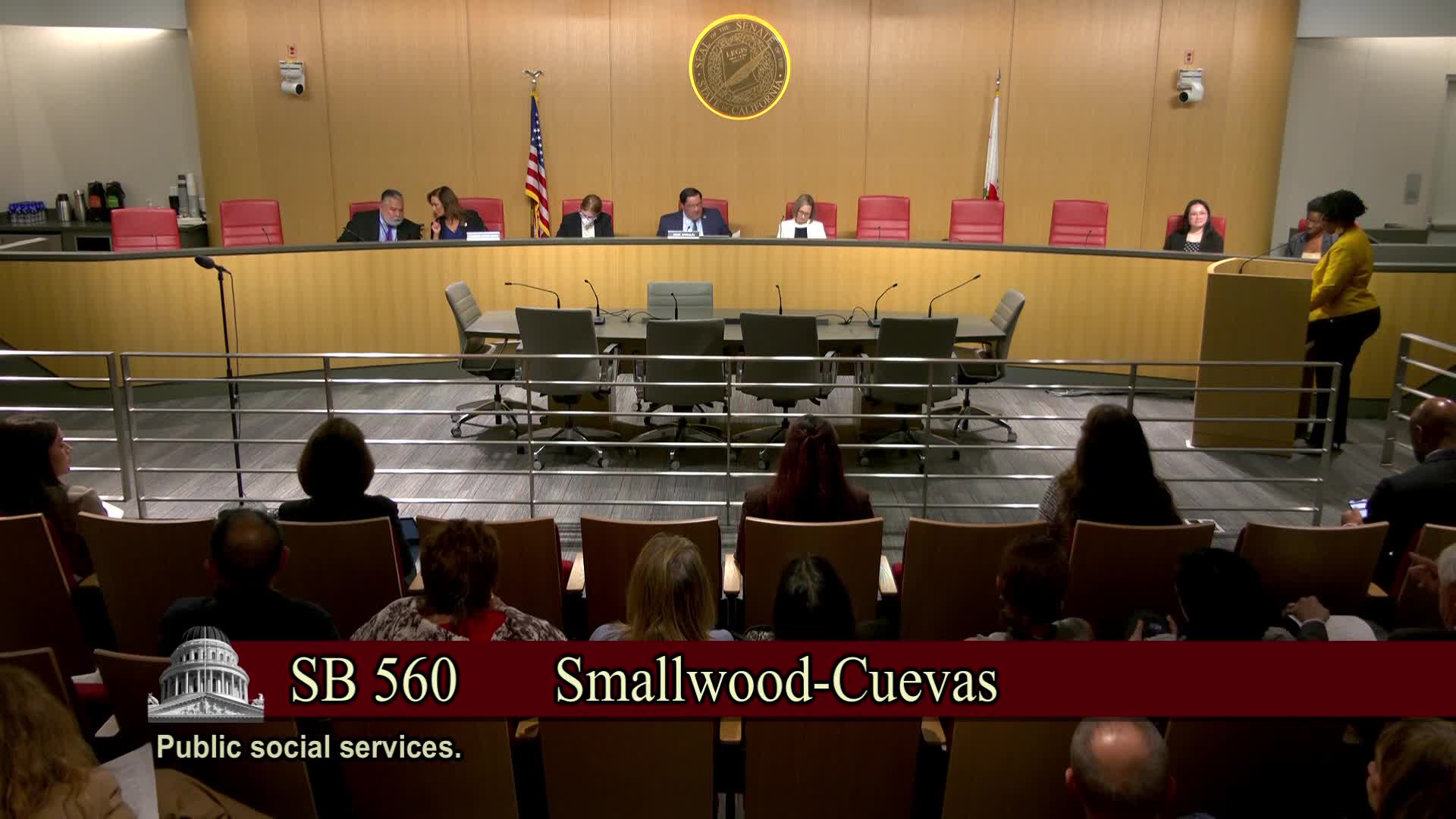
The Senate Human Services Committee voted to pass SB 560, which would allow counties to address most CalFresh and CalWORKs overpayments through administrative proceedings instead of criminal prosecution, while preserving felony prosecution for clear intent to defraud.
The Senate Human Services Committee on Thursday advanced SB 560, a bill by Sen. Small Cuevas that would let counties process many public-benefit overpayment cases administratively rather than through criminal charges.
Supporters say the measure aims to stop low-income Californians — mostly women of color, according to witnesses — from being criminalized for paperwork errors or missed deadlines. The author and several witnesses told the committee the current approach has led to felony arrests and convictions for small overpayments.
Senator Small Cuevas, the bill's author, told the committee: “California's safety net is meant to offer stability and opportunity. But for thousands of low income families, it has become a legal trap that punishes them for being poor and maybe having minor oversight.” She said SB 560 “allows counties to handle most overpayment cases through the administrative system where consequences like repayment or benefit suspensions still apply. But people aren't criminalized for such simple errors.”
Two witnesses with lived experience described the effects of prosecution. Tracy Michelle Porter said a 1999 fraud conviction cost her employment and earnings and argued the bill would stop the "punishment of Black women" for mistakes described as noncriminal in practice. Alexandria Harris, a San Diego County human services specialist, told the committee that overpayments she sees are often "the result of an honest mistake" and urged support for SB 560.
Opponents, including the California Welfare Fraud Investigators Association and several district attorneys, said the bill risks removing criminal deterrence for intentional theft. Glenn Allen, representing the investigators association, said the bill would remove criminal consequences in some cases where prosecutors believe there was deliberate fraud and warned the burden could shift to counties' administrative systems, which he described as already backlogged.
Committee members questioned the $25,000 threshold that SB 560 references and asked whether the bill could inadvertently shield intentional fraud. Support witnesses and the author said SB 560 is drafted to preserve felony prosecution where there is evidence of deliberate deception (for example, use of a false identity or applying in multiple counties). Natasha Minsker, who described committee findings on prosecutions, said over a 10-year period there were roughly 10,000 prosecutions for public-benefit overpayments and that prosecutorial practice often resolves cases by plea before intent is litigated.
After discussion the committee put the bill on call and later voted to pass it to the Public Safety Committee. The motion was recorded by roll call; members voting or recorded on the motion included Adegeen (aye), Achobog (not voting), and Perez (aye). The committee chair later reported the bill as passed to Public Safety.
Votes at the hearing do not change existing county procedures until the bill becomes law. The bill's author said counties would still be able to recover funds and that the measure was meant to reduce collateral damage of criminal records on employment and housing.
Supporters and opponents said they would continue technical discussions as the bill proceeds to the next committee.
Ending: SB 560 now moves to the Senate Public Safety Committee. The bill's author and supporters said they will continue to work with counties and prosecutors to define how administrative processes will be staffed and implemented.