Get Full Government Meeting Transcripts, Videos, & Alerts Forever!
Get email alerts on the Small Business Finance Regulation topic
No spam. Unsubscribe anytime.
Committee advances SB 728 to register merchant cash advance and factoring firms with DFPI
Summary
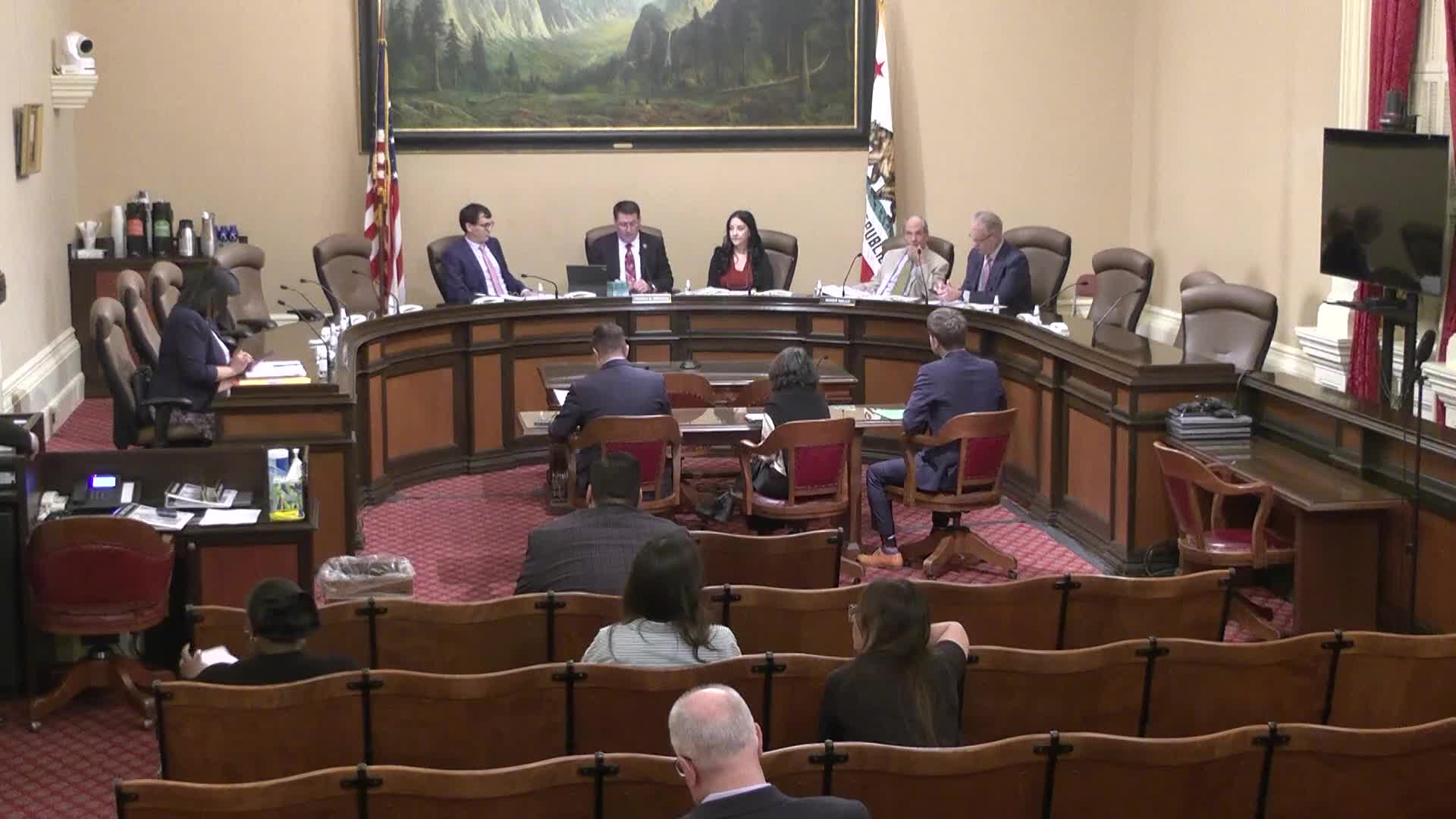
The California State Senate Committee on Banking and Financial Institutions advanced SB 728, a bill by Senator Padilla, that would require non-loan commercial financing companies to register with the Department of Financial Protection and Innovation (DFPI). The committee voted to pass the measure and re-refer it to the Judiciary Committee by a 5-0 vote with one not voting.
The California State Senate Committee on Banking and Financial Institutions advanced SB 728, a bill by Senator Padilla, that would require non-loan commercial financing companies to register with the Department of Financial Protection and Innovation (DFPI). The committee voted to pass the measure and re-refer it to the Judiciary Committee by a 5-0 vote with one not voting.
SB 728’s sponsor says the bill would close a regulatory gap that leaves small businesses exposed to opaque, high-cost commercial financing products. "SB 728 ... would require non loan commercial financing companies to register with the DFPI under California consumer financial Protection Law," Senator Padilla said when he presented the bill. He said registration would allow the DFPI to oversee non-loan financing products that are currently outside its scope.
Supporters told committee members that merchant cash advances (MCAs), factoring and similar products can impose extremely costly repayment obligations and often lack the transparency, disclosures and consumer protections that apply to traditional small-business loans. "Study of California businesses found average small business using these unregulated loan products is being charged payments of 178% of their net income," Heidi Pickman of Cameo Network said, summarizing research cited by the bill’s sponsors. Pickman also said Federal Reserve research shows Black and Latino-owned firms are more likely to use these products and face disproportionate harms.
Louis Cadets Peck of the Responsible Business Lending Coalition said the bill would bring providers and brokers "out from under the radar" by applying the state’s CCFPL regulatory framework for non-loan financing. He and other witnesses described industry practices they argued are predatory: steep broker commissions (industry reporting cited commissions of 14 to 18 percentage points versus 1 to 4 percent on SBA loans), contract clauses that limit disclosure, and legal devices used to take funds from business bank accounts despite California’s 2022 ban on confessions of judgment.
Opponents and industry commenters said they generally support registration and some of the bill’s aims but raised technical and scope concerns. A representative speaking for the Revenue Based Financing Coalition and for Carol and Bill Hunter said the measure uses a new small-business definition that differs from definitions across state law and that the bill’s reference to the California resident definition in the Revenue and Taxation Code could unintentionally sweep in people who do not currently reside in the state. Mark Smith of Smith Policy Group, speaking for the Secured Finance Network, urged carve-outs or exemptions for more sophisticated transactions and de minimis lenders and requested clarity on whether the bill’s provisions would unintentionally prohibit longstanding asset‑based lending practices, including pre-default account access provisions.
Committee members pressed for more detail and for regulatory clarity from DFPI. Vice Chair Yagniello said the bill risks treating different financing activities — consumer-style loans and business financing aimed at return on investment — as if they were the same. Several senators and the bill’s author agreed the measure should be refined through further discussions. Senator Padilla closed by saying he will continue to work with stakeholders and regulatory bodies as the bill moves forward.
The committee motion to pass and re-refer SB 728 to the Judiciary Committee was made from the floor by Senator Richardson. The roll call recorded Senator Grayson voting "Aye"; one member, Senator Nilo, was recorded as not voting. The clerk announced the tally as "Ayes 5, No 0, with 1 not voting." The bill will proceed to the Senate Judiciary Committee.
Votes at a glance - SB 728 (Padilla): Motion to pass and re-refer to Judiciary Committee — Passed; committee tally announced as Aye 5, No 0, 1 not voting. Motion made by Senator Richardson. Specific individual yes votes were not fully recorded beyond Senator Grayson voting "I" and Senator Nilo being recorded as not voting.
Background and next steps SB 728 would apply the California Consumer Financial Protection Law (CCFPL) registration framework to certain commercial financing providers that do not make traditional loans. Supporters point to Federal Reserve and academic reports showing heavy use of merchant cash advances and factoring, higher effective costs for many businesses, and disparities affecting Black and Latino business owners. Opponents and industry groups requested clarifications on definitions, potential regulatory overreach (registration versus licensing), and carve-outs for established asset-based financing. The author said he will negotiate technical fixes; the bill now moves to the Senate Judiciary Committee for further consideration.