Get Full Government Meeting Transcripts, Videos, & Alerts Forever!
Get email alerts on the Bh Connect Medi Cal Waiver topic
No spam. Unsubscribe anytime.
DHCS outlines BH Connect waiver timeline; multi‑year spending plan to appear in May revision
Summary
DHCS told the Assembly it secured federal approval for the BH Connect Medi‑Cal demonstration and will provide a multiyear funding plan as part of the May revision; key components — including workforce investments, evidence‑based practices and transitional rental assistance — are slated to phase in between spring 2025 and 2026.
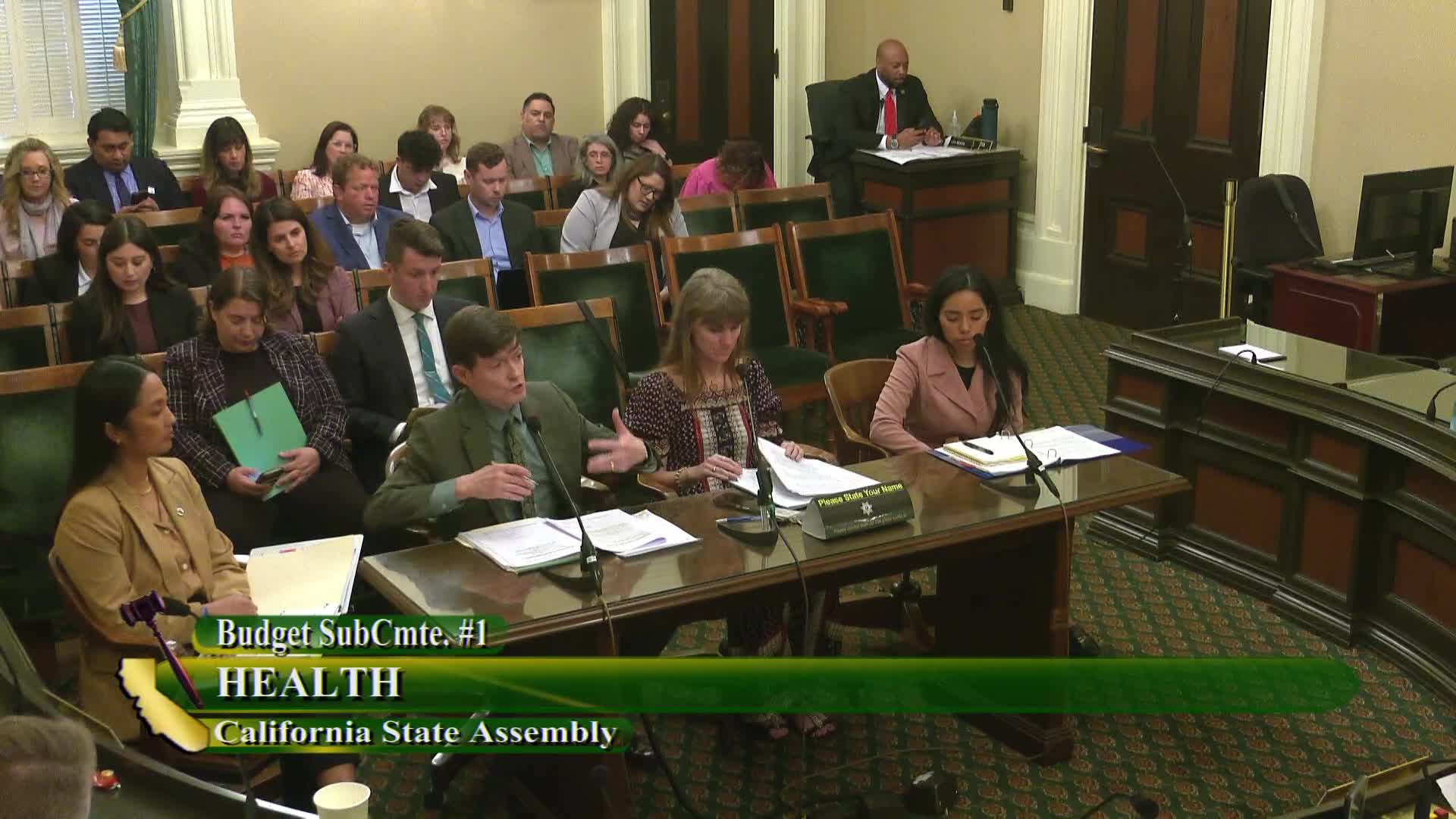
Department of Health Care Services officials told the Assembly Budget Subcommittee No. 1 on Health that the BH Connect bundle of Medi‑Cal waiver and state plan changes received federal approvals in December 2024 and that the administration will provide a multiyear funding plan with the May budget revision.
"DHCS received critical federal approvals for BH Connect in December of 2024," Deputy Director Paula Wilhelm said, briefing members on a complex package intended to expand community‑based behavioral health services for Medi‑Cal members. The department said it is preparing a multiyear funding plan to break down projected expenditures by federal, state and county shares over the five‑year demonstration and that a more detailed projection of general‑fund obligations will be included in the May revision.
Key components and timing: DHCS said several changes are already moving forward. The access‑reform and outcomes‑incentive program makes up to $1.9 billion available to reward improved performance on quality metrics for behavioral health plans, and counties representing 90 percent of Medi‑Cal beneficiaries have submitted letters of commitment to participate. Counties can also begin optionally covering expanded evidence‑based adult practices in April 2025, and DHCS anticipates publishing final IMD (institution for mental disease) guidance soon. The department expects centers of excellence to be contracted to provide technical assistance, and workforce investments of $1.9 billion will be phased in with loan repayment and other programs.
Transitional rental assistance: DHCS explained that transitional rental assistance will be implemented through Medi‑Cal managed care plans, not county behavioral health agencies. Coverage will be optional beginning in July 2025 and mandatory for eligible populations in January 2026. Plans will submit plans of care describing how they will operate the benefit.
Why it matters: BH Connect integrates waiver authorities, state plan changes and administrative actions to expand services and create federal financial participation where available. The multiyear spending plan will clarify state fiscal exposure and county matching responsibilities.
Ending: Committee members urged DHCS to ensure managed care plans and counties are ready to operationalize rental assistance and evidence‑based practices so eligible members get timely access. DHCS said more implementation guidance will be released in the coming weeks and that detailed spending information will appear in the May revision.