Get Full Government Meeting Transcripts, Videos, & Alerts Forever!
Get email alerts on the Children Youth Behavioral Health Initiative topic
No spam. Unsubscribe anytime.
State officials defend CYBHI investments in schools and digital platforms as fee‑schedule rollout continues
Summary
State officials told the Assembly that the Children and Youth Behavioral Health Initiative has funded more than $2.1 billion to 1,300 organizations and rolled out digital platforms that have delivered tens of thousands of coaching sessions, while acknowledging some schools have faced delays onboarding to the fee‑schedule billing system.
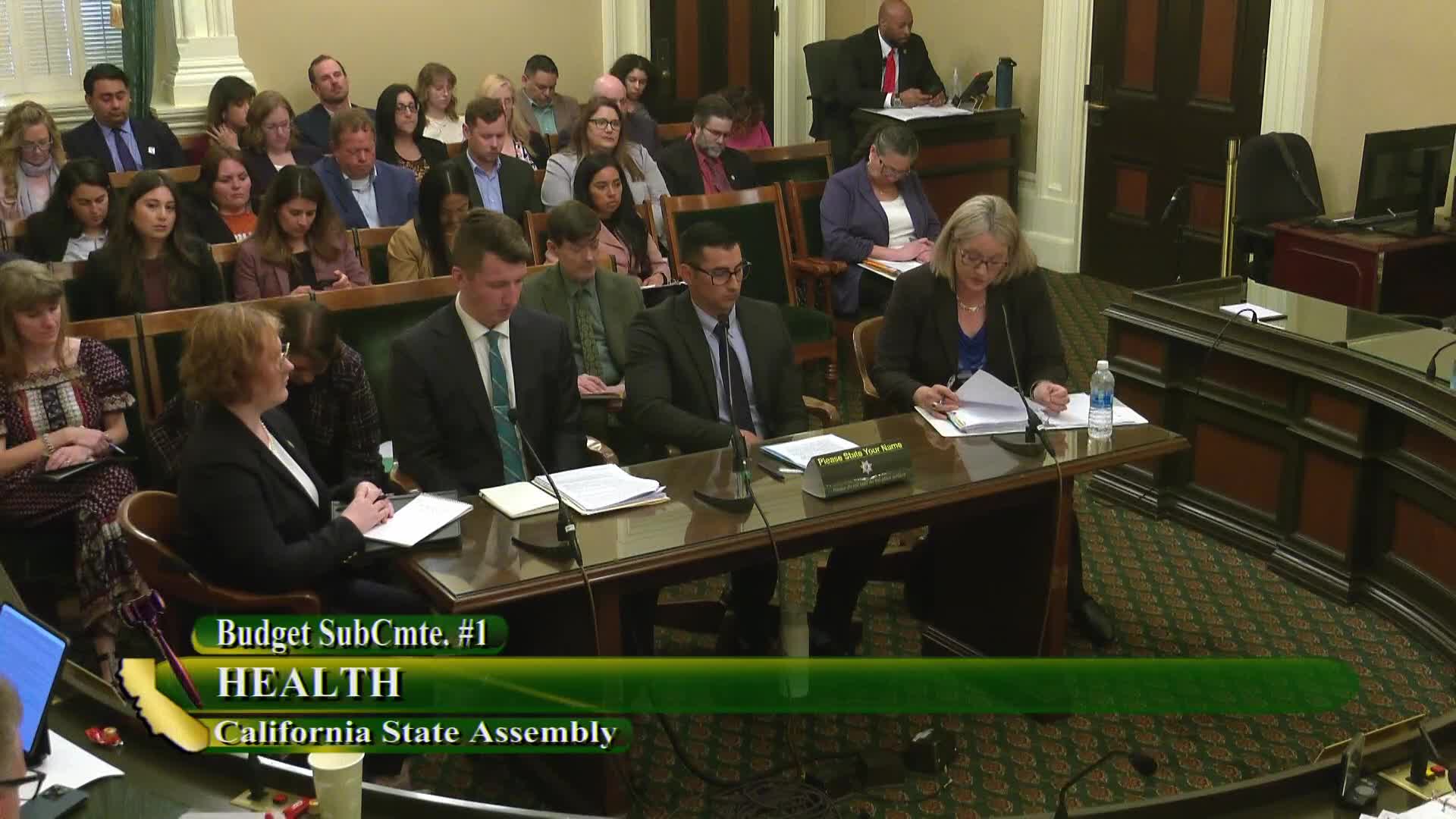
State health and education officials told the Assembly Budget Subcommittee No. 1 on Health that the Children and Youth Behavioral Health Initiative (CYBHI) has made large, rapid investments in school‑based services and digital platforms, while acknowledging implementation challenges for the fee‑schedule reimbursement program used by school districts.
Sohil Sood of the California Health and Human Services Agency described CYBHI as a broad, prevention‑oriented initiative and said "to date, over 1,300 organizations have been awarded more than $2.1 billion to conduct more than 1,800 separate activities." He said early, independent evaluation work suggests some flagship programs have potential to change service ecosystems but need to continue scaling.
Deputy Director Autumn Boylan of the Department of Health Care Services said the various school investments include a $400 million School Link partnership and capacity grants and a fee‑schedule program designed to make school‑based behavioral health services billable. "The infrastructure though is in place to pay claims today," she said, noting nine local educational agencies in Cohort 1 had submitted 41 claims and 20 additional LEAs had completed onboarding steps.
Digital platforms: DHCS highlighted two statewide online services launched under CYBHI — Brightline Kids and Kooth's Soluna — that provide telehealth coaching and counseling. Boylan said the platforms had more than 95,000 users as of February 2025, with 19,668 Saluna mental‑health coaching sessions and more than 23,000 Brightline coaching sessions delivered. She said 70 percent of surveyed users reported the digital platforms were their first point of professional help. DHCS said both platforms use validated clinical tools and report outcomes to the department for evaluation.
Concerns from schools and advocates: multiple speakers at the hearing — including school district representatives and organizations supporting school‑based care — told the committee that some districts face administrative and contracting hurdles that delay fee‑schedule billing and create financial uncertainty. DHCS acknowledged the rollout is complex and has provided technical assistance, updated templates and weekly office hours.
Ending: The administration said Mathematica’s independent interim evaluation will continue and that DHCS expects larger volumes of claims to follow as more LEAs complete onboarding. Committee members asked the administration to accelerate supports so districts can bill for services retroactive to July 1, 2024, and to ensure investments translate to sustainable school‑based care rather than temporary staffing changes.