Get Full Government Meeting Transcripts, Videos, & Alerts Forever!
Get email alerts on the Disaster Recovery topic
No spam. Unsubscribe anytime.
Assembly committee advances bill to create state individual disaster assistance program
Summary
The Assembly Emergency Management Committee voted to pass AB 262 to the appropriations committee. The bill would establish the California Individual Assistance Act to let Cal OES provide grants for individual and community disaster needs when federal aid is unavailable; members debated eligibility, funding and implementation details.
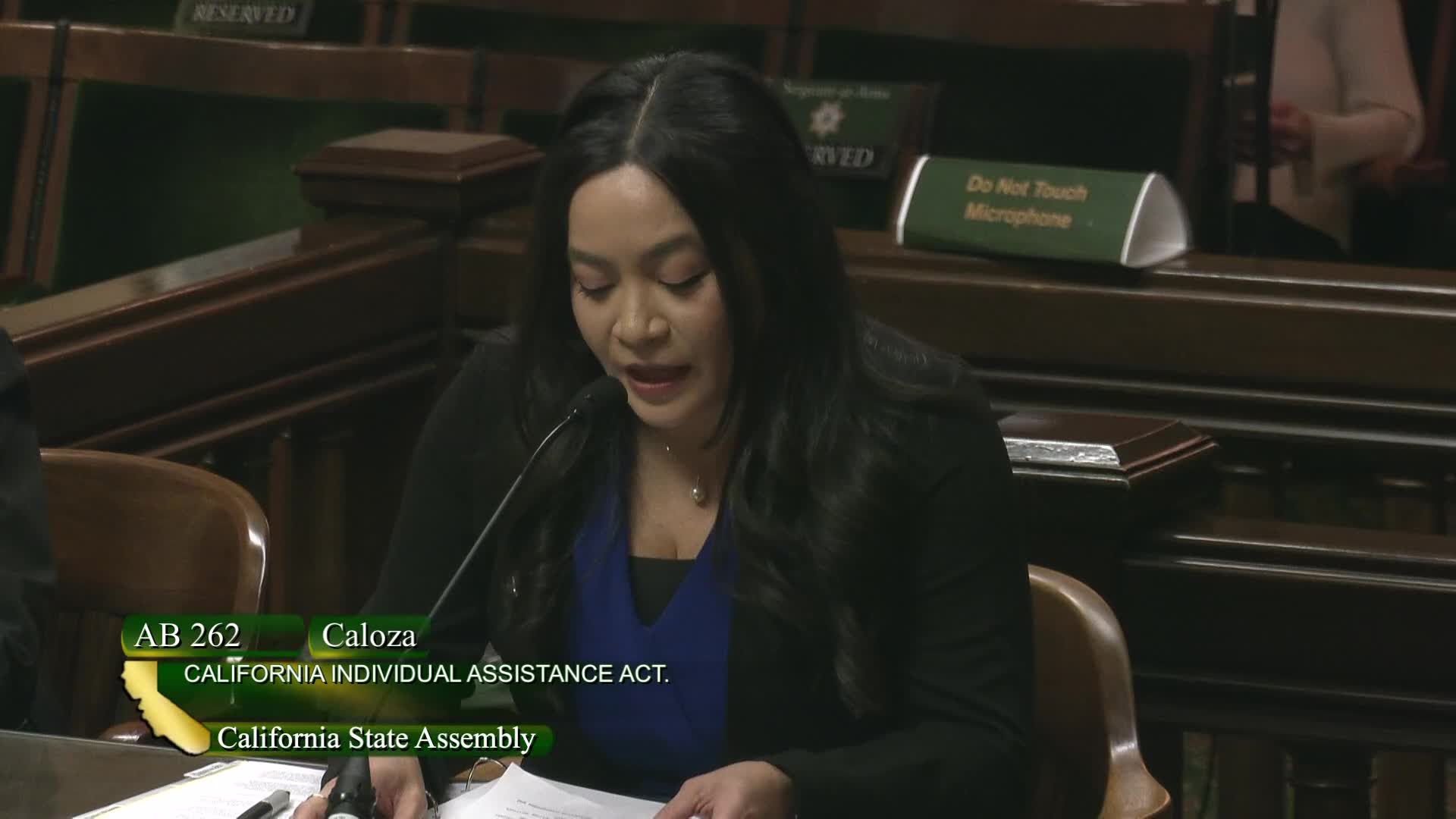
Assemblymember Heath Colosa’s AB 262, the California Individual Assistance Act, was advanced out of the Assembly Emergency Management Committee on a 4–2 vote, sending the measure to the Committee on Appropriations.
AB 262 would create a grant program administered by the California Office of Emergency Services (Cal OES) to provide direct financial assistance to local agencies, community organizations and individuals for disaster-related costs when federal assistance is not available. The bill’s author said the program is intended to cover needs such as housing assistance, groceries, income replacement and medical expenses that go unmet when events fall short of federal thresholds.
The bill’s sponsor, the League of California Cities, and Mayor Deborah Garnes of Rio Dell described gaps in federal coverage during the 2022 earthquakes that severely damaged Rio Dell. Garnes said the 6.4 magnitude quake damaged 25% of homes in her city, displaced about 300 residents and produced damages she estimated “well in excess of $32,000,000.” She said the event did not meet FEMA’s threshold for a federal disaster declaration and that her city relied on donations for recovery services that otherwise would have been provided through individual assistance programs.
Supporters argued the state program would ‘bridge the gap’ when federal aid is not available, and would help underserved communities recover more equitably.
Committee members questioned several implementation details. Assemblymember DeMio pressed the author to amend the bill to exclude undocumented immigrants from eligibility; Colosa declined to add such a limitation, saying disasters affect everyone and that the bill seeks to help the most vulnerable. DeMio said he would vote no, arguing the bill would “prioritize funds” for noncitizens at the expense of citizens. Other members raised concerns about funding and administrative capacity: the author and witnesses repeatedly noted that AB 262 creates the program but does not appropriate funds and that rules and eligibility criteria would be set by Cal OES, including a requirement that requests be made within 60 days of a disaster declaration.
Assemblymember Calderon and others expressed support for the bill’s goal. The California Association of Realtors said it is “support if amended” and is working with the author’s office. Several cities and associations, including Thousand Oaks and the Marin County Council of Mayors and Councilmembers, offered support. The committee record includes the author’s statement that the office is “actively working to identify a funding source.”
Vote and next steps: The committee recorded the motion as “due pass to the committee on appropriations.” Members recorded votes on the floor; Ransom, Arambula and Calderon voted aye, Assemblymember DeMio voted no, and the motion passed and will go to Appropriations for fiscal review.
Clarifying details and limits: AB 262 does not appropriate money. The bill delegates rulemaking to Cal OES to set eligibility criteria and requires requests within 60 days of a disaster declaration. The transcript does not provide a total cost estimate or a specific funding source for the program; the author said staff are “actively working to identify a funding source.”
The committee hearing included testimony from municipal officials describing local impacts where federal declarations were not issued; witnesses asked the committee to consider implementation capacity and guardrails to prevent fraud and misuse.
Assemblymember Colosa asked for an aye vote; the committee’s roll call shows the motion passed and the bill advanced to appropriations.