Get Full Government Meeting Transcripts, Videos, & Alerts Forever!
Get email alerts on the State Hospitals Budget Competency Restoration topic
No spam. Unsubscribe anytime.
State hospitals get $3.4 billion budget ask as state reports sharp drop in competency restoration waitlist
Summary
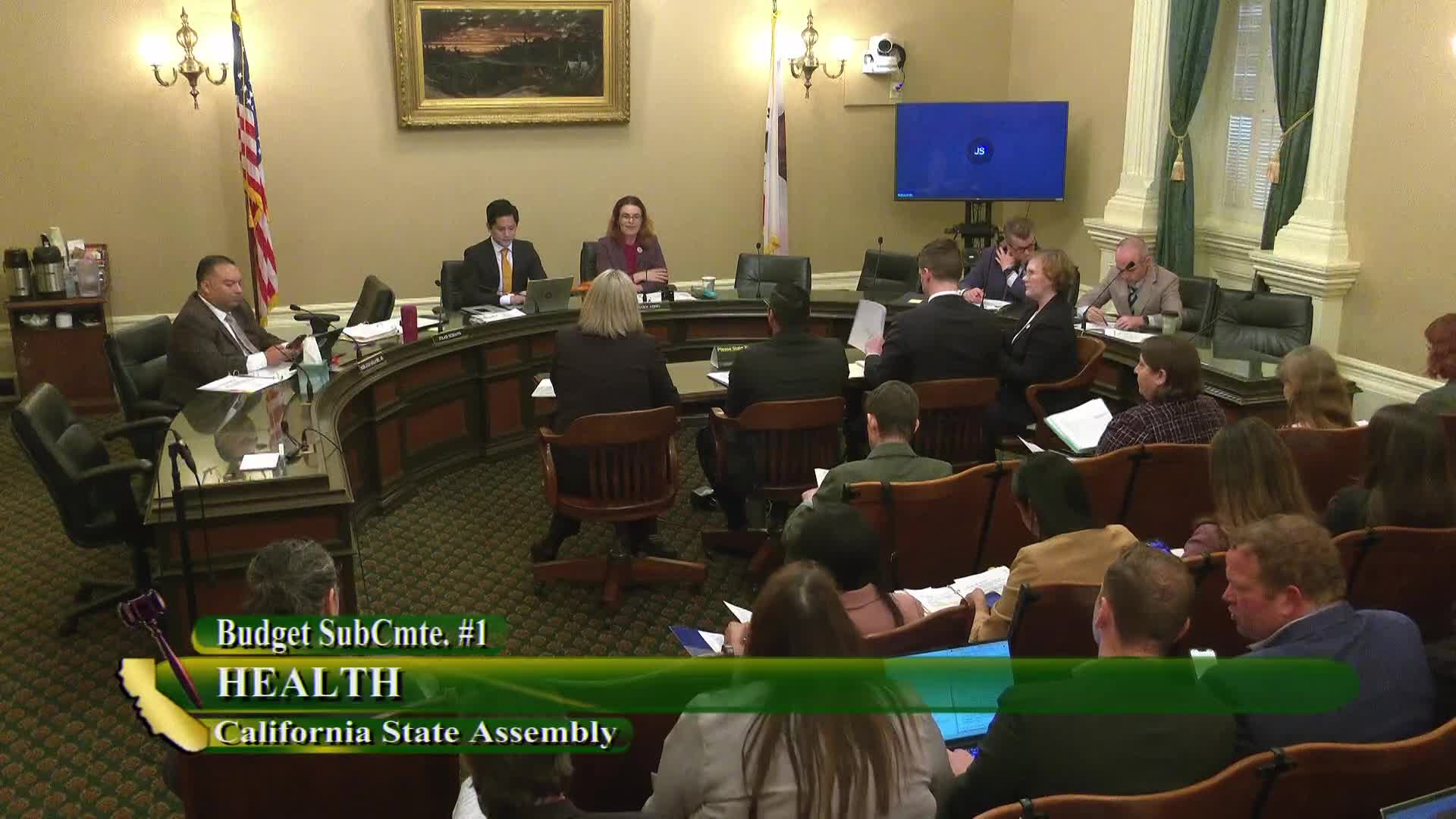
The Department of State Hospitals told the Assembly Budget Subcommittee No. 1 on Health on April 9 that the governor’s 2025–26 budget proposes $3.4 billion for the department, and department leaders reported large reductions in the wait list of people deemed incompetent to stand trial.
The Department of State Hospitals told the Assembly Budget Subcommittee No. 1 on Health on April 9 that the governor’s 2025–26 budget proposes $3.4 billion for the department, and department leaders reported large reductions in the wait list of people deemed incompetent to stand trial.
The proposed budget "will allow the department to maintain operations, delivery of services, and provide for state hospital facility capital improvements," Director Stephanie Clendenin said, as she outlined requests that include new position authority and capital-outlay planning.
The department said the budget package includes requests to cover higher patient-driven operating expenses — citing utilities, pharmaceuticals, food, and outside hospital costs — and seeks hiring authority for positions tied to increased referrals and reevaluation services. Clendenin told the committee the proposal requests 38 new positions and a capital planning request for an electrical infrastructure upgrade at the Napa campus.
Why it matters: the Department of State Hospitals oversees the state’s inpatient forensic and civil psychiatric care system. Staffing, facility improvements and patient census projections drive costs and affect how quickly courts and local agencies can move people who need restoration treatment into appropriate programs.
On competency restoration, Clendenin said the department has substantially reduced the number of people waiting for services after investments and other reforms. “During the pandemic in January 2022, we reached an all‑time high of 1,953 IST individuals on the waitlist,” she said, and reported that as of February 2025 the waitlist stood at 281. Clendenin said the department’s average time to initiate treatment in February 2025 was five days, and that since November 2024 "100 percent of all ISTs who did not have extenuating circumstances beyond DSH's control received services within the final court compliance benchmark of 28 days." The transcript shows the department’s current monthly referrals average roughly 469 per month.
The committee pressed DSH on whether referrals will continue to grow. Chief Deputy Director Brent Hauser said the department has seen referrals decline since implementation of SB 1323 (referred to in the hearing as SB 13 23) and added that it is too early to tell what the long‑term effect of the statute will be. "It’s really too early to tell ultimately what the long term impacts are," Hauser said, describing ongoing monitoring and adjustments.
The department also described a suite of workforce and recruitment strategies: expanded psychiatric residencies, fellowship programs with academic partners, targeted marketing, streamlined hiring and partnership with CalHR on compensation. Hauser said the most effective strategy has been "growing our own," naming programs that allow entry‑level staff to work while obtaining professional licensure.
Ending: Committee members asked the department for follow‑up information about trends in referrals and workforce lessons learned for facilities in high‑cost areas. Clendenin and Hauser told members they will continue to report on IST wait‑list trends and implementation of the proposed staffing changes.