Lifetime Citizen Portal Access — AI Briefings, Alerts & Unlimited Follows
Puerto Rico House committee reviews Bill 37 to update fireworks rules amid disposal, safety and import concerns
Loading...
Summary
The House Public Safety Committee on April 8 heard testimony on House Bill 37 to update Puerto Rico's laws governing the sale, manufacture, licensing and distribution of fireworks and pyrotechnics.
SAN JUAN, Puerto Rico — The House Public Safety Committee on April 8 heard testimony on House Bill 37, a measure to amend Puerto Rico's law on the sale, manufacture, licensing and distribution of fireworks and other pyrotechnics.
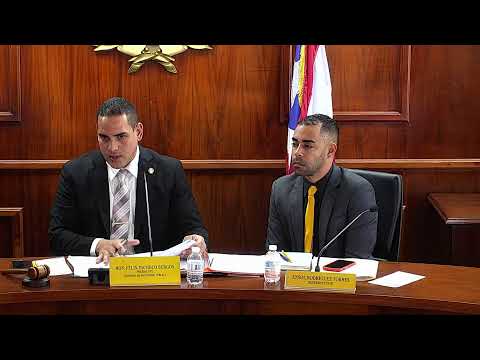
The measure was introduced at a committee hearing chaired by Representative Félix Pacheco Burgos and drew witnesses from the Department of Public Safety (DSP), the Police Bureau's Office of Explosives and Public Safety, the Fire Corps (Negociado del Cuerpo de Bomberos), the Department of Consumer Affairs (DACO) and the Office of the Veterans' Advocate.
Why it matters: Witnesses described both public-safety and fiscal strains tied to illegal pyrotechnics. Police officials said large seizures of illegal material are costly to store and dispose of, and that Puerto Rico lacks EPA-authorized facilities to handle hazardous pyrotechnic waste. Fire officials and inspectors urged stricter operational requirements and training for personnel who handle, store or set off fireworks. Consumer-affairs staff said the agency lacks a budget to run the kind of public-awareness campaign the bill would require.
Department of Public Safety testimony
Arthur Garfer, listed in the record as secretary of the Department of Public Safety, said the legislation's intent aligns with the department's public-safety policy and that the department supports clarifying rules on fireworks and pyrotechnics. In the hearing transcript he told the committee, in Spanish, "La intención legislativa está alineada con la política pública del DCP y sus negociados, por lo que no tendríamos reparo con la aprobación de la presente medida." ("The legislative intent is aligned with the public-policy of the DSP and its bureaus, so we would not object to approval of the present measure.")
Police explosives office: seizure weights and disposal costs
Teniente Ismael Caratini, director of the Police Bureau's Office of Explosives and Public Safety, described the unit's caseload and the logistical costs of handling seized pyrotechnics. He told the committee that last year the office seized roughly "veinte mil libras aproximadamente" (about 20,000 pounds) of material and provided a separate figure for 2023 of roughly "dos millones diez mil unidades de pirotecnia" (about 2,010,000 units), which the transcript equates to about 65,000 pounds for that year.
Caratini also described the federal regulatory steps required to reclassify seized material from evidence to hazardous solid waste and the 90-day timeframe EPA allows to dispose of material once that reclassification occurs. He and other witnesses said the Police Bureau has had to contract private companies to package, label and transport hazardous pyrotechnic waste off-island, adding significant costs to the agency's budget. The transcript records that at times costs approached hundreds of thousands of dollars and that daily fines from EPA compliance issues were described in testimony as about $25,000 per day.
Fire Corps and inspection recommendations
Luis Cordero Rivera, attorney for the Fire Corps, and Inspectora Brenda Rodredguez Torres described how the Fire Corps applies the International Fire Code (IFC 2018) and related NFPA standards to public exhibitions and to permitting. Inspectora Rodredguez said the bureaus typically require applicants to submit contingency plans, material data sheets, certified personnel trained in extinguisher use and proof of insurance or bonds before an approval for a public display. She urged that permittees and their staff be certified in basic fire-safety and that the Fire Corps be consulted in the pre-event planning process.
DACO and public-education funding
Waleska Morales Toros, legislative adviser for the Department of Consumer Affairs (DACO), said DACO's existing administrative order already covers required consumer warnings and that DACO could provide consumer-oriented information. But she stressed DACO does not have the budget to run the broad, interagency publicity campaign the bill contemplates and recommended that any assignment of campaign duties to DACO be accompanied by a budget allocation. She said DACO can supply inspectors and educational materials but recommended that data about injuries and fatalities be supplied by the public-safety bureaus.
Veterans and vulnerable populations
Agustedn Montaf1e9s, the Puerto Rico veterans'advocate, said the measure would help veterans and older adults who may be disturbed by loud pyrotechnics. He recommended widening buffer distances from sensitive facilities and offered the veterans'office's help in public outreach.
Committee directions and follow-up requested
During the hearing the committee asked the Police Bureau and DSP for additional data and materials. Committee members instructed DSP and police to provide seizure and intervention statistics and the current list of registered pyrotechnics suppliers to the committee in writing within five days. The committee also asked the bureaus to supply historical injury and hospitalization statistics related to fireworks and to provide a written list of currently registered companies that handle pyrotechnics in Puerto Rico.
Multiple lawmakers and witnesses urged that the committee consider involving federal agencies, including the Bureau of Alcohol, Tobacco, Firearms and Explosives (ATF) and federal port authorities, in addressing illegal imports, which several witnesses said are a major source of dangerous pyrotechnic material on the island.
No final vote recorded
The hearing record shows testimony, questions and requests for follow-up but no formal committee vote on the bill during the April 8 hearing. Committee members signaled interest in amendments addressing funding for disposal costs, certification and permit coordination among agencies, and measures to increase enforcement at ports of entry.
What's next
Committee leaders said they will review written submissions and the statistics requested from DSP and the Police Bureau. The committee did not set a public deadline in the transcript for further hearings or formal action beyond the data requests that were issued at the hearing.