Get Full Government Meeting Transcripts, Videos, & Alerts Forever!
Get email alerts on the Outdoor Dining Policy topic
No spam. Unsubscribe anytime.
CB2 SLA grapples with sidewalk congestion, agrees to 10 p.m. compromise for many side streets
Summary
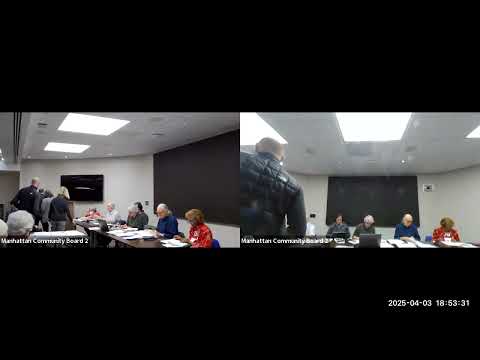
At an April meeting, Manhattan Community Board 2SLA committee members and dozens of residents debated new outdoor dining proposals and roadside seating, and pushed for a 10 p.m. evening cutoff on side streets while allowing some main-frontage seating to remain later.
The Community Board 2 State Liquor Authority committee on April 1 wrestled with how to balance a new city outdoor-dining program against residentsconcerns about crowded sidewalks and late-night noise.
At the meeting, applicants for sidewalk and roadway seating at multiple restaurants asked to keep expanded outdoor service into the spring and summer. Several residents urged limits on hours and clearer enforcement; committee members said they were seeking a compromise that would allow businesses to operate while protecting pedestrian clear paths and residential sleep.
The committee and neighbors repeatedly returned to one practical rule: clear pedestrian passage on the sidewalk and a fixed time cutoff for side-street seating. After discussion with applicants and residents, committee members said they would generally recommend a 10 p.m. closing time for seating on side streets, with some main-frontage sidewalk cafes permitted to close at 11 p.m. if the applicant can show it will not impede pedestrian flow.
Supporters of patio seating said outdoor tables were necessary to keep businesses viable after the pandemic and rising rents. "We can all live together," said Augustine Hope, who said he supports restaurants that commit to clear paths and reasonable hours. "If they agree to close at 10 p.m., we can all live together."
Opponents said earlier cutoffs and stricter enforcement were needed to protect residentsquiet evenings. "We do not believe that adding wine and beer is the same as running a coffee shop," said Leslie Clark of the West Village Residents Association, arguing that previously unlicensed storefronts that sought liquor permits would accelerate licensing in the neighborhood and change its character.
Committee members repeatedly stressed that the 10 p.m. figure represented a compromise to start implementation and monitoring. Applicants were told they could return to request later hours in future months if they show they can operate without creating sidewalk congestion or late-night disturbances.
The committee also pressed applicants to show precise, to-scale sidewalk layouts that preserve the required clear path for pedestrians and to avoid host stands, service stations or waitstaff operating outside the defined perimeter. Several residents and committee members said DOT and DCA enforcement of sidewalk clearances had been inconsistent during the temporary outdoor-dining program, and asked applicants to work with neighbors before final approvals.
For now the committeeas a practical matter and pending follow-up checkswill recommend 10 p.m. for side-street seating and allow 11 p.m. on main frontage in certain cases, with the understanding that attendees will be required to meet the cityand community boardconditions and that the committee will reconvene if problems reappear.
Ending: Committee members said they will monitor compliance and hold monthly check-ins with operators and neighborhood representatives where residents have expressed continuing concerns. If operators fail to follow the agreed conditions, the board said it will consider further restrictions or returning the matter for fresh review.