Get Full Government Meeting Transcripts, Videos, & Alerts Forever!
Get email alerts on the Student Surveys And Parental Consent topic
No spam. Unsubscribe anytime.
Pennridge SD policy debate centers on opt‑in vs. opt‑out for third‑party student surveys
Summary
Public comment and a policy committee second‑reading discussion focused on whether Policy 235.1 should require parental opt‑in for third‑party surveys, with speakers raising concerns about consent, instructional time and administrative burden.
A public commenter urged the Pennridge School District Policy Committee not to change Policy 235.1 on student surveys and to require affirmative parental opt‑in for third‑party surveys, saying “Consent is not implied. You need to obtain affirmative consent to opt in.”
The issue surfaced during the committee’s public comment period and resurfaced when the committee opened a second reading of the surveys policy. The commenter told members that third‑party surveys are “a non school related activity and should be handled like all other extracurricular activities,” and said many districts exempt themselves from some pay surveys.
District members and administrators discussed practical implications: whether the district should place opt‑out/opt‑in options on the PowerSchool front page, how teachers would be used as proctors, and the administrative time required to obtain affirmative opt‑in consent. One committee member noted an opt‑in requirement would likely require staff to “chase down opt in” responses, potentially using significant teacher and administrative time and reducing instructional minutes.
Administrators also said some surveys—such as fidelity checks for behavioral support programs used to monitor implementation—are difficult to administer if every parent must opt in because the district must secure high participation to measure program effectiveness. A school administrator described such surveys as used to set measurable goals, collect intervention data and monitor progress through the year.
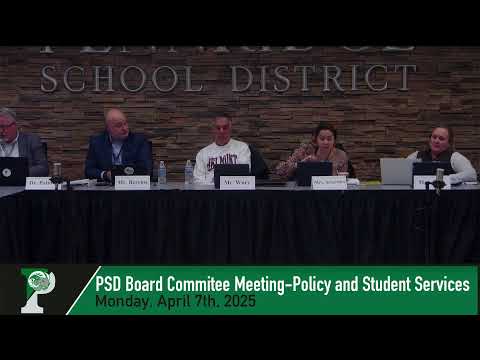
Policy 903’s three‑minute public comment limit was read at the start of the meeting. No final vote on Policy 235.1 was recorded in the transcript; the committee proceeded with a second reading of the surveys policy but did not register a formal decision during the recorded portion of the meeting.
The discussion juxtaposed parental consent concerns, the district’s operational needs for certain program surveys, and the practical workload for staff and teachers if affirmative opt‑in were required.
Looking ahead, the committee continued the second reading of Policy 235.1; any final policy change, and whether it will be implemented as opt‑in or opt‑out, was not decided in the portion of the meeting captured in the transcript.