Get Full Government Meeting Transcripts, Videos, & Alerts Forever!
Get email alerts on the Budget And Finance topic
No spam. Unsubscribe anytime.
San Mateo council signals support for overhaul of general fund reserve structure; staff to seed $25M capital-investment reserve
Summary
Finance staff proposed redefining the city's reserve architecture — lowering a contingency reserve from 25% to 15%, creating a 15% budget stabilization reserve tied to revenue, allocating $10M to a pension stabilization reserve, and establishing a $25M capital investment reserve; council directed staff to include changes in the FY 2025–26 budget.
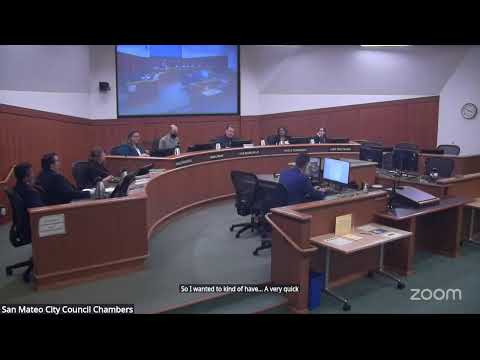
San Mateo’s finance director on April 7 presented a comprehensive review of the city’s general fund reserve policy and a proposed restructuring that the council signaled unanimous support for in concept.
Karen Hwan, finance director, said the current reserve framework treats virtually all unspent balances as a single “rainy day” pot, which obscures money already committed to capital projects and makes it harder to manage risks and targeted investments. The staff-proposed redesign would separate reserves by purpose and create a clearer, rules-based structure:
- Rename the current 25% operating reserve as a Contingency Reserve targeted at non-financial, one-time emergencies and reduce the target from 25% of operating expenditures to 15% (freeing an estimated $17 million under current projections).
- Create a Budget Stabilization Reserve (formerly rainy-day reserve) set at 15% of general fund revenue to address fiscal shocks tied to economic cycles (sales tax and property-transfer revenue volatility), rather than a fixed-dollar target.
- Seed a Pension Stabilization Reserve with $10 million to smooth CalPERS contribution spikes and avoid service cuts when pension contribution requirements rise unexpectedly.
- Establish a Capital Investment Reserve and propose a $25 million down-payment to begin funding unfunded capital maintenance and renewal needs (the change would convert a portion of the previous undifferentiated fund balance into a dedicated capital reserve while leaving an estimated $77 million in the general fund balance tied to defined reserves and unassigned balance in staff’s projections).
Hwan explained that the city’s pooled cash and investments provide liquidity — the city’s investment pool exceeds $400 million — and that the proposal was tested against credit-rating criteria and Government Finance Officers Association (GFOA) guidance. “If there’s an emergency, this $25 million will provide immediate cash to take care of initial needs. But when we need more, we can use the pool cash for interfund borrowing for short-term relief,” Hwan said. Staff said the changes were intended to preserve the city’s strong financial position while making room to begin strategic capital investment.
Councilmembers asked clarifying questions and largely supported the approach and direction to include the new reserve structures and the proposed $25 million capital reserve in the FY 2025–26 budget adoption process. Several councilmembers emphasized the need for transparent public communication about what the new buckets mean and how funds would be used. Staff said the proposed policy language and reserve targets will be presented as part of the regular budget materials and that any formal policy adoption and transfers would occur during the June budget process.
The council did not take a formal vote on an ordinance or resolution during the meeting; councilmembers indicated unanimous agreement in concept on the four changes and directed staff to incorporate the policy changes and capital-reserve seed into the coming budget documents.
Speakers quoted in this article are listed in the speaker list below.