Get Full Government Meeting Transcripts, Videos, & Alerts Forever!
Get email alerts on the Emergency Management topic
No spam. Unsubscribe anytime.
Council postpones adoption of Western Montana regional hazard mitigation plan pending local work session
Summary
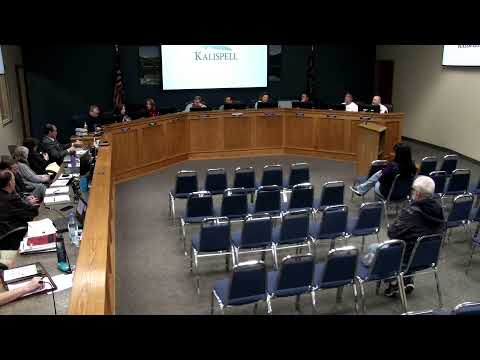
After a presentation from emergency-management staff on the Western Montana Regional Hazard Mitigation Plan, the Kalispell City Council voted to postpone formal adoption and requested a council work session to review the document and any jurisdiction-specific changes.
The Kalispell City Council on April 7 voted to postpone adopting the Western Montana Regional Hazard Mitigation Plan and asked staff to schedule a council work session for more detailed local review.
Juanita Nelson, Emergency Management Planner with the Office of Emergency Services, presented the background of the regional plan, describing a multijurisdictional effort that began in 2022 and noted state and FEMA reviews that left the plan in an “approved pending adoption” status. Nelson told council the plan is a living document, requires annual reviews, and that approval by local jurisdictions is necessary for eligibility to apply for certain federal mitigation grants.
Council concerns and reasons for postponement: several council members said the plan is large and portions of the data are out of date because the plan’s primary data collection and risk assessments began in 2022 and 2023. Councilor Hunter and Councilor Dowd raised specific concerns about mapping references (for example, a reference to “Summit Drive” that may be a mislabeling of Summit Ridge Drive) and inconsistencies in tables that compare counties. Councilor Dowd expressed that he had not had adequate time to review the lengthy document and said he preferred a work session before adopting the plan; he said he was reluctant to give what he described as “carte blanche” acceptance to data or powers he did not fully understand.
Staff response and next steps: Nelson and staff told the council the plan’s state and FEMA reviewers view the submitted draft as eligible for adoption, and that the plan’s regional approach reduces cost for smaller jurisdictions. Staff recommended approval to enable grant eligibility. Council instead voted to postpone adoption and requested staff schedule a work session (council requested staff pull available annual‑review procedures, show how record-of-change updates will be handled, and provide a list of items in the plan that appear to be incorrect or require local clarification). Staff indicated they would consult with county counsel and the other participating jurisdictions about how subsequent changes would affect prior adoptions and whether readoption would be necessary for other jurisdictions if Kalispell makes jurisdiction‑specific edits.
Vote: during the roll-call vote on the motion to postpone, the council recorded five ayes and four nays; the motion to postpone carried and the item was tabled pending a work session. The transcript records the sequence of council questions and the explicit request for a workshop, and staff committed to finding an appropriate date for the session.
Why it matters: adoption of a FEMA‑approved hazard mitigation plan is often a prerequisite to apply for some federal mitigation funding. Delaying adoption preserves council oversight and allows Kalispell to flag and correct jurisdiction‑specific data before committing the city to the document as presented.
Provenance: presentation and discussion of the Western Montana Regional Hazard Mitigation Plan began with Juanita Nelson’s staff report at approximately 1857.17 seconds into the meeting and continued through council questions and the subsequent motion to postpone (transcript entries surrounding 1857–2749 seconds).