Get Full Government Meeting Transcripts, Videos, & Alerts Forever!
Get email alerts on the Education Career Readiness topic
No spam. Unsubscribe anytime.
Shawnee Heights students, instructors highlight JAG career-readiness program and student outcomes
Summary
In a school board presentation, instructors and students described the Jobs for America’s Graduates (JAG) program’s project-based learning, employer engagement and community service, and cited attendance and suspension improvements and near-target community-service hours for the year.
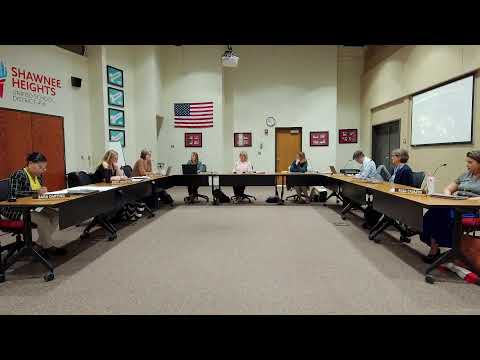
At a Shawnee Heights school board meeting, JAG instructors Cammie Mead and Jess Smith and JAG students described Jobs for America’s Graduates (JAG), a career-readiness class they said helps students build workplace skills, engage with employers and complete community service.
The program presentation combined a short video with student remarks and teacher-collected data. Jess Smith introduced the class as a career specialist and said JAG uses project-based learning to teach life and work skills to students who “might otherwise fall through the cracks.” Smith said the program sets a goal of 10 employer engagements each year and that the classroom has already hosted about 20 employer contacts this school year.
Students described JAG activities in their own words. “The three main things that we do in this class are community service, PBLs, as well as employer engagement,” said Sienna Graves, identified in the presentation as vice president of the JAG II program. A student speaker said the class sets a goal of 10 community service hours per semester (20 hours per year) and reported, “We have achieved 19 hours this year.”
Teacher Cammie Mead summarized outcomes the instructors track. Mead said that among the 64 students in one cohort, total missed-class incidents dropped from 1,203 in first quarter to 808 in second quarter — a decline she described as 395 fewer absences — and that suspensions in the same cohort fell from seven to two. Mead also noted the program’s state and national performance targets, saying JAG sets benchmarks including a 90% graduation rate and roughly 60% of graduates entering employment or the military. Mead added that JAG provides follow-up support for graduates during the year after graduation.
Presenters described employer engagement as a major program component. Students and staff said guest speakers have included law-enforcement and legal professionals, entrepreneurs, tradespeople and local business representatives; students reported field trips and hands-on exposure to workplace settings such as a local welding company. Students credited employer visits and regional competitions with helping them practice interview skills and discover career options.
No board action was taken on the presentation. Board members thanked the students and instructors at the meeting; board member Sarah Darting praised the students’ public speaking and the instructors’ work. The board moved on to its consent agenda after the presentation.
Why it matters: JAG presentations document program-level outcomes schools use to justify classroom offerings, employer outreach and extracurricular competition travel. The board heard specific attendance, suspension and community-service figures the instructors attributed to the program’s structure and supports.