Get Full Government Meeting Transcripts, Videos, & Alerts Forever!
Providence committee backs broad slate of state bills, amends several to include companion measures
Summary
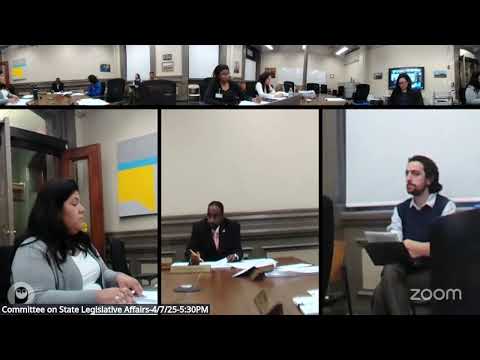
At an April 7, 2025 meeting, the Providence City Committee on State Affairs voted to recommend approval or take procedural actions on 19 resolutions endorsing or urging passage of state legislation; most were amended to include unnumbered companion measures and forwarded to the full council by voice vote.
Providence City’s Committee on State Affairs on April 7, 2025, moved to recommend approval or take procedural action on 19 separate resolutions urging or endorsing state legislation, generally approving amendments to include unnumbered companion bills and forwarding the measures to the full City Council by voice vote.
The committee — chaired by Chairman Gonzales and with Councilor Thomas Peterson and Councilor Vargas present (Vice Chairman Doris and Councilor Graves absent) — considered a long list of House and Senate bills covering civil rights enforcement, education, housing, tax credits, transportation surcharges, insurance and health-care prior-authorization, minimum wage increases, an assault-weapons ban, and other topics. For many items policy staff recommended amending the committee resolution to include an unnumbered companion bill in the other chamber; the committee repeatedly approved those amendments and recommended the resulting resolutions to the full council.
Key items discussed included a proposal to decouple the Rebuild Rhode Island tax-credit program’s sales-and-use-tax rebate from a project cap (discussion emphasized a 20% affordable-housing requirement and an affordability target tied to area median income), a slate of bills to expand childcare and early-educator support, legislation aimed at increasing the minimum wage in annual increments through 2030, and measures to change prior-authorization rules for mental-health and substance-use treatment and for certain insurance benefit determinations.
Committee discussion was generally procedural rather than adversarial. Councilor Peterson moved most of the committee motions and Councilor Vargas seconded; policy staff explained bill effects and, where applicable, identified fiscal implications (for example, the civil‑rights enforcement bill was flagged as…
Already have an account? Log in
Subscribe to keep reading
Unlock the rest of this article — and every article on Citizen Portal.
- Unlimited articles
- AI-powered breakdowns of topics, speakers, decisions, and budgets
- Instant alerts when your location has a new meeting
- Follow topics and more locations
- 1,000 AI Insights / month, plus AI Chat