Get Full Government Meeting Transcripts, Videos, & Alerts Forever!
Get email alerts on the Utilities topic
No spam. Unsubscribe anytime.
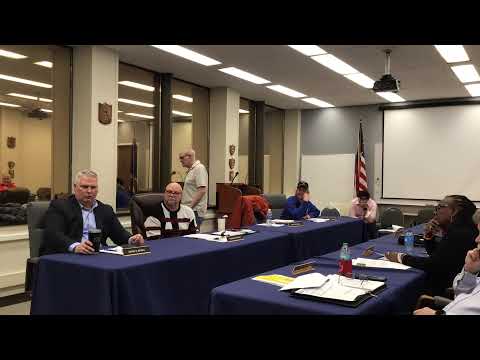
Jamestown utility officials update council on microgrid, district heating, pump-station plans and rate pressures
Summary
At its April 7 meeting, the Jamestown City Council received a multi-topic briefing from city utility staff covering the DOE Jamestown Community Microgrid, district heating repairs and expansion, a planned pump‑house rebuild, a regional water‑expansion study, sewer inflow inspections and an outlook for electric rates.
Jamestown City Council members on April 7 heard a multi-part briefing from the city Department of Public Utilities (DPU) covering major utility projects and near-term rate pressures that could affect customers.
DPU staff described the DOE Jamestown Community Microgrid as a multi-year project that has resumed moving forward after a pause in funding. Officials said initial orders for underground equipment have been placed and an owner’s‑engineer request for proposals is under way; staff characterized the overall schedule as a four- to five‑year effort.
Council members were told the city is actively addressing the existing district‑heating system with leak identification and targeted repairs ahead of the warmer months. The DPU reported dye testing at customer heat exchangers produced a small number of incidents but no major problems.
Officials also described planning for a major rebuild at the Casadega pump‑house site north of Faulkner: a new pump house, storage tank and possible new transmission mains. Staff said a bonding resolution to support grant applications for that work is expected before the council in either April or May; the bonding resolution would be used to pursue outside grant funds and does not by itself authorize construction.
On water system expansion, the DPU said it has sought a NYSERDA FlexTech study to analyze the capacity and infrastructure needs if Jamestown were to serve multiple neighboring towns. The study, still in early stages, will consider storage tanks, pump stations, staffing and other costs; staff expects results in roughly six months.
Wastewater staff described work in Sewer Shed No. 7 to reduce inflow and infiltration. Inspectors targeted about 300 homes for on‑site inspections and had completed roughly 200 at the time of the meeting. DPU briefed council members that field inspections had identified illegal connections or confirmed problems in roughly 20–25% of inspected homes and that an additional 15–20% required further investigation. Staff emphasized that correcting private illegal connections could reduce the need for large capital main replacements.
DPU said make‑ready work for a community fiber project is under way on utility poles and that buildout could begin this summer.
On financing and equipment, staff said tomorrow’s borrowing requests would include about $750,000 from the water division to support a new fueling station; staff described the overall fueling‑station project cost as “over $1,100,000” though speakers did not provide a final contracted total. Wastewater borrowing for sand‑filter rebuilds at the treatment plant was also described as pending.
Utility rates and charges were a separate focus. Staff warned that multiple external factors could push the city’s fuel adjustment charge higher this year: potential New York Power Authority (NYPA) hydropower rate changes, higher transmission service charges charged through National Grid and state clean‑energy obligations. Staff noted that in January–February the city’s fuel adjustment charge was low because the city’s power plant was generating and offsetting purchases from the market, but that outlooks point to upward pressure later in 2025. The DPU also said it is evaluating a modest increase to the fixed basic service charge for electric customers, a charge last increased in March 2016; any change would require going to the Public Service Commission.
Staff acknowledged a billing error that failed to apply the board‑approved 4% water rate increase earlier this year; April bills will include a recovery charge for January–March. DPU estimated the typical residential customer impact for those months at about $2 and said commercial high‑use customers would see larger adjustments.
Next steps identified for the council include the anticipated bonding resolution for the pump‑house/grant package, follow‑up reports on the NYSERDA study and continuing updates on the microgrid, district‑heating repairs and sewer I&I inspections.
Speakers named in the briefing included Dave (DPU presenter) and Brad Albright, Safety Compliance Administrator. Several council members asked questions during the update; one council member asked for the number and likely effect of illegal sewer connections after staff reported the home‑inspection results.