Get Full Government Meeting Transcripts, Videos, & Alerts Forever!
Get email alerts on the Public Art Program topic
No spam. Unsubscribe anytime.
Encinitas arts commission approves revised sculpture-loan process, establishes mission for public art
Summary
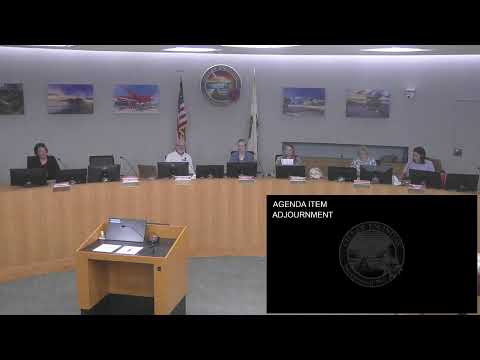
The Encinitas Commission for the Arts voted April 7 to adopt a mission-driven, multi-step jurying process for the city’s temporary sculpture loan program and recommended staff forward the revised program to council.
The Encinitas Commission for the Arts voted April 7 to adopt a revised sculpture-loan process that formalizes selection criteria, establishes a mission for public art and creates a multi-step jurying review before recommendations are forwarded to city council.
The commission’s recommended mission reads, in full: “Public art in Encinitas tells a story that shifts our moment in an uplifting way that unifies us in new perspectives, and celebrates our unique culture.” Commissioners said that mission — drafted from public engagement — will guide call materials, juror briefings and the written rubric used by both a jury panel and individual commissioners.
Why it matters: commissioners and staff said a clearer, mission-aligned process should reduce popularity-contest outcomes and make the city’s loan program more transparent and defensible when a recommended work goes to council. The loan program places temporary sculptures in public sites so residents encounter changing works over time; loan durations discussed in the presentation are two years.
How the new process will work: staff will post a call for artists tied directly to the mission statement and site briefs. An ad hoc panel from the commission plus five nominated community jurors will evaluate submissions and advance 10–15 finalists per call. Those finalists will be reviewed by each commissioner individually using a standard rubric that breaks the mission into three evaluative parts; commissioners will each nominate up to two works per site. The full commission meeting will be the public-decision forum where public comment is read and the commission finalizes its recommendation to council. Staff will compile the individual commissioner reviews into the meeting packet.
Program details and limits noted during the discussion: the loan program is not a commission for site-specific permanent pieces; it is intended to rotate existing sculptures on loan. Staff told the commission that insurance is not currently covered by the city in the existing program and that stipend amounts were not being recommended for increase in this action. The ad hoc and staff also prepared site briefs (maps, photos and site personality notes) to help jurors and reviewers evaluate fit for each location.
Public engagement and research: commissioners described a public-insights process used to craft the mission. The ad hoc engaged a local insights consultant and a survey methodologist, ran focus groups and random intercepts, and reviewed email comments from prior outreach. Commissioners and staff stressed further outreach would continue between commission recommendation and the council report, and that artist statements and on-site placards would be used for programming and context once sculptures are installed.
Formal action: the commission moved to approve the recommended mission statement and the jurying/selection process as presented. The motion passed at the meeting; the record states the motion passed with all commissioners voting yes and Commissioner Kadakia absent.
Next steps: staff will compile the ad hoc’s material and the draft process into an agenda report for the city council. The ad hoc will work with staff on the final packet, which commission members said should include the jury rubric, site briefs and outreach documentation for council review.
Ending: Commissioners and several members of the public and artists said they hope the clarified process will encourage more submissions, make artist selection more transparent and increase opportunities for commissions, public programming and rotating visual interest in Encinitas parks and public spaces.