Get Full Government Meeting Transcripts, Videos, & Alerts Forever!
Get email alerts on the Budget topic
No spam. Unsubscribe anytime.
Smith County board reviews FY 2025–26 budget options; no votes taken
Summary
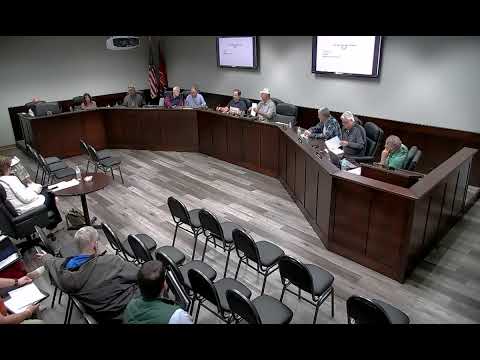
Board chair (Speaker 1) opened a special Smith County meeting to review options for the fiscal year 2025'025'026 budget and emphasized that "no decisions [would] be made tonight" and the session was for discussion only.
Board chair (Speaker 1) opened a special Smith County meeting to review options for the fiscal year 2025–26 budget and emphasized that "no decisions [would] be made tonight" and the session was for discussion only. Staff were asked to return next Tuesday with formal budget options for a vote to send to the county commission.
The board heard a staff presentation summarizing revenues, expenditures and capital outlay. The presenter (Speaker 5) said the expenditure total on page 12 adds up to about $41,000,000 and noted that last year's approved budget was $38,100,000, a difference of roughly $3,200,000. The presenter also said estimated revenue was about $24.8 million and that the revenue estimate includes a $575,000 reimbursable grant item.
Members discussed several line items that drive the increase in the draft budget: a $575,000 teacher bonus the presenter described as reimbursable; an insurance estimate of $350,000 that assumes 100% employee participation (board members noted participation historically has been lower); and a $700,000 capital request for baseball/softball field upgrades, which several members questioned as lacking a detailed, bid-level estimate. Board members repeatedly requested that staff obtain cost estimates before asking the board to approve such a large capital item.
Discussion also addressed safety and security capital requests (grouped in the capital outlay line), with board members proposing that safety projects be pursued first via grant funding and that reimbursable grant amounts be removed from the base budget until the reimbursements are confirmed. Staff identified a capital outlay line that consolidates several items (baseball lights, intercoms, a reimbursable grant, and a state building contingency) and said removing the $700,000 and the $450,000 safety/intercom items would reduce the capital outlay total significantly.
Several members expressed concern about the board's fund balance trajectory if all proposed items are included. One board member said the county could hit a fund-balance level of about $4 million this year and that drawing down fund balance further over multiple years could leave the district near a minimum-operating threshold. Other members noted that some large costs from the prior year were one-time items and may not recur.
On process, the board agreed on three options for staff to prepare and present at the next meeting: (1) the current proposed budget (including the new capital items and the reimbursable bonus), (2) a version that removes the listed capital items and the bonus (reducing capital outlay and presenting those projects as conditional on grant or later board approval), and (3) a version that essentially reverts to last year's budget baseline (with one of several small percentage-based salary scenarios applied). Board members said they would vote next Tuesday on which option to forward to the county commission.
Staff (including Daisy, finance staff) repeatedly told the board that revenues and expenditures are shown through March in the draft and that current-year results to date indicate the district is running under the county-approved budget if current spending levels continue. Board members asked for clearer, itemized cost estimates for major capital requests (baseball lights, intercoms, and safety equipment) and for a clearer breakdown of recurring versus one-time costs in the capital and operating lines.
The meeting concluded with a motion to adjourn, a second, and an affirmative voice vote to end the session; no substantive votes on the budget were taken at the special meeting.
Votes and formal outcomes
- Motion to adjourn: motion made and seconded; vocal "Aye" recorded and the motion carried. No roll-call tally for the adjournment motion was recorded in the transcript.
Notes on source material: this article is based exclusively on statements recorded in the meeting transcript, including staff statements about totals on page 12, the presenter's revenue and grant references, and board members' repeated requests for estimates and for three formal budget options at the next meeting.