Get Full Government Meeting Transcripts, Videos, & Alerts Forever!
Get email alerts on the Density Bonus Program topic
No spam. Unsubscribe anytime.
Caldwell staff outline point-based density bonus program, council raises questions on deed restrictions and open‑space safeguards
Summary
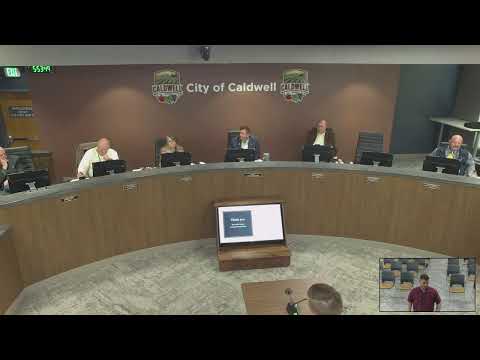
City of Caldwell planning staff on Monday presented a draft density bonus program that would let developers gain extra residential units in exchange for meeting public‑benefit criteria such as deed‑restricted affordable units, additional open space, dedication of land for parks or public facilities, or universal‑design units.
City of Caldwell planning staff on Monday presented a draft density bonus program that would let developers gain extra residential units in exchange for meeting public‑benefit criteria such as deed‑restricted affordable units, additional open space, dedication of land for parks or public facilities, or universal‑design units.
Robin Collins, community development director, and Joe Dodson, principal planner, described the program as voluntary, using a point system to award incremental increases in allowed density. Dodson said larger bonus awards would require more substantial commitments from developers; for the largest bonuses the draft calls for a significant share of rental units to be deed‑restricted to specified affordability levels. Dodson framed the program as the city’s new vehicle for density allowances, saying, “you no longer, through the PUD code, would be permitted to have any density increase through the PUD code. It’s only through this density bonus program.”
Council members pressed staff on how the program would work in practice. Councilor Kelser Dimber asked whether donated land could be used to obtain a bonus on a small parcel; Dodson replied that while the code does not set a single acreage threshold for a donation, “the city would not accept it” if the proposed dedication were impractically small and that acceptance requires coordination with the receiving city department. Dodson said development agreements and city review would be used to limit future subdivision or removal of dedicated open space.
On affordability, staff said the program uses federal affordability designations (HUD area‑median income bands) rather than fixed local dollar amounts. Dodson described two common approaches developers use to make bonus units “affordable”: deed restrictions tied to funding commitments or land donations paired with deed restrictions. He said deed restrictions and proof of funding would be required before staff would allow a bonus.
Councilor questions also covered impact fees and administration. Dodson confirmed impact fees are collected per unit at building permit, and thus would apply to bonus units as well. Councilor Auger and others asked about minimum amenities, long‑term maintenance of dedicated open space, and whether the council could limit approved bonuses during project review; staff said council retains discretionary authority through development applications and development agreements.
Staff emphasized limits and exclusions in the draft: the density bonus would not apply in R‑1 (single‑family) zones and would be inapplicable within the “neighborhood 1” place type mentioned in the comp plan. Infills are treated differently: the city reduced the infill threshold used in the code from 20 acres to 5 acres for special infill considerations. Dodson invited council members to meet with staff for line‑by‑line review before the draft returns for further action.
Ending
Staff presented the density bonus program as a policy tool intended to implement priorities in the recently adopted comprehensive plan, including housing choice and increased open space. Council members signaled support for some elements but asked for more detail and assurances on deed restrictions, the scale of donated land, open‑space management and how bonuses would be verified before extra units are permitted. Staff offered follow‑up meetings and said the draft will return for additional discussion before formal ordinance action.