Get Full Government Meeting Transcripts, Videos, & Alerts Forever!
Get email alerts on the Equal Pay topic
No spam. Unsubscribe anytime.
Board proclaims April 2025 Equal Pay Awareness Month and highlights local pay gaps
Summary
Santa Clara County supervisors adopted a proclamation recognizing April 2025 as Equal Pay Awareness Month and speakers urged continued action to close large local wage gaps, especially for Latinas and other women of color.
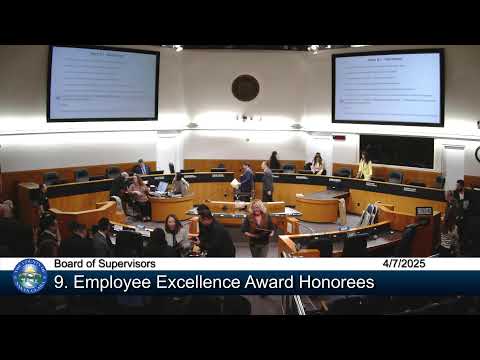
The Santa Clara County Board of Supervisors adopted a proclamation declaring April 2025 as Equal Pay Awareness Month and invited leaders from the Office of Women's Policy, the Latina Coalition of Silicon Valley, and the Commission on the Status of Women to the dais.
Vice President Yong opened the presentation and cited county and state statistics. "Women in California were paid only 87¢ for every dollar paid to men and ... women in Santa Clara County were only paid 74¢ for every dollar paid to men," Yong said, citing the 2024 California women's well‑being index. The presentation noted particularly large gaps for Latinas and for specific Asian‑origin groups when data are disaggregated.
Ruth Silvertaub, a founding member of the Bay Area Equal Pay Collaborative, provided additional city‑level figures, saying that in 2025 women in San Jose earned 72¢ for every dollar earned by men and that Sunnyvale ranked poorly among midsize cities, at 56¢. She emphasized that gaps persist "even in female‑dominated jobs" and are worse for many women of color.
Speakers reviewed county policy tools and state law that support pay equity. The remarks referenced the county’s March 2017 board policy revisions that created an interactive pay‑equity dashboard, a county ordinance (referred to in the presentation as a "CETA ordinance") addressing pay equity, and the county’s voluntary equal pay pledge. Silvertaub also noted state transparency laws that require employers to post salary scales and restrict inquiries about prior pay.
Presenters warned that federal changes have reduced enforcement capacity: Silvertaub said a recent executive order rescinded protections for federal contractors and that enforcement capacity at the federal Office of Federal Contract Compliance Programs (OFCCP) has been diminished, removing a significant source of recovered funds.
The board presented the proclamation and recognized local partners for ongoing outreach and advocacy. The transcript does not record a roll‑call vote for the proclamation; the item was presented and accepted during the ceremonial portion of the meeting.
Speakers encouraged employers to conduct pay‑equity analyses, adopt salary transparency practices, and sign the equal pay pledge to address persistent disparities.