Marysville levee work nears completion; officials prepare FEMA certification and pursue state 200‑year upgrades
Loading...
Summary
Contractors on the Marysville levee project have about two weeks of work remaining, and staff say they can certify the work to FEMA for 100‑year protection while exploring options to meet the state’s 200‑year urban standard.
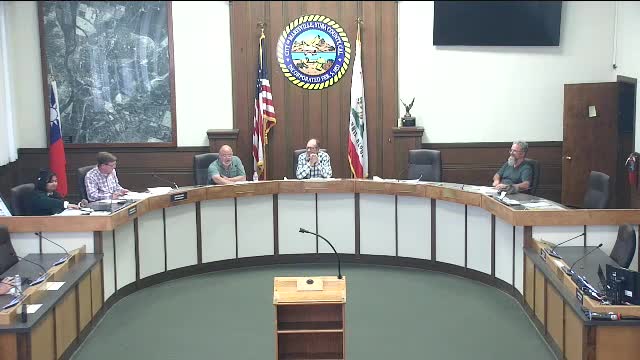
Contractors on the Marysville levee project have about two weeks of construction remaining, and city staff told the Marysville Levee Commission they have the documentation needed to certify the work to the Federal Emergency Management Agency (FEMA) for a 100‑year level of protection.
The staff member speaking to the commission said the U.S. Army Corps of Engineers’ (the Corps’) work and recent contractor clean-up should allow the city to pursue FEMA accreditation that will be considered during an ongoing FEMA remapping effort. The staff member said certification materials will be assembled and submitted to FEMA ahead of the agency’s remapping schedule, which staff described as taking about 18–24 months.
The commission heard that while the current work will provide better-than-100‑year protection, achieving the state’s 200‑year urban certification would require additional construction. Staff said the water agency and local partners are exploring a locally led project to complete the north-area berm and related features; staff estimated that local construction could cost roughly $6 million to $8 million. The speaker said doing the work locally could proceed much faster than waiting for the Corps’ full project, which staff said might take decades to reach construction if left solely to the Corps’ schedule.
Staff explained a remaining issue involves a set of finger levees that Caltrans is expected to repair; the commission was told the Corps’ risk assessment has determined that the corps’ contracted scope is essentially complete except for finger‑levee repairs Caltrans must address. If Caltrans participates and the Corps agrees to authorize a scope that allows state funds to be used, the state could apply remaining funds to Marysville rather than the city having to seek a separate state program.
The staff member said the water agency is willing to support a locally led effort, and the commission is working with consultants and state legislative contacts to secure the city’s inclusion in proposed legislation that would extend the deadline for cities to demonstrate a 200‑year level of protection. Staff said they had been coordinating with county officials and with Senator Ashby’s office on adding Marysville to that bill during upcoming committee hearings.
A commissioner asked how FEMA certification interacts with state 200‑year certification and remapping; staff said FEMA requires an engineer to certify the Corps’ work for a 100‑year accreditation (the Corps no longer sends a direct letter), and that the city has the information needed to assemble a certification package for FEMA. Staff emphasized that FEMA certification and a state 200‑year urban finding are distinct: FEMA certification addresses flood insurance mapping and a 100‑year standard, while a 200‑year urban certification affects local land-use decisions and higher state requirements for development.
Commissioners were told some unexpected materials (old concrete, railroad ties, sand and gravel) were found during excavation and caused delays, but cleanup and staging-area restoration have started. The staff member said once contractor work finishes and staging areas are cleaned up, equipment will be moved out and the project will “really start winding down” from a construction standpoint.
The commission discussed next steps for accreditation, potential local funding routes and timing for legislative inclusion; staff said they would return to the commission with updates on contracts, the FEMA submission package and any agreements that allow state funds to be used locally.