Get Full Government Meeting Transcripts, Videos, & Alerts Forever!
Get email alerts on the Environment topic
No spam. Unsubscribe anytime.
NC DEQ outlines progress and funding request to eradicate invasive giant salvinia at Gatway Swamp
Summary
A North Carolina Department of Environmental Quality official gave commissioners an update on an ongoing eradication project for giant salvinia in Gatway Swamp, describing multi‑year treatment work, acreage treated, and a 2025 budget request that would require a $75,000 county match.
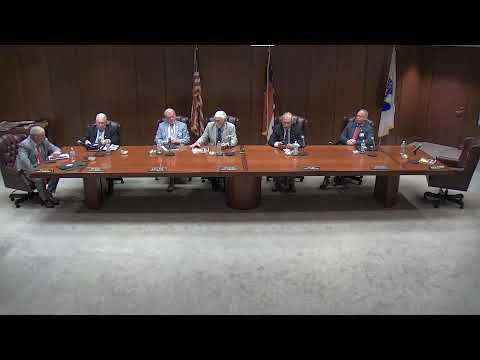
Ron Ehman, a representative of the North Carolina Department of Environmental Quality, briefed the Columbus County Board of Commissioners on March 17 about an ongoing effort to remove the invasive aquatic plant giant salvinia from ponds in Gatway Swamp near Cherry Grove.
Ehman said the infestation was detected in 2020 and the state began active management in 2021. He described the plant as a regulated invasive species that can “impact recreation activities on the water, impact agriculture operations, and cause flooding.” Ehman said the site covers roughly 250 acres in total and that recent efforts have targeted about 130 acres for treatment.
Treatment methods described included in‑water liquid herbicide applications where long exposure time is required, and a granular pellet approach in higher‑flow areas where liquid treatment could be diluted. Ehman said crews have accessed the site from dam locations and by kayak; he also noted the project team has considered using a drone to reach difficult pockets.
On funding, Ehman said the 2025 work plan requests $150,000 in total project costs with a 50/50 cost share; he said that would equate to $75,000 from the county for the coming year. He said the state has covered significant portions of the multi‑year effort and that the county share being requested for 2025 is “in line with the last couple years.” Ehman presented a multi‑year budget projection in which the county’s annual share would decline over time if current removal trends continue.
Board members asked technical questions about dewatering options, drought effects, herbicide choices and impacts on fish and wildlife. Ehman said reduced water levels can help treatment effectiveness but that fully dewatering the system is not feasible because of ongoing inflow; he also said the herbicide used is selected to minimize damage to native cypress trees and other non‑target species. Ehman reported early ecological benefits as treated areas have begun to show more open water and signs of recovering aquatic life.
No formal appropriation was made at the meeting; Ehman’s presentation served as an update and a request for the county’s cost‑share consideration during upcoming budget discussions.
Ending: DEQ officials said they expect to continue active treatment this year and will return to the county with more detailed budget information and a proposed schedule for field work.