Get Full Government Meeting Transcripts, Videos, & Alerts Forever!
Get email alerts on the Homelessness topic
No spam. Unsubscribe anytime.
Council pauses vote on Spalding transitional wellness center funding; human services committee to review
Summary
The Cambridge City Council heard emotional pleas to keep the Spalding transitional wellness center open but deferred a vote after a councilor exercised charter right; staff estimate continuation costs at about $3 million per year.
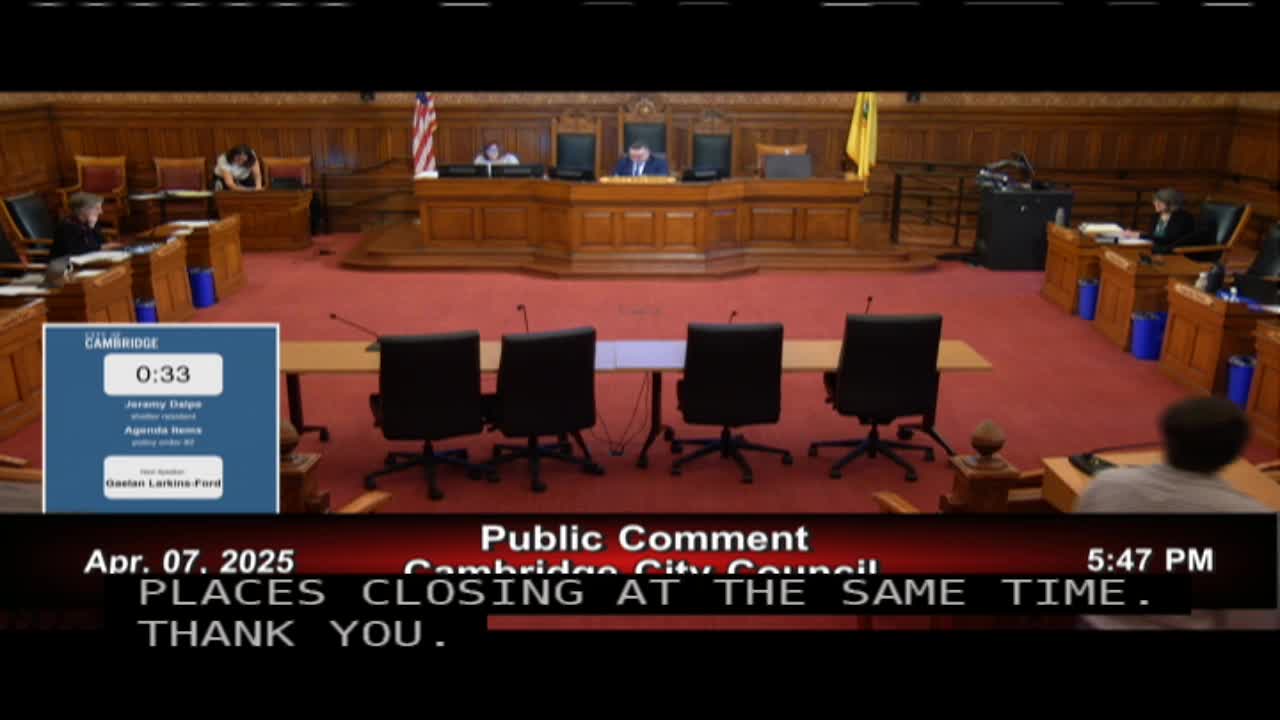
Dozens of Cambridge residents, service providers and people who live at the Spalding facility urged the City Council on April 7 to preserve the transitional Spalding Wellness Center — saying the non‑congregate shelter provides meals, medical care and case management that have helped residents stabilize their lives.
Speakers described Spalding as a “lifeline” and said moves to close it would push vulnerable residents back into congregate shelters or onto the street. “This place provides health care. It provides a lot of social services,” resident Galen Larkins Ford told the council. Jan Devereaux, who has worked on housing issues, told the council that “this shelter really sets people up for success.”
Councilors and the city manager said the center was originally funded with federal American Rescue Plan Act (ARPA) dollars and that ARPA funding is expiring. City staff estimated the annual operating cost at roughly $3 million. The center’s designation as “transitional” and its higher per‑bed cost relative to congregate shelters is the core of the funding debate: several councilors said they support the center’s services but acknowledged the city faces tradeoffs across competing post‑ARPA priorities.
Councilor Toner exercised his charter right on the order, which deferred a final council vote. The city manager and staff confirmed the Human Services and Veterans Committee will hold a focused session on Thursday (afternoon) to review homelessness services, spending and alternatives, and to discuss whether and how the Spalding facility could be funded beyond June. The council directed staff to bring options to the committee and to the finance process, including potential state funds, city operating funds, partnerships and other sources.
City staff and councilors described a portfolio approach: continue to pursue permanent supportive housing (the city is opening supportive units) while also evaluating whether the Spalding model should be sustained as a permanent non‑congregate option. Advocates urged the council to treat the facility as a life‑saving resource and to identify funding sooner rather than later.
What’s next: The Human Services and Veterans Committee will review detailed budget options, transition plans and capacity projections at a meeting scheduled for Thursday, April 10, 2025, and staff said they will brief the full council and finance committee as budget season progresses. No final funding decision was made on April 7.