Get Full Government Meeting Transcripts, Videos, & Alerts Forever!
Get email alerts on the Utilities Energy topic
No spam. Unsubscribe anytime.
Chemung County lawmakers push for coordinated response as residents report sharp energy bill spikes
Summary
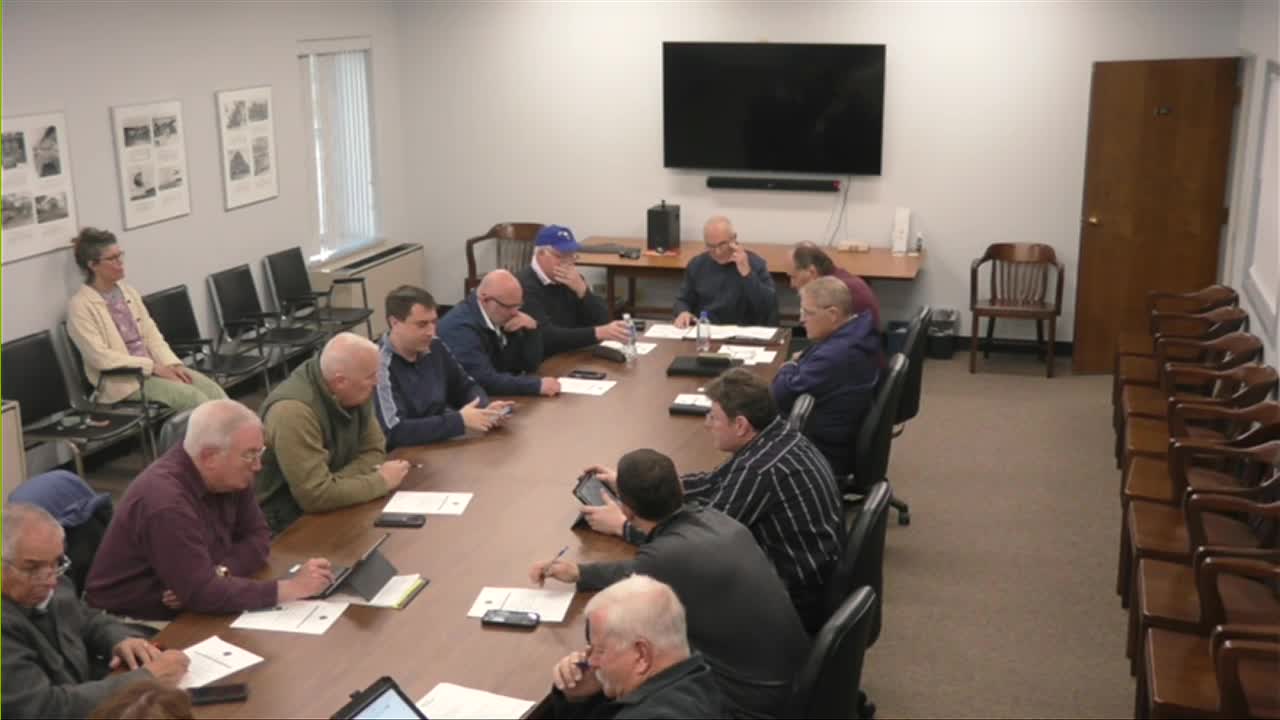
At a Chemung County budget meeting, legislators heard multiple reports of unusually high residential energy bills, were told NYSAC and NYSEG will be provided constituent contacts for follow-up, and discussed possible regulatory steps including a section 71 petition to the New York State Public Service Commission.
At a Chemung County budget meeting, legislators discussed a wave of constituent complaints about sharply higher energy bills and agreed to route individual cases to a New York State Association of Counties (NYSAC) contact so NYSEG can follow up directly.
The proposal presented at the meeting calls for county legislators and staff to collect constituent names, addresses and utility account numbers and forward that information to a designated NYSAC contact. Meeting participants were told they would receive an email the next day with that contact information and instructions for forwarding details. NYSAC has agreed to pass complaints to NYSEG for direct follow-up with the individual account holder, according to meeting remarks.
Lawmakers described multiple examples of high bills raised by residents during recent calls: one legislator said a constituent’s electric bill had been $699 for a single month and the gas bill $243; another mentioned a bill of about $1,700. Meeting discussion also noted that many residents had seen sudden spikes after months of estimated readings and that smart meters had been activated recently in some households.
Members distinguished between delivery and supply: NYSEG maintains and delivers electricity but some speakers noted that supply charges come from third-party suppliers over NYSEG’s wires. The meeting record states that NYSEG owns and maintains distribution infrastructure while some customers may be billed separately for supply by third-party providers.
Speakers raised concerns about the Woodlawn apartment complex (referred to in discussion as Hawthorne Court), saying the social services commissioner had reported “over a hundred empty apartments” in a building of roughly 400 units. Legislators said they were concerned that threatened or actual utility shutoffs there could force large-scale displacement and that the county and city previously identified multiple shelter sites as part of contingency planning when utilities were disconnected.
Participants discussed regulatory options. Meeting remarks noted that a petition under “section 71” can be filed by either 25 signatures or by a legislative body to request an investigation by the New York State Public Service Commission; members asked staff to look into whether the county should pursue that step. Attendees also discussed encouraging constituents to research third-party suppliers and working to steer callers to NYSAC and NYSEG contacts so each household can get a case-specific response.
The conversation included requests for additional public outreach and coordination with state-level actors. Legislators said they would share the NYSAC contact information with colleagues and constituents, and one participant said county staff (identified in discussion as “Adam”) would be asked to examine whether formal communications or a petition to the Public Service Commission are appropriate next steps.
Meeting attendees asked staff to continue follow-up, including providing a public forum (a Zoom meeting was mentioned) and routing constituents to the contact who can escalate problems. No formal legislative action or vote on regulatory filings was taken at the meeting.