Get Full Government Meeting Transcripts, Videos, & Alerts Forever!
Get email alerts on the Short Term Rentals topic
No spam. Unsubscribe anytime.
Committee debates proposed short‑term rental ordinance changes: operator vs. owner registration, density rules and human‑trafficking training
Summary
The Quality of Life Committee debated multiple amendments to a proposed short‑term rental ordinance — who must register (operator vs. owner), whether entire multifamily properties can be stripped of STR registrations after a threshold of unit‑level revocations, density limits for multifamily properties, and mandatory human‑trafficking training — but took no votes.
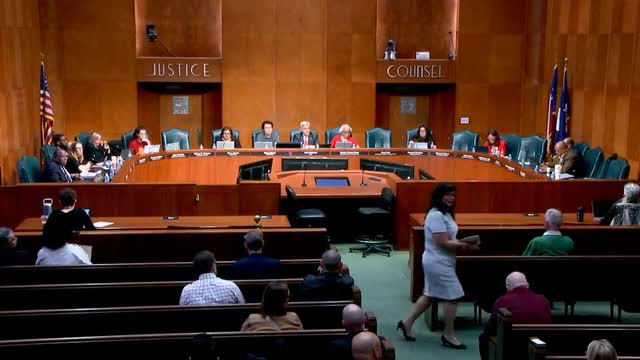
Members of the Quality of Life Committee reviewed and debated a raft of proposed amendments to a draft short‑term rental (STR) ordinance, focusing on enforcement, who must register, density limits in multifamily properties and training requirements.
The committee framed the discussion around two competing registration approaches. Councilmember Kamen offered Amendment 1A to make the operator (the party managing a listed unit) the required applicant for the city certificate of registration. Administration staff and legal advised that Amendment 1B — defining applicant as the owner or operator — is preferable. Director Paez told the committee the administration supports Amendment 1B and would like to keep the word "owner" in the ordinance; legal counsel Rashad Grama said owner-or-operator language mirrors other municipal codes and is used by many U.S. cities. Kamen argued operator‑only language reduces ambiguity in criminal prosecutions, saying the operator is the party "closest to the action." The committee heard competing legal views about prosecutorial clarity and municipal precedent.
Members also debated a proposal (Amendment 2) that would allow revocation of registrations for an entire multifamily property if 25% or more of the units registered as STRs at that property have had their licenses revoked after due process. Administration and legal raised concerns that the 25% threshold lacks empirical support and might raise substantive due‑process or equal‑protection challenges; councilmembers urged a workable enforcement tool to address repeatedly offending properties. Committee participants suggested alternative thresholds (for example, revocation after two or more adjudicated unit-level revocations) and asked legal staff to draft revised language tailored to enforcement concerns while reducing risk of successful legal challenge.
Amendment 3 would place density limits on multifamily buildings — for example, limiting the share of units in a multifamily property that may operate as STRs — and drew similar objections about legal risk and grandfathering. Committee members cited San Antonio’s block‑face density approach (12.5% is commonly referenced) and urged caution on takings and nonconforming‑use questions; several committee and city legal staff said any limit would likely require careful grandfathering language to avoid retroactive interference with existing lawful uses.
The committee unanimously supported a non‑code application change proposed as Amendment 4: requiring applicants and relevant employees to complete free human‑trafficking awareness training as part of the application process. Administration confirmed a short video used for hotel/motel training will be adapted for the STR application process.
Amendment 5 would clarify the ordinance’s definition of "platform" so that multiple listing services (for example, HARMLS) are not captured in the ordinance’s listing‑platform definition; administration said technical cleanup language would be provided following legal consultations with listing services.
Council and legal staff also discussed duplicative registration concerns for multifamily buildings. The Houston Apartment Association asked that apartment properties already registered under existing city habitability and crime‑registration ordinances not be forced to duplicate registration; association counsel said the city already holds owner/manager contact information in other registration systems. Apartment‑industry representatives asked for an exemption from duplicated filings or clearer cross‑references.
Public comment was substantial. Owners and operators urged the council to avoid rules that would unduly limit responsible small operators; operators asked for longer permit terms (three years) to reduce administrative burden, privacy protections for emergency contact information, and presumption of compliance during permit processing. Industry representatives sought higher registration fees to fund enforcement. Neighbors and community advocates urged stronger enforcement tools and clearer evidence standards for nuisance and crime allegations; several callers pressed for clearer noise enforcement, better evidence collection and injunctions in extreme cases. Committee members acknowledged enforcement challenges — citations and revocations can be slow and may require litigation in nuisance cases — and asked ARA, legal and administration staff to refine language, consider alternative thresholds and produce draft amendments that reduce litigation risk while providing stronger tools for bad actors.
No votes were taken; Councilmember Plummer signaled an intent to tag the item for full‑council consideration, giving additional time for language revisions.
Ending: Staff said they will return with refined language (legal/administration drafts), proposed grandfathering or nonconforming‑use provisions, and proposed enforcement thresholds for committee and public review before the item returns to council.