Get Full Government Meeting Transcripts, Videos, & Alerts Forever!
Get email alerts on the Marijuana Dispensary topic
No spam. Unsubscribe anytime.
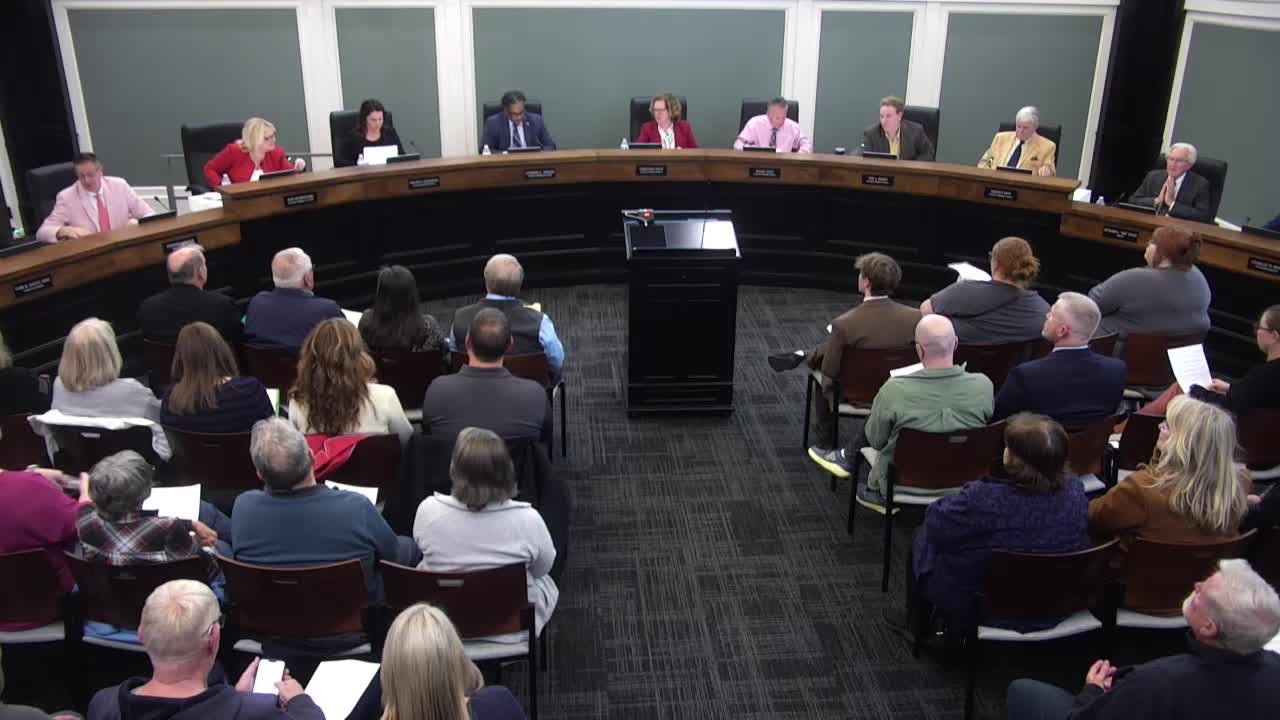
Grove City Council approves special‑use permit for Stringtown Road cannabis dispensary; mayor announces veto
Summary
After hours of testimony for and against a proposed Ohio Cannabis Company dispensary at 1947 Stringtown Road, Grove City Council voted 4‑3 to approve Ordinance C1025 as amended — excluding a drive‑through pickup window — then received notice the mayor intends to veto the measure.
Grove City Council voted 4‑3 at its meeting to approve Ordinance C1025, granting a special‑use permit for Ohio Cannabis Company to operate a marijuana dispensary at 1947 Stringtown Road; Mayor Ike Stage announced he will veto the ordinance.
The vote followed more than two hours of presentations from the applicant, city staff and more than three dozen public comments both for and against the proposal. The council also adopted an amendment to the ordinance to explicitly prohibit a drive‑through or pickup window at the site.
The applicant, Brian Wingfield, presented the Ohio Cannabis Company proposal and provided statewide and company data, emphasizing security and customer counts. “Ohio Cannabis Company is a family owned and operated group of dispensaries,” Wingfield said, and described his three existing stores and plans to renovate the proposed site. Wingfield told council his company has had no police reports at its three stores in the past two years and said the store would follow state Division of Cannabis Control rules. He described a medical‑only pickup window as a quick, “very quick and safe process” for patients who place orders in advance.
Planning and development staff raised concerns about the site. Kyle Rausch, a member of city planning/development staff, said the property is a prominent three‑acre site and noted past Planning Commission and staff recommendations against approval. Rausch said the Planning Commission recommended denial at its March 4 meeting and that staff’s regulatory review focused on noncompliance with the city’s recently adopted cannabis ordinance, C32‑24. Rausch also summarized traffic guidance: “according to the Traffic Engineers Association [the proposed use] would generate 6 12 trips a day. So 306 in, 306 out,” based on the applicant’s planned use of about 2,900 square feet.
Kevin Tieferth, director of the city’s Department of Public Safety, told council the city’s cannabis rules were designed to “balance the economic benefits of cannabis businesses with the responsibility of ensuring public safety and traffic efficiency,” and pointed to Stringtown Road’s heavy congestion and crash history as factors that informed those rules.
Public comments were deeply divided. Supporters said a lawful, regulated dispensary would create jobs and local revenue and would revitalize the property at China Bell, the existing business on the site. Michelle Lung, a longtime Grove City resident, said dispensaries she visited were “run with a high level [of] professionalism and security.” Several residents argued the community voted in favor of legalization at the state level and that local regulations should allow businesses that meet state requirements.
Opponents raised public‑safety, youth and traffic concerns. Doug Solles, a 30‑year Grove City homeowner, urged council to reject the permit and said published research shows higher crime rates around some dispensaries; he concluded, “I urge you to vote this proposal down.” Other residents cited local school vaping problems, impaired driving concerns and potential impacts on neighborhood character.
Council debate focused on two technical deviations the applicant sought: a reduction below the city’s 500‑foot setback requirement from residential property and a request to allow a medical pickup window (drive‑through). Councilmember Anderson moved to amend the ordinance to bar any drive‑through or pickup window at the location; the amendment passed. The council then approved the ordinance as amended by a 4‑3 vote (Yes: Councilmembers Wilson, Holt, Burrows and Anderson; No: President Hauck, Councilmembers Gary and Du).
After the council vote the mayor exercised veto authority. Mayor Ike Stage said he would veto C1025, noting the large petition and public opposition: “I will be vetoing this particular piece of legislation better known as C1025.” Council may consider an override at a future meeting; the law director noted an override would require five council votes.
What happened next: if the veto is filed by the mayor, the ordinance will not take effect unless council overrides the veto at a future meeting. If the applicant proceeds, any future request to add a pickup window or drive‑through would require a separate review and approvals through the city’s development and special‑use processes.
Votes at a glance: the council adopted the amendment to prohibit a drive‑through; the full ordinance passed 4‑3 before the mayor announced his intent to veto. The Planning Commission had recommended denial on March 4; staff likewise recommended denial based on noncompliance with the city’s cannabis ordinance.
The discussion drew extensive public participation: residents and local stakeholders provided both written petitions and in‑person testimony. Council members and staff said the matter involves overlapping considerations — the city’s recently adopted local cannabis rules, traffic and safety data for Stringtown Road, the status of state tax and regulatory changes, and the economic character of a three‑acre site on a major corridor.
The council’s next regular meeting will include the opportunity to vote on overriding the mayor’s veto if a motion to do so is filed.