Get Full Government Meeting Transcripts, Videos, & Alerts Forever!
Get email alerts on the Social Services topic
No spam. Unsubscribe anytime.
Counseling Place details program expansions, funding losses and new outreach as council hears budget preview
Summary
The Counseling Place told the Richardson City Council it exceeded service targets in fiscal 2024, expanded youth and Spanish-language services, and faces funding shortfalls after cuts to Victims of Crime Act (VOCA) assistance that have reduced available money for victim services.
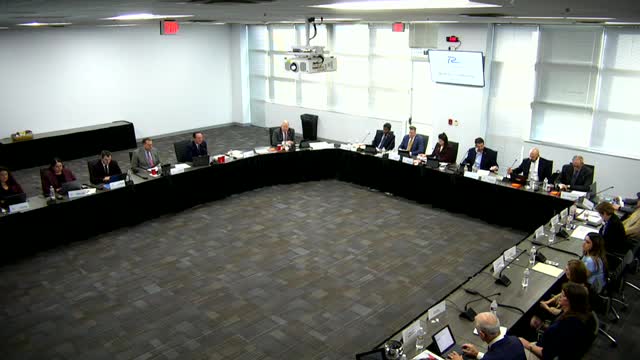
The Counseling Place briefed the Richardson City Council on its services, recent program expansions and funding challenges, saying the nonprofit surpassed service projections in fiscal 2024 but has reduced some free services in 2025 after federal victim-services funding declined.
Deborah Dobbs, CEO of The Counseling Place, told council members the agency has “always been about mental health” and described a range of trauma-informed interventions beyond traditional talk therapy that she said speed clients’ recovery and help preserve staff. She said the organization increased staffing in 2024, adding two therapists and expanding a suite of youth programs, and that new Spanish-language services are being offered by bilingual staff.
The agency highlighted two programs the council and the public heard about in detail. Project Positive is a mental-health-education curriculum that was adapted for elementary ages last year and had full summer registrations; Dobbs said Jonathan Flores translated the curriculum into Spanish. Empower You is a new education-and-skills curriculum for survivors of domestic violence, developed by Ashley Akers, the Counseling Place’s victim-assistance director. Dobbs said Empower You combines safety planning, skill-building and emergency supports so participants can address basic needs before engaging in longer-term therapy.
Dobbs read excerpts from a former Project Positive student’s message who wrote that the program helped her “figure out how to control my emotions,” stop using drugs and graduate high school — an account she presented as an example of the nonprofit’s impact.
Council members pressed for operational details. Dobbs said the Counseling Place’s annual budget “is about a million dollars,” and later identified staffing as nine full-time and five part-time positions. She described the agency as fiscally conservative and said that, in 2025, the organization had to reduce some free services after cuts to Victims of Crime Act (VOCA) funding. Dobbs told the council the agency “took a hit” from funding changes and later said VOCA had previously provided nearly $400,000 a year to support victim services; the agency adjusted its grant requests amid a tighter statewide award environment.
Other highlights and recent additions described in the presentation included: - Expanded youth programming: Project Positive was adapted for kindergarten through third grade and fourth through sixth grade, and classes filled after the library hosted sessions; Dobbs noted programs were small and often one-on-one when needed. - Spanish-language access: Jonathan Flores provides Spanish-language therapy and translates advocacy materials; several staff serve Spanish-speaking clients as victim advocates. - Emergency and wraparound supports: The agency provided rent advocacy, emergency assistance through board and donated gift cards, and helped clients secure attorneys when legal aid was unavailable. - Food access: The Counseling Place has been approved to participate in the North Texas Food Bank’s RX program to distribute nonperishable food and vouchers to clients with immediate needs. - Community event: The nonprofit will reprise the low-cost, inclusive Mindful Mile color-walk fundraiser on June 26 to support operations and outreach.
Dobbs told the council the Counseling Place keeps case sizes and staff caseloads deliberately small and said the center’s low staff turnover is “almost unheard of” for the field. She urged council members and residents to talk about the organization and share information to widen donor and volunteer support, noting that some funders conclude the nonprofit is too stable to need certain grants.
Several council members expressed support and pledged to participate in and promote the Mindful Mile event. Council members also asked for clarity about service area and access: Dobbs said about 90% of clients are Richardson residents and that most referrals come from Richardson Police Department, municipal court and local schools, with some community and nonprofit referrals.
Dobbs closed by saying the Counseling Place would continue serving clients and seeking additional local support to restore services cut in 2025.
Ending: The Counseling Place left council members with a fundraising ask, event date and contact information for follow-up during the city’s budget-preparation process this summer.