Get Full Government Meeting Transcripts, Videos, & Alerts Forever!
Get email alerts on the Labor And Workforce Development topic
No spam. Unsubscribe anytime.
Council hears options for project labor and community workforce agreements to boost local hiring and compliance
Summary
At a council work session, an outside consultant outlined how project labor agreements (PLAs) and community workforce agreements (CWAs) work, the limits and potential benefits for Lynnwood projects, and the likely administrative costs and compliance needs.
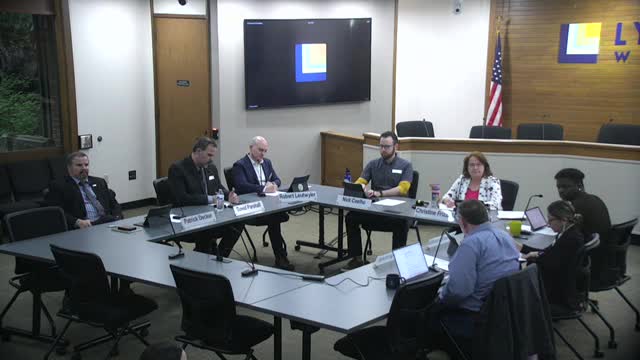
City Council received a briefing April 7 on project labor agreements and community workforce agreements as tools the city could use to encourage higher wages, local hiring and stronger compliance on public construction projects.
The consultant Daniel Viao of Intelligent Partnerships told council members that PLAs and CWAs are legal, pre-hire agreements intended to guarantee wage, apprenticeship and hiring commitments from contractors before work begins. "These are administrative reporting processes, not construction deliverables," Viao said, adding that the agreements typically do not force contractors to unionize and should not automatically raise construction costs. "Our typical experience has been that they average about 1% of your construction costs to administer these programs," he told council.
Why it matters: Council member David Hurst, who requested the discussion, framed PLAs/CWAs as a tool to bring higher-wage jobs to Lynnwood and to ensure publicly funded projects deliver agreed outcomes. Viao and council members discussed tradeoffs including staffing for enforcement, whether the city would use an external third party to monitor compliance, and how apprenticeship and priority-hire provisions could be structured to benefit local and disadvantaged residents.
Key points from the presentation
- What PLAs/CWAs do: Viao described PLAs and CWAs as pre-hire agreements that establish wage and workforce standards for contractors bidding public projects. He distinguished them from community benefit agreements (CBAs), which usually tie public benefits (for example, park construction or housing) directly to a project. Viao said PLAs/CWAs focus on ensuring contract compliance, apprenticeship utilization and priority hiring for a jurisdiction.
- Costs and administration: Viao said the incremental administrative cost to run such programs typically runs about 1% of construction cost and can be paid from project management allowances already included in engineering estimates. He emphasized that midsize cities often lack staff capacity for day‑to‑day compliance and frequently hire outside third parties to provide real‑time monitoring rather than relying solely on post‑performance complaint-driven enforcement.
- Labor and apprenticeship: The presentation explained that registered apprenticeship programs are overseen either by the federal Office of Apprenticeship or state apprenticeship agencies (Washington operates a state apprenticeship agency). Viao said these systems provide a ready training and dispatch infrastructure that cities can leverage rather than build from scratch.
- Union participation and non-discrimination: Viao stressed that public agencies cannot legally require contractors or workers to join a union; PLAs and CWAs are not "union-only" procurement tools. What such agreements can do is secure labor partnerships that reduce the risk of work stoppage because unions typically waive their right to strike on projects covered by these agreements.
Council reaction and next steps
Council members asked about pilot options and whether the city should begin with an interlocal or pilot agreement for large projects. Viao suggested pilots and noted Everett and Snohomish County have adopted PLA/CWA provisions for large projects. Councilmember Escamilla said the city could learn from those nearby examples and consider a pilot on a large project first. Hurst and Hirsch also asked staff to bring back potential next steps and cost estimates for external compliance support.
No formal action or ordinance was taken at the work session; staff advised that further analysis and possible pilot design would be the next steps if council wants to pursue PLA/CWA language for future procurements.