Get Full Government Meeting Transcripts, Videos, & Alerts Forever!
Get email alerts on the Ceasefire Monitoring topic
No spam. Unsubscribe anytime.
UN peace operations chief urges member-state backing for modernized ceasefire monitoring
Summary
Jean-Pierre Lacroix told an annual meeting of military heads in New York that peacekeeping must integrate new technologies, training and political backing to monitor ceasefires effectively; he highlighted UNIFIL, MONUSCO and MINUSCA adaptations and noted five peacekeeper deaths or injuries this year.
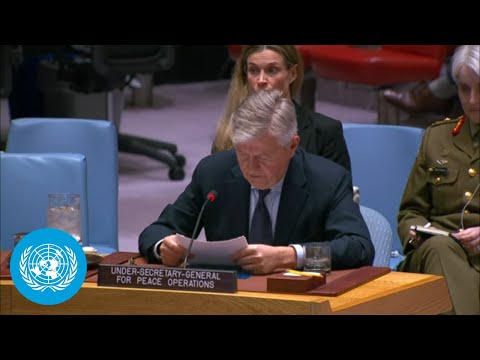
Jean-Pierre Lacroix, Under-Secretary-General for Peace Operations, told an annual meeting of heads of military components in New York that United Nations peacekeeping must pair traditional presence with new technology, training and stronger political support to monitor ceasefires effectively.
“this annual meeting is an opportunity for us to reiterate our shared commitment to peace and security through the very important work of peace keeping operations of the United Nations,” Lacroix said, listing strategic communications, resource scarcity, women, peace and security, protection of civilians and training as priorities.
Lacroix said ceasefire monitoring — a long-standing core task of UN peacekeeping — can no longer rely solely on physical presence. He described a “digital transformation strategy under the action for peacekeeping plus framework” designed to give missions tools to “detect violations swiftly, coordinate responses effectively and maintain the trust of the communities they serve.” He cited the UnitedAware platform as a program that has “changed how we monitor critical zones in Cyprus,” allowing missions to move “from reactive responses to anticipatory data driven decision making.”
Lacroix urged member states and the Security Council to back adaptations of existing missions and to prepare for possible new operations. He noted planned high-level discussions in Berlin in May, saying that meeting should be “a unique opportunity for high level discussions to take place on the future of peacekeeping and necessary peacekeeping reforms.”
On operational adaptations, Lacroix referenced UNIFIL’s new posture in Lebanon following the November 27 cessation of hostilities agreement and said the mission’s adaptation plan has five stated objectives. He said MONUSCO’s potential role in implementing a DRC ceasefire had been raised by the Security Council and that MINUSCA has adjusted its concept of operations and is altering its police footprint in response to changing conditions. He described recent consultations with force commanders, including Lieutenant General Aroldo Lazaro Zayen, head of mission and force commander of UNIFIL, and Lieutenant General Ulises Demis Gadigomez, force commander of MONUSCO.
Lacroix warned that modern threats — influence operations, cyberattacks and other hybrid tactics — require fresh monitoring approaches beyond traditional domains. He also emphasized the political limits of peacekeeping, saying that “the success of any ceasefire remains the sole responsibility of the parties” and that mission effectiveness depends on host-state cooperation and Security Council support.
He closed by acknowledging casualties among peacekeepers, saying five personnel were killed this year and 42 sustained injuries from malicious acts, and expressed solidarity with their families.
No formal decisions or votes were recorded during the briefing; Lacroix’s remarks were presented to the Security Council and the assembled force commanders as part of the annual meeting agenda.