Get Full Government Meeting Transcripts, Videos, & Alerts Forever!
Lawmakers, advocates and municipalities clash over proposed changes to Maine's municipal general assistance program
Summary
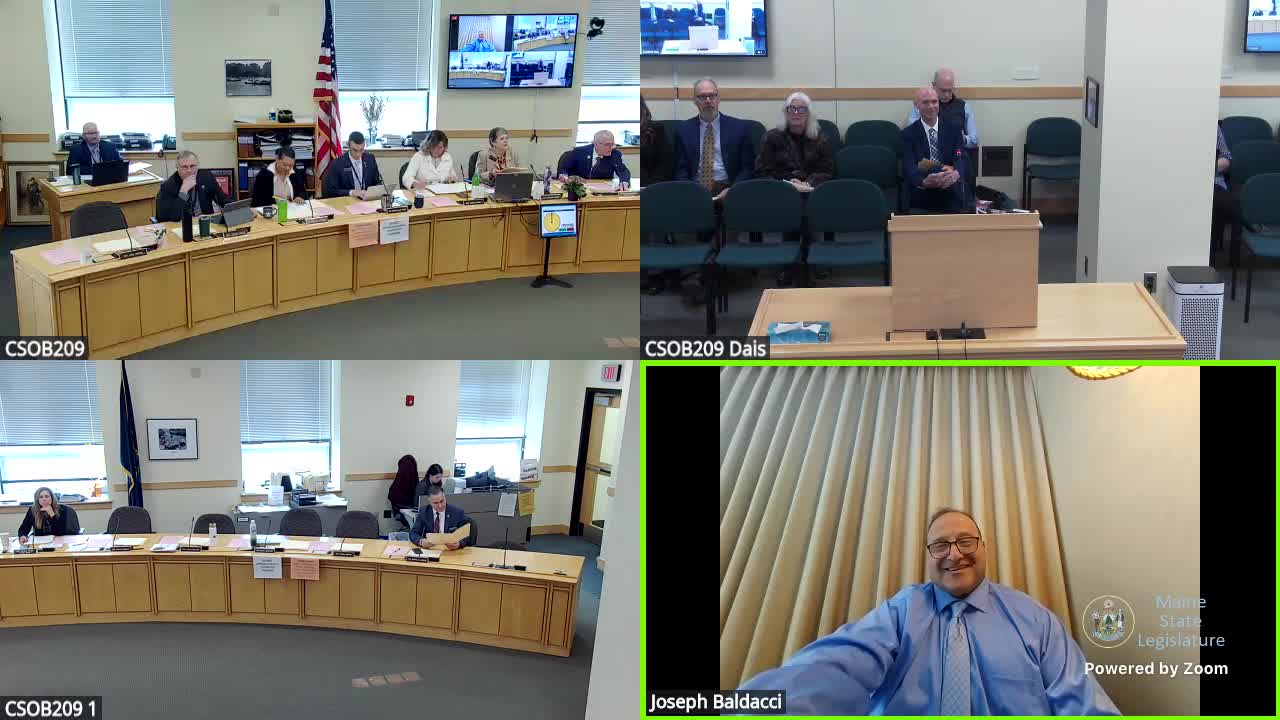
The Joint Standing Committee on Health and Human Services heard hours of testimony on multiple bills that would change how Maine's municipal general assistance (GA) program is administered and funded, including proposals to raise state reimbursement, restrict eligibility and expand what counts as a reimbursable basic need.
The Joint Standing Committee on Health and Human Services heard hours of testimony on multiple bills that would change how Maine's municipal general assistance (GA) program is administered and funded, including proposals to raise state reimbursement, restrict eligibility and expand what counts as a reimbursable basic need.
Proponents of higher state support and expanded shelter reimbursements said the current structure leaves service centers and emergency shelters unable to keep up with growing homelessness and rising costs; state officials warned that expanding eligibility or increasing reimbursement without offsetting funding would rapidly increase pressure on the state general fund.
The bills before the committee included LD 453 (state pay 90% of municipal and tribal GA costs), LD 637 (directing the Department of Health and Human Services to evaluate the feasibility of a statewide GA database), LD 657 (designating broadband Internet or wireless access points as a GA-eligible basic necessity), LD 1017 (allowing food provided at emergency shelters to be reimbursed), LD 1029 (a package to raise reimbursement from 70% to 90%, prevent housing assistance from crowding out other basic needs, and extend presumptive eligibility for shelter residents from 30 to 180 days), LD 1046 (a 180-day residency requirement before receiving GA), LD 1066 (limits on municipal GA including caps on housing assistance and mandatory municipal work programs), LD 1081 (flexibility on when municipalities must accept GA applications during regular business hours), LD 1178 (expedited review and penalties when municipalities illegally move people to avoid GA responsibility), and LD 1274 (cap state GA reimbursement to any municipality at 50% of the program's state funds in a year). Sponsors, municipal representatives, shelter operators, advocates and the department offered sharply different views on costs, fairness and operational feasibility.
"This bill is important because of the property taxpayers," said Senator Joseph…
Already have an account? Log in
Subscribe to keep reading
Unlock the rest of this article — and every article on Citizen Portal.
- Unlimited articles
- AI-powered breakdowns of topics, speakers, decisions, and budgets
- Instant alerts when your location has a new meeting
- Follow topics and more locations
- 1,000 AI Insights / month, plus AI Chat