Get Full Government Meeting Transcripts, Videos, & Alerts Forever!
Get email alerts on the Constitutional Officers Elections topic
No spam. Unsubscribe anytime.
Maine committee holds combined hearing on multiple bills to let voters elect constitutional officers and the state auditor
Summary
The Joint Standing Committee on State and Local Government heard testimony on a package of bills that would move selection of Maine's secretary of state, attorney general, treasurer and state auditor from legislative appointment to popular election; supporters cited accountability, critics warned of politicization and campaign costs.
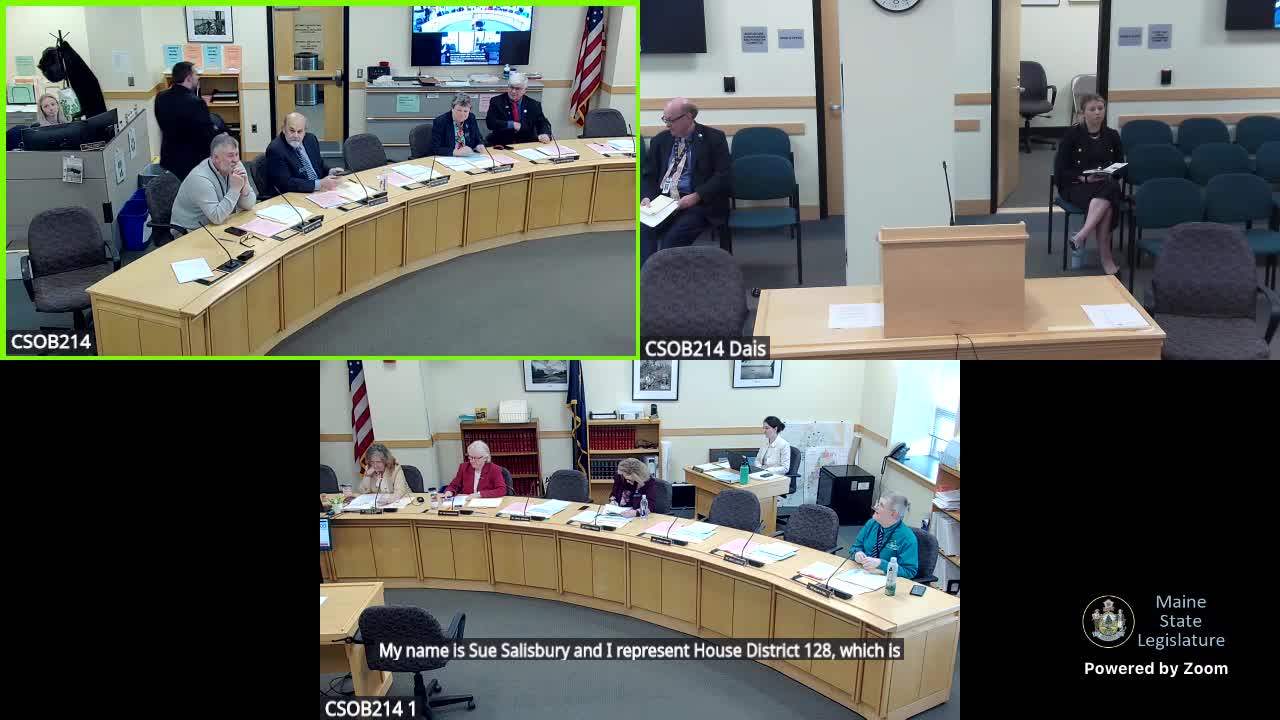
Augusta, Maine — The Joint Standing Committee on State and Local Government on Monday held a combined public hearing on about 11 bills that would change how Maine selects several constitutional officers and the state auditor, with proponents urging greater accountability and opponents warning of politicization and campaign costs.
Committee members arranged a single, combined hearing to allow witnesses to testify once for all related proposals. Representative Sue Salisbury presented LD 1052, a resolution to amend the Constitution of Maine to make the office of state auditor a constitutional office. "The Auditor would be chosen quadrinally by a joint ballot of the Senators and Representatives in the Convention," Salisbury said in opening remarks. Salisbury identified the bill as submitted on behalf of Maine State Auditor Mat Dunlap.
Mat Dunlap, who identified himself as State Auditor, told the committee that "auditor independence is really a cornerstone of the work and of objectivity." Dunlap said placing the auditor in the constitution would protect the office's independence over time and cited historical precedent for making other offices constitutional.
Representative Billy Bob Faulkingham, who said he sponsored a package of bills, told the committee "Maine is one of a few states in the country where our constitutional officers and state auditor are appointed by the legislature." He described his bills as proposing popular election of the secretary of state, attorney general and treasurer, and a separate proposal to allow the public to elect the auditor. Faulkingham said the proposals aim to give voters a direct role and increase public confidence.
Senator Rick Bennett and Senator Joseph Martin separately presented amendments and proposals that take different approaches: Bennett proposed delaying implementation or changing the legislative election process to an open ballot, while Martin presented LD 508, a resolution proposing popular election of constitutional officers. Senator Joe Baldacci argued that combining reforms with ranked-choice voting could increase the chances of securing the two-thirds legislative votes needed to send a constitutional amendment to voters.
Supporters emphasized accountability and public trust. "Allowing the people of Maine to decide who holds these positions of power and authority will provide another level of responsibility and give our citizens more faith in their government," Senator Rick Bennett said. Proponents also argued that popular elections would produce greater public engagement and a clearer accountability line to voters.
Opponents, including citizen William Clardy, cautioned against turning technical or administrative offices into statewide political campaigns. "I actually am testifying pretty much in opposition to almost all the bills," Clardy said, arguing that high-profile popular elections can raise campaign costs, politicize technical duties and shift attention away from administrative competence.
Witnesses also raised operational questions about qualifications and timing. Several presenters said a requirement that a state auditor be a certified public accountant is important; Representative Faulkingham noted the recent example of an auditor who obtained certification after appointment. Senators and representatives discussed whether statewide elections should be held during presidential cycles, gubernatorial cycles, or delayed to avoid immediate turnover and how the legislature might secure the two-thirds threshold necessary to send constitutional amendments to voters.
Committee members and sponsors requested additional information for the work session, including comparative materials on how other states select constitutional officers, and technical guidance about whether different voting systems (for example, to accommodate ranked-choice voting) would be needed if some proposals were enacted.
The hearing drew a mix of legislators, state officials and citizens. Committee staff asked in-person witnesses to provide 20 copies of any printed testimony and noted that electronic testimony is available through the legislature's testimony portal.
The committee did not take votes on the package during the hearing. Members said they will consider the bills together at the work session, and several sponsors indicated a willingness to negotiate on matters such as ranked-choice voting or timing to build broader support.
The proposals heard include LD 1052 (Representative Sue Salisbury), LD 148 (statewide popular auditor election proposals presented by multiple sponsors), LD 455 (Senator Rick Bennett), LD 11 93 (Senator Bennett; open ballot convention election), LD 508 (Senator Joseph Martin presenting Trey Stewart's bill), LD 1068 (Senator Bradstreet presenting a popular-election bill for state auditor), and LD 1161 (Representative Fredette's attorney general popular election proposal), among others. Some bill numbers were presented in package testimony; the committee's docket lists all bills for the combined hearing.
The committee scheduled a work session to review the bills and requested written materials, including: a list of how each other state selects the offices at issue, and clarification about implementation timelines and qualification requirements for offices such as the state auditor.
Supporters said the proposals are intended to expand direct accountability to Maine voters; opponents said they risk turning administratively technical offices into partisan campaigns. The committee will address these and other questions at its work session.