Get Full Government Meeting Transcripts, Videos, & Alerts Forever!
Get email alerts on the Igaming Tribal topic
No spam. Unsubscribe anytime.
Committee tables bill to authorize internet gaming licenses for Wabanaki nations; members ask for broader review
Summary
LD 1164 would have authorized federally recognized Wabanaki tribes in Maine to obtain internet gaming licences and require a 16% tax cascade to specified public funds. The committee tabled the bill after hearing fiscal, regulatory and public‑health questions and as legislators requested more tribal consultations and comparative state experience.
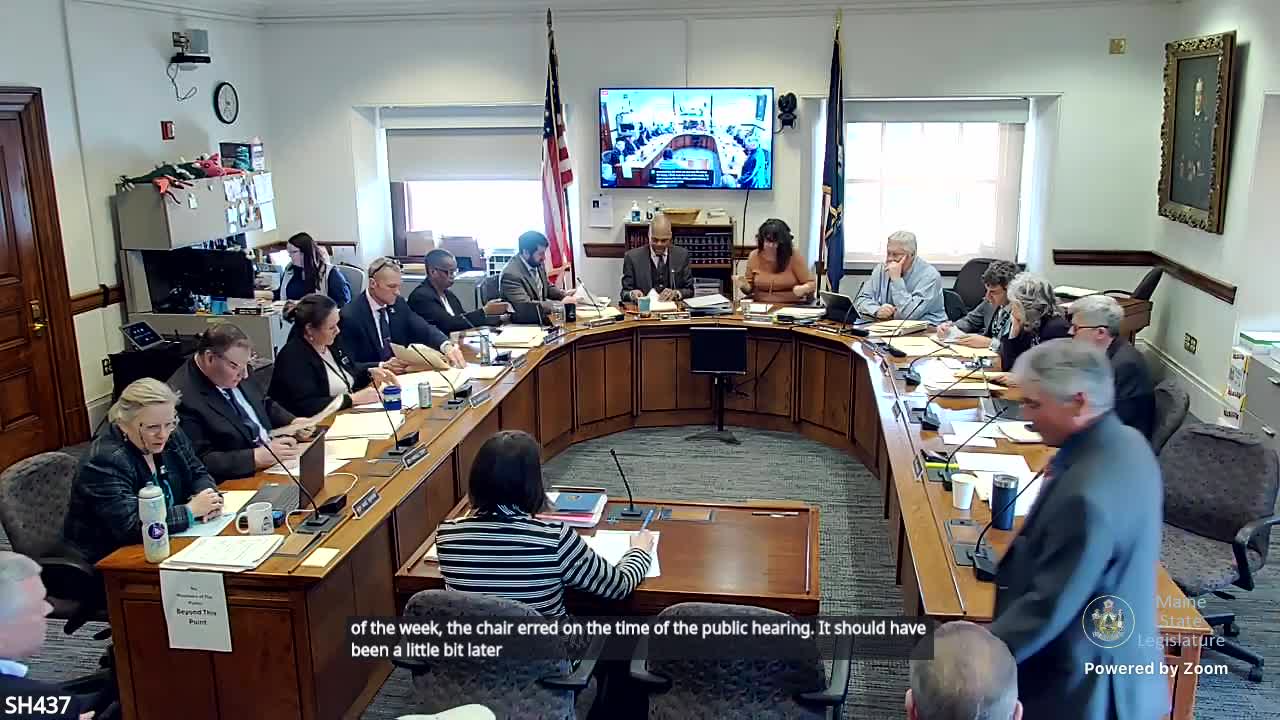
The Joint Standing Committee on Veterans and Legal Affairs tabled LD 1164, an act that would authorize internet gaming licenses for federally recognized Wabanaki nations and set a 16% levy on adjusted gross internet gaming receipts for a specified cascade of public funds.
Ms. Olsen, the committee analyst, walked members through the bill's structure: each federally recognized tribe could obtain one internet gaming license, the Director of the Gambling Control Unit would regulate mobile/digital platforms, license fees would be $50,000 annually, and suppliers and key personnel would require licensure. The bill proposed a 16% allocation of adjusted gross internet gaming receipts to a distribution that would fund the Gambling Control Unit, problem gaming treatment, E‑911, opioid treatment, emergency housing relief, and the Maine Veterans Homes Stabilization Fund.
Analysts noted prior committee work on a nearly identical bill (LD 1777) from the prior legislature and provided an older fiscal note and an NCSL comparison showing seven states currently permit online casinos or iGaming in some form. Witnesses raised concerns about net revenue impacts to brick‑and‑mortar casinos, employee location of iGaming support services (Penn Entertainment representatives told the committee support is often based in Pennsylvania), and potential equal‑protection challenges; Penn Entertainment submitted an advisory opinion from Rudman Winchell warning that exclusive tribal iGaming authorization could face constitutional challenge.
Chief William Nicholas of the Passamaquoddy Tribe testified that tribal leaders had discussed the proposal with other chiefs and that Caesars lobbyists had appeared at prior hearings; he said he was not aware of tribal opposition. Committee members asked for more information about tribal positions, job impacts, the adequacy of public health and problem‑gaming services, and the legal implications of carving out exclusive rights. Representative Grama (the bill sponsor) and Ms. Olsen noted that similar provisions had gone through FOA (fiscal/administrative) review in the prior session and that stakeholders had negotiated cascade distributions.
Representative Mallon moved to table LD 1164; the motion was seconded and approved unanimously. Committee members requested additional materials: tribal consultation summaries, updated fiscal estimates, employment and revenue analyses from casino operators, and public‑health capacity assessments before taking further action.