Get Full Government Meeting Transcripts, Videos, & Alerts Forever!
Get email alerts on the Appliance Standards topic
No spam. Unsubscribe anytime.
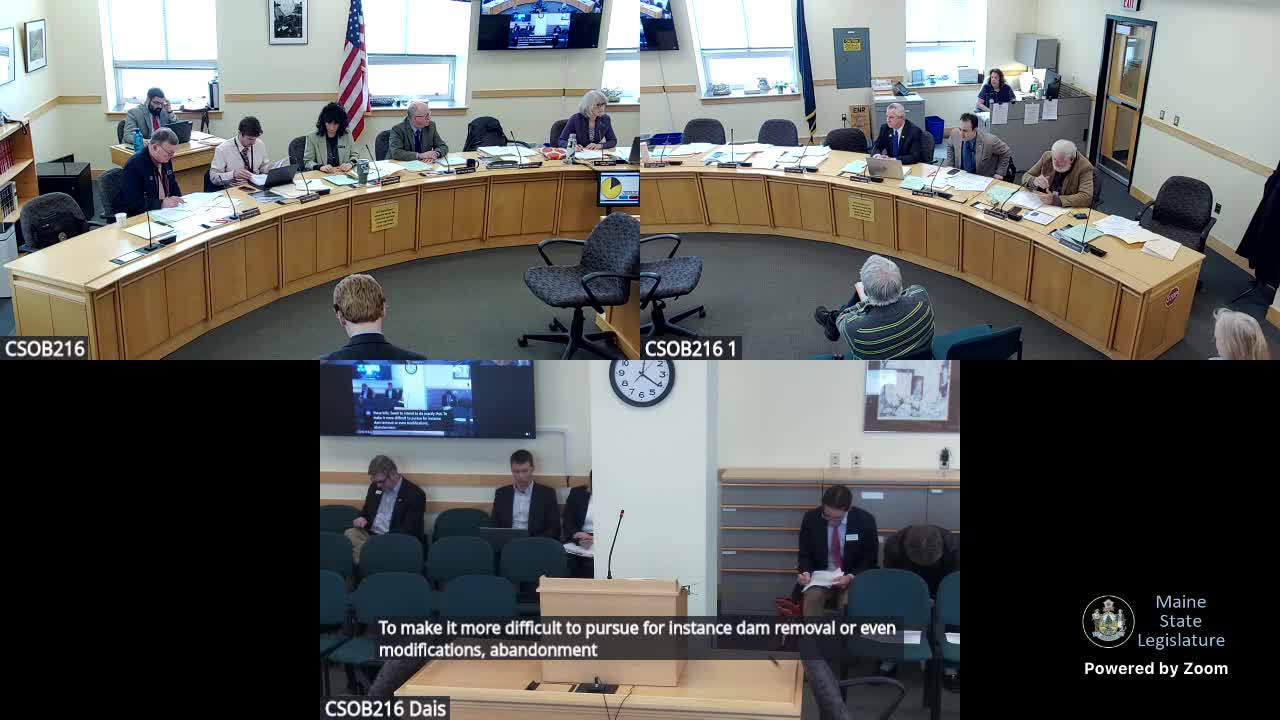
Committee hears support and some business concern for expanding appliance energy and water standards (LD 11 58)
Summary
Rep. Art Bell—s LD 11 58 would add categories of commercial and residential appliances to Maine—s efficiency standards (which Gov. Mills enabled in 2021). Proponents cited projected consumer savings and emissions reductions; hospitality groups warned of disproportionate impacts on small or seasonal businesses and supply-chain pressures.
Representative Art Bell presented LD 11 58 to expand the list of products the Department of Environmental Protection may address via major-substantive rulemaking under Maine—s appliance, energy and water standards law. The 2021 law (LD 940) authorized DEP to adopt efficiency standards for an initial set of products; the current bill would add additional commercial and residential categories including commercial dishwashers, commercial ovens, commercial food steamers, commercial fryers, commercial battery chargers, certain gas fireplaces, residential ventilating fans, and water softeners.
DEP Bureau of Air Quality Director Jeffrey S. Crawford testified neither for nor against the bill but outlined implementation issues. He noted that many product categories benefit from existing certification programs such as EPA Energy Star and WaterSense and that states commonly rely on those external certification lists during rulemaking. The department cautioned that some categories (notably water softeners and certain gas fireplaces) may lack widely used certification standards and that availability and upfront cost for compliant models can be a concern for businesses; DEP emphasized that rulemaking would need to be pragmatic about availability and cost impacts.
Proponents emphasized the bill—s consumer and climate benefits. Kathy Breen of Maine Conservation Voters said expanded standards would cut energy and water use and cited an estimate of roughly $169 million in utility bill reductions for Maine consumers by 2050 if standards are adopted for the listed items. Brian Fady of the Appliance Standards Awareness Project and Dylan Jaffe of Consumer Reports described the policy as a low-cost, established tool to reduce wasteful energy use and noted many other states have adopted similar standards.
Hospitality Maine opposed or raised concerns about the bill—s effect on small, seasonal and low-margin businesses. Nate Cloutier said restaurants and lodging operators often face narrow profit margins and uncertain supply chains and that some commercial equipment can have long lead times; he recommended consideration of targeted financing or grant programs (as Vermont—s Clean Energy Development Fund does) to ease the transition for smaller operators.
Committee members asked technical questions about which products would be covered, how out-of-state vendors would be affected, and whether the DEP timeline and rulemaking approach would allow time for industry to adapt. DEP staff said the statute contemplates major-substantive rulemaking and that the department can align standards with existing certification programs and public databases of compliant products. No committee vote was taken; the committee indicated it would likely ask DEP and stakeholders to refine availability and economic-impact information for a work session.
Ending: LD 11 58 drew broad support from environmental and consumer groups and caution from business groups with narrow margins; the committee requested more detailed market and cost information before moving forward.