Get Full Government Meeting Transcripts, Videos, & Alerts Forever!
Get email alerts on the Dam Removal Policy topic
No spam. Unsubscribe anytime.
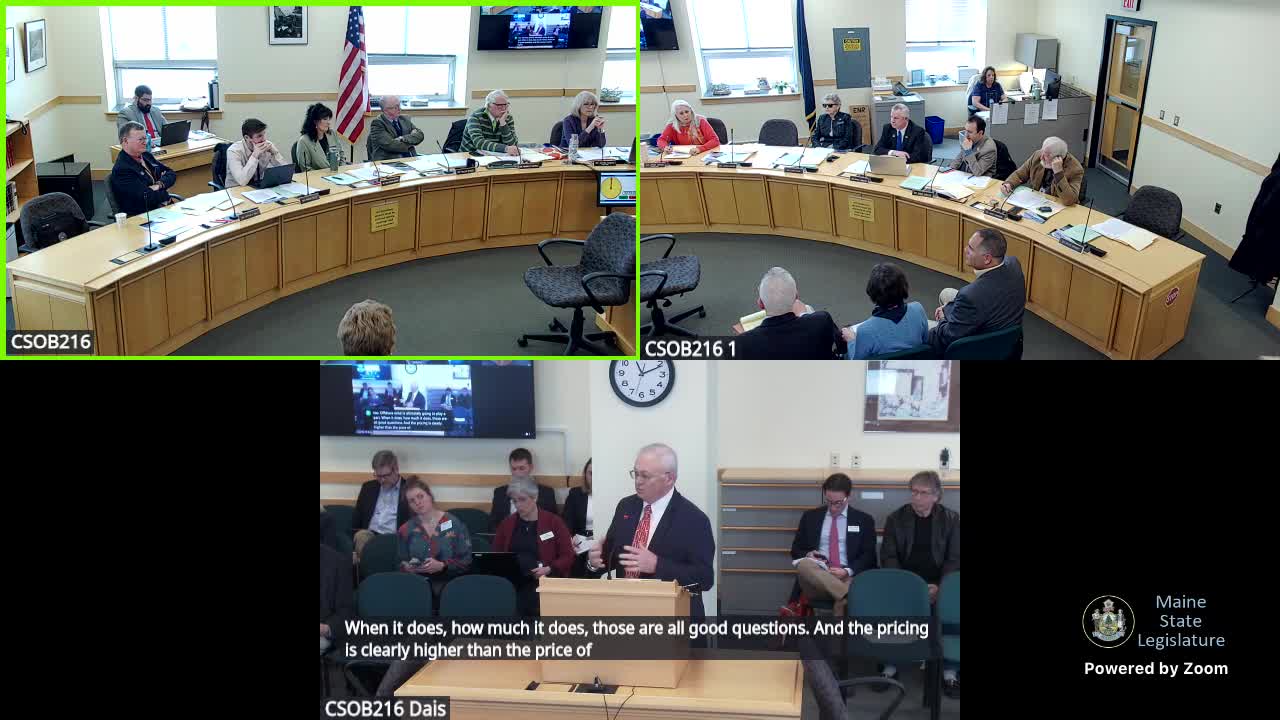
Committee hears competing views on moratorium, sale and community protections for dam removals (LD 212 & LD 430)
Summary
Rep. Campbell—s bills would require economic valuation, market checks and extended timelines before dam removal and would temporarily bar hydropower dam removals; DEP and conservation groups opposed, saying existing law and permitting already address these issues and a moratorium would stall ongoing restoration projects.
Representative Campbell introduced two related measures (LD 2 12 and LD 4 30) that would: (1) require owners seeking to remove hydropower dams to provide an evaluation of the dam—s generating capability and proof that they made reasonable efforts to sell the dam before removal, and (2) temporarily prohibit the department from approving removal of hydropower dams and require studies of negative outcomes of removals (sunset 01/01/2027). The sponsor described local cases (including Bucksport) where municipal purchasers were exploring alternatives and asked for extra time for towns to organize purchase or mitigation plans.
Laura Pei, DEP hydropower coordinator, testified in opposition to LD 2 12 and LD 4 30. DEP said owners applying to remove a dam have typically already evaluated economics and often have surrendered FERC licenses before applying to the state; requiring a statutory prohibition on removal until an owner demonstrates unsuccessful sale attempts would be unreasonable and could leave high-hazard structures in place. DEP also objected to Section 10 of LD 4 30, saying its mandate would require the agency to develop programs "outside of the Department—s jurisdictional scope." DEP supported selected timeline extensions in Sections 2— 8 that overlap with LD 62 but urged against a moratorium that could delay planned projects and federal surrenders.
Opponents including the Natural Resources Council of Maine, Atlantic Salmon Federation, Maine Rivers and Trout Unlimited testified that the bills were unnecessary, duplicative of existing state and federal processes (MWDCA, DEP chapter 450 rules, FERC licensing and NEPA), and could derail projects that restore habitat, reduce public-safety risk and resolve aging infrastructure. The groups emphasized that dam removals are costly, long-running, and typically pursued where the structures are obsolete or unsafe; a moratorium would stall ongoing community-backed projects and could create environmental and safety risks if high-hazard dams remain in place.
Several municipal and local stakeholders described existing community efforts to plan for specific dams. DEP and conservation witnesses asked the committee to consider narrower, site-specific approaches rather than broad statewide moratoria. Kennebunk Light & Power District noted it has been working through the FERC surrender process for years and urged any new statute to grandfather projects already in active FERC surrender proceedings.
The committee asked DEP and other witnesses for additional information at a future work session. No formal action was taken during the public hearing; DEP said it would attend work sessions and that existing statute (Title 30-A and Title 38 provisions) and permitting requirements already govern many aspects of dam siting, removal and operation.
Ending: The hearing exposed a policy fault line: sponsor concerns about community notice and economic valuation versus agency and conservation group worries that a blanket moratorium would have harmful, unintended consequences. The committee requested more targeted options and technical input for its work session.