Get Full Government Meeting Transcripts, Videos, & Alerts Forever!
Get email alerts on the Elections Uocava topic
No spam. Unsubscribe anytime.
Veterans and Legal Affairs committee tables bill to expand municipal absentee ballots for military and overseas voters
Summary
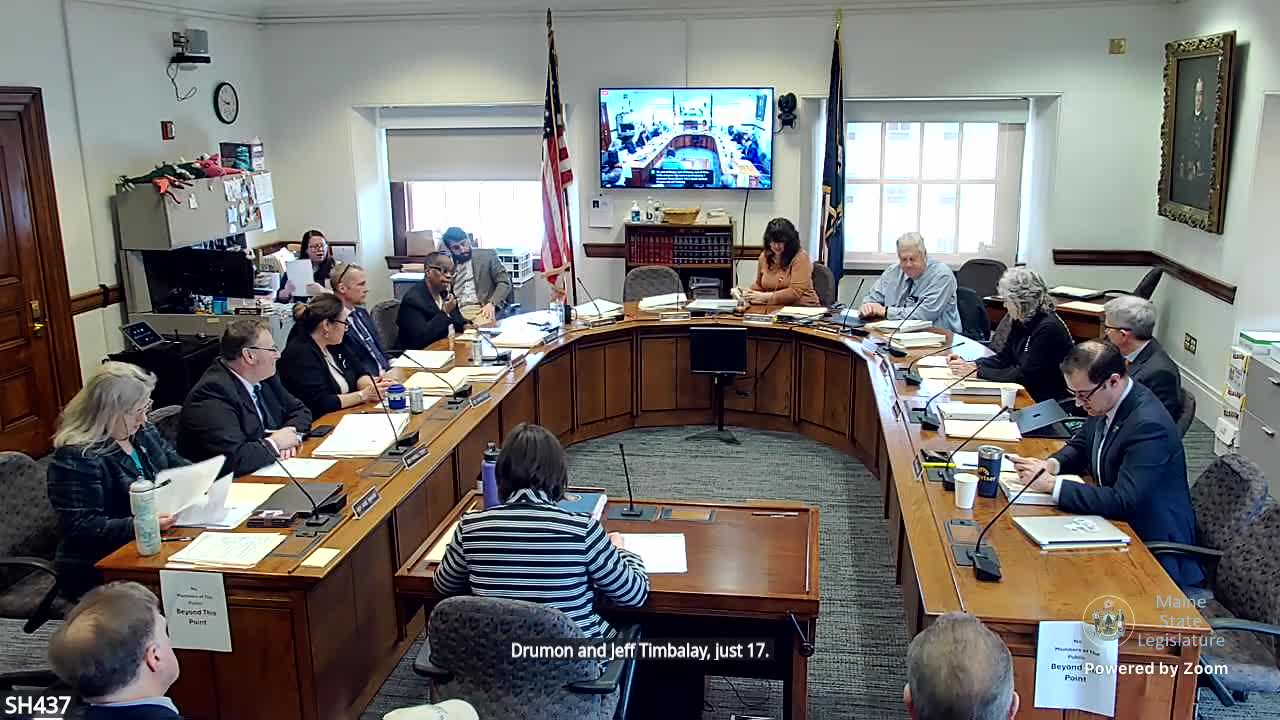
The Joint Standing Committee on Veterans and Legal Affairs on Monday tabled LD 1148, which would have required municipalities to provide local ballots to the Secretary of State so uniformed service and overseas voters could receive municipal absentee ballots when municipal and statewide elections coincide.
The Joint Standing Committee on Veterans and Legal Affairs on Monday tabled LD 1148, a bill that would require municipalities holding municipal elections on the same day as statewide elections to provide local ballots to the Secretary of State so that uniformed service and overseas (UOCAVA) voters could receive municipal absentee ballots through the Secretary’s office.
Committee chair Rep. Laura Csupica, House Chair of Veterans and Legal Affairs, opened the work session and asked the committee analyst, Ms. Olsen, to present the bill and related materials. Ms. Olsen summarized the proposal: it would direct municipalities to provide a copy of their local ballots to the Secretary of State, allow UOCAVA ballot applications to remain valid for 18 months for municipal elections held with statewide contests, and authorize the Secretary of State to receive and transmit municipal ballots to eligible UOCAVA voters.
The Secretary of State’s office told the committee the proposal raises substantial implementation challenges and would require new technology, additional staff, and new procedures to protect election security and accessibility. Secretary Shannon Bellows and Deputy Secretary Julie Flynn provided written and oral testimony describing three major investments: procurement or expansion of an IT system, a new municipal/local services section within the Elections Division, and ongoing maintenance costs that scale with the number of ballots. They noted that municipal timelines vary, that some municipal elections (e.g., certain school budgets) do not align with statewide election schedules, and that federal timelines (UOCAVA ballots must be issued 45 days before an election in some circumstances) could make the logistics difficult.
Committee members pressed staff on data about UOCAVA turnout and return rates. The Secretary of State said Maine’s share of UOCAVA voters as a percentage of total voters is slightly above the national average and that the office publishes reports on absentee requests and returns, but it does not maintain a static denominator for the population of overseas citizens originating in Maine. The office offered to provide more detailed analytics (for example, requests and returns since 2018) but warned such a retrospective analysis would be a substantial project requiring staff time and could require overtime.
Representative Dave Boyer moved that the committee report the bill as “Ought Not to Pass”; Representative Anne Fredericks seconded. Representative Boyer later withdrew that motion. Senator Timberlake then moved to table LD 1148; the motion was seconded and approved unanimously by members present. The committee recorded the bill as tabled.
Committee members and staff asked for follow-up information if the bill is revisited, including: (1) a clearer fiscalnote from the Office of Fiscal and Program Review that includes the costs of an RFP, vendor maintenance fees, and projected staffing; (2) examples of how other states manage municipal ballot transmission for overseas voters; and (3) data showing the number of UOCAVA ballot requests and returns, and the incremental cost to the Elections Division for recent recounts and ballot processing work.
The committee did not take final action on policy details; members said they were open to studying the issue further but stressed that any change would require meaningful funding and operational planning before implementation.