Get Full Government Meeting Transcripts, Videos, & Alerts Forever!
Get email alerts on the Hydropower Permitting topic
No spam. Unsubscribe anytime.
Maine lawmakers hear divided testimony on bill to weigh hydropowerbenefits in DEP decisions
Summary
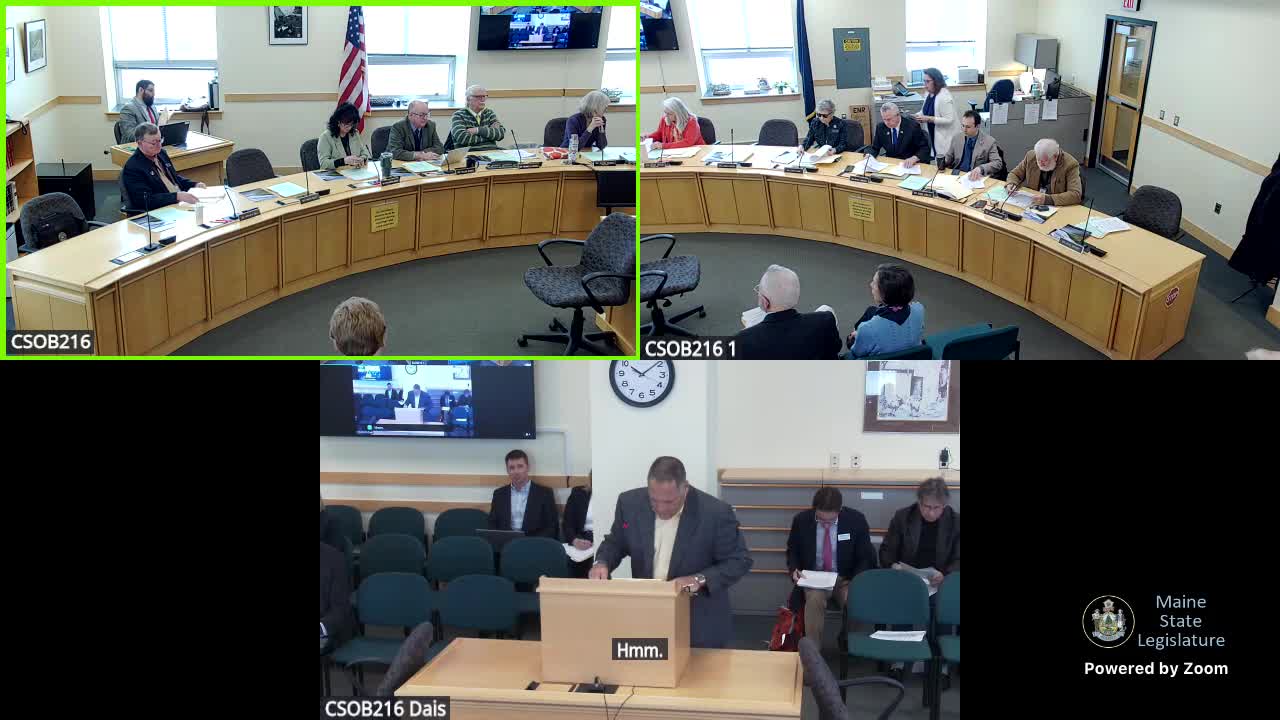
Sen. Brad Farrin, sponsor of LD 12 10, told the Environment and Natural Resources Committee the bill would make sure state regulators "take into account the full benefits of hydropower, not just the environmental impact, but also its role in our clean energy goals, decarbonization efforts and baseline power loads needs."
Sen. Brad Farrin, sponsor of LD 12 10, told the Environment and Natural Resources Committee the bill would make sure state regulators "take into account the full benefits of hydropower, not just the environmental impact, but also its role in our clean energy goals, decarbonization efforts and baseline power loads needs." Farrin, who represents Senate District 3, introduced the bill as an effort to preserve and expand hydropower generation in Maine.
The measure would instruct the Maine Department of Environmental Protection (DEP) to weigh the energy, economic and jobs benefits of hydroelectric facilities alongside environmental and aquatic impacts when it evaluates projects and issues water-quality certifications under Section 401 of the Clean Water Act. Proponents said the change is needed to avoid losing baseload renewable generation as relicensing and permitting move forward.
Industry and local officials gave testimony that linked potential dam removal or refusal to relicense dams with direct impacts on businesses and communities. Jim Brooks, environmental manager for Sappi Somerset Mill (Skowhegan), said the Shawmut Dam—s impoundment lets the paper mill withdraw and discharge process water and that removal of the dam would "devastate" operations. Brooks said Sappi has invested in the mill and that the facility supports "about 750 well-paying jobs" locally and has many contracted suppliers. He urged the committee to ensure DEP considers those economic consequences in its decisions.
Other proponents pointed to grid reliability and the cost of alternative resources. Krista West of the Maine Forest Products Council said hydropower provides stable baseline generation needed to integrate intermittent wind and solar and cited state and regional studies. Stephen Hudson, an attorney representing the Industrial Energy Consumer Group, told the committee large hydropower impoundments currently provide long-duration storage services that would be far costlier to replicate with batteries.
Conservation groups strongly opposed LD 12 10. Luke Frankel of the Natural Resources Council of Maine said the statutory and regulatory processes used now "already require" DEP to consider economic and energy impacts and warned the bill could be redundant and invite legal conflict with FERC relicensing. Greg Ponti of the Maine Council of Trout Unlimited and John Burrows of the Atlantic Salmon Federation said state and federal authorities already evaluate water quality and fish passage as part of FERC relicensing and Section 401 certification; both organizations warned the bill—s "notwithstanding" language risked subordinating fish and habitat protections.
Several speakers and committee members pressed for clarity on technical points. Questions addressed whether the statute would remove DEP—s authority to require fish passage, how the state—s water-quality rules apply to impoundments versus flowing river reaches, and how FERC and the state processes interact. DEP staff were asked to provide a history of state water-quality standards and related rule updates for a work session; DEP agreed to supply that material.
Committee members also asked proponents for data. Witnesses referenced a 2022 economic analysis for the Kennebec dams that estimated almost $8.9 million in property taxes paid by four regional dams and associated mills in 2021, and industry witnesses cited investment and job figures for individual mills. Multiple witnesses said their figures came from studies or internal company data and offered to provide more documentation at a work session.
No formal action or vote was taken at the hearing. The committee indicated there will be a follow-up work session to review the technical and legal issues raised, and several agencies and stakeholders were invited to provide additional materials, including DEP—s water-quality history and economic and energy data cited by witnesses.
Ending: The hearing made clear the competing priorities at stake: industry and regional economic concerns and the role of hydropower in Maine—s electricity mix versus aquatic habitat and long-standing water-quality protections. Lawmakers requested more documentary evidence and regulatory history before moving forward.