Get Full Government Meeting Transcripts, Videos, & Alerts Forever!
Get email alerts on the Healthcare Consolidation topic
No spam. Unsubscribe anytime.
Minnesota committee lays over Healthcare Accountability Act to increase ownership transparency and curb corporate interference in care
Summary
The Health Finance Policy Committee heard testimony supporting House File 2779, which would require greater transparency around health system ownership and limit corporate interference in clinical decisions; the bill’s author's A1 amendment was adopted and the measure was laid over for possible omnibus inclusion.
Vice Chair Ryar introduced House File 2779, the Healthcare Accountability Act, saying it would increase transparency around ownership and financing of health systems and clarify prohibitions on corporate practice of medicine. The committee adopted an A1 author's amendment and laid the bill over for possible inclusion in an omnibus bill.
The bill's sponsor, Vice Chair Ryar, told the committee that recent consolidation among hospitals, clinics and insurers has increased prices without improving care and that private equity ownership has been associated in some studies with worse outcomes. "Corporate profit interests are interfering in our medical care and putting healthcare costs out of reach and we need to stop them," Ryar said. The bill would add a statutory section addressing corporate practice of medicine and would require disclosures about ownership and financing relationships, the sponsor said.
Testimony in support came from workers and clinicians describing impacts in Greater Minnesota. Leslie Caup, representing SEIU Healthcare Minnesota & Iowa, described service reductions after Mayo Clinic acquisitions in Albert Lea and surrounding towns and urged action to make ownership more visible so communities can respond. "When we don't know if a global hedge fund is calling the shots for our local hospital, we cannot know how to fight back," Caup said. Dr. Alita Borud, a physician advocate for rural health care, cited academic studies linking consolidation and private equity ownership to increased referrals to higher-priced facilities and to financial structures that can leave hospitals vulnerable to bankruptcy.
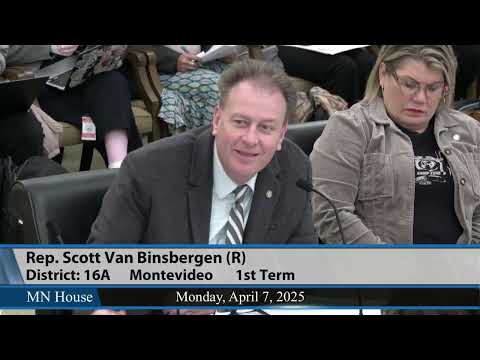
Committee members asked about thresholds and scope. Representative Van Binsbergen and others asked whether the bill's revenue or reporting thresholds would include out-of-state revenues; House staff indicated they would provide clarifying detail after the hearing. Some members expressed concern that stricter disclosure or ownership limits could reduce capital investment in rural areas; Ryar replied the bill does not prohibit investment but seeks to preserve clinicians' authority over medical decisions.
The committee approved the A1 author's amendment by voice vote and the committee chair renewed the motion to lay House File 2779 over for possible omnibus inclusion.
The committee did not take a final vote on the bill; the action recorded was to adopt the amendment and lay the bill over for further consideration.