Get Full Government Meeting Transcripts, Videos, & Alerts Forever!
Get email alerts on the Infrastructure Fund Balances topic
No spam. Unsubscribe anytime.
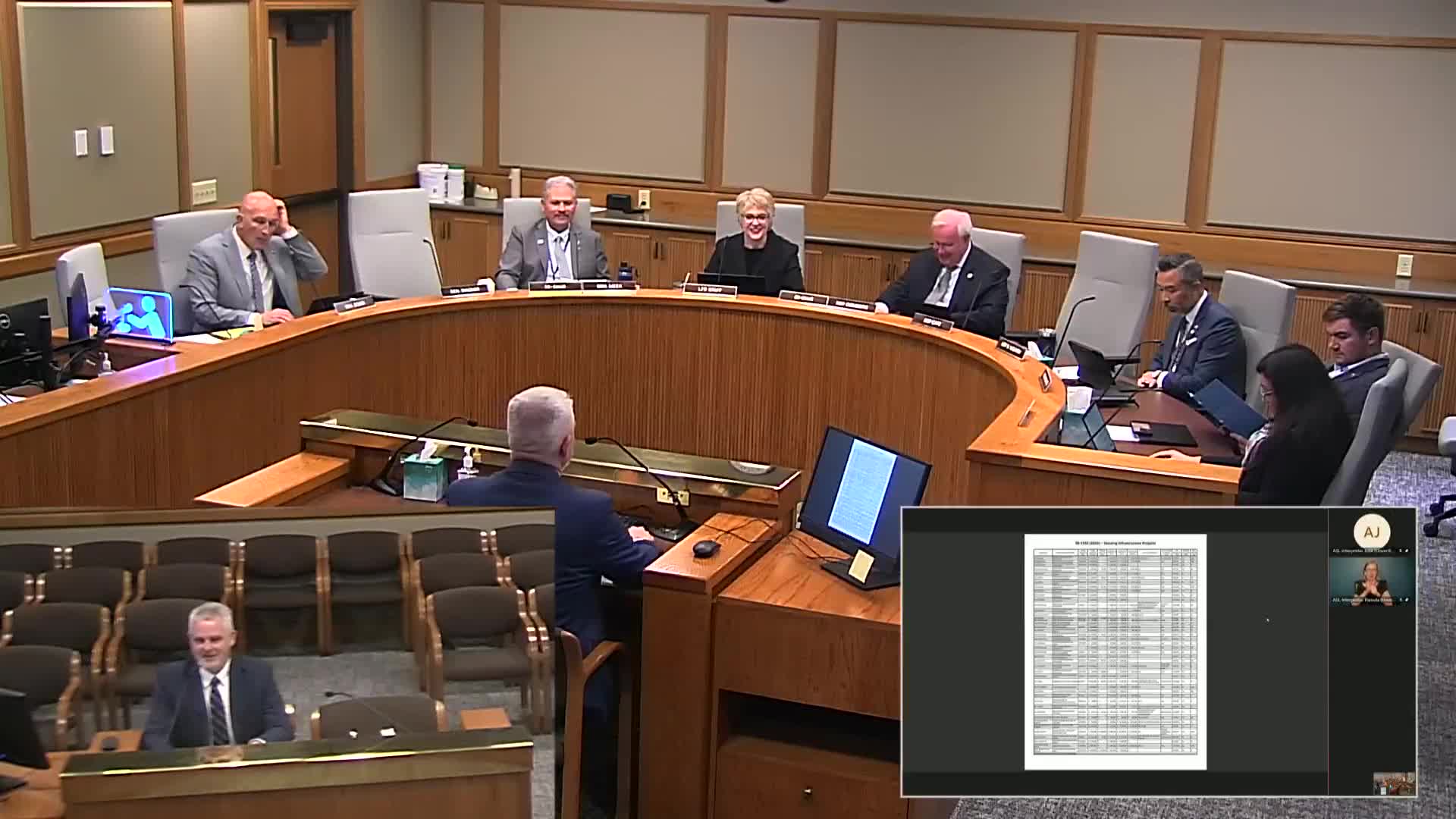
Business Oregon briefs subcommittee on infrastructure fund balances, forecast model and demand for loans and grants
Summary
Business Oregon presented a high-level forecast of multiple infrastructure funds, highlighted demand for the Special Public Works Fund and childcare infrastructure bond rounds, and noted some funds would go negative without new legislative allocations.
Business Oregon staff told the Ways and Means Subcommittee on Transportation and Economic Development on April 7 that several infrastructure funds are under active demand and that some will require legislative recapitalization to sustain current award levels.
Ed Taber, Business Oregon’s infrastructure and program services director, said the department presented a forecast model covering multiple programs administered by the Infrastructure Finance Authority (IFA), including the Special Public Works Fund (SPWF), Port Revolving Loan Fund, Marine Navigation Fund, Brownfields funds and the Childcare Infrastructure Program. He described the model as a high-level spreadsheet and said staff are developing a more robust financial model with advisors.
Taber highlighted SPWF as the agency’s flagship program and said it mainly provides loans and below-market interest financing for municipally owned projects, including ports and special districts. "There are approximately 70 projects drawing funds," Taber said, and the SPWF typically sees demand near $80 million per biennium. He said SPWF and other revolving loan funds generate revenue through repayments and interest earnings, and Business Oregon averages repayments and interest over a five-year period for forecasting.
On childcare infrastructure, Taber said House Bill 3005 allocated $50 million in lottery bonds to establish the Childcare Infrastructure Fund. Round 1 received 726 applications requesting roughly $280 million; about $10 million was awarded to 64 applicants (61 under contract) with $7.2 million drawn to date. Round 2 (about $15 million) was open and Round 3 (about $25 million) was expected to open in mid-summer, contingent on bond sales and legislative direction.
Taber said several programs show low or negative projected fund balances without new appropriations; he noted the Marine Navigation Fund and Port Revolving Loan Fund had not been recapitalized in over a decade. He added that some bond authorizations previously approved by the legislature will not be fully sold because existing cash balances can cover part of the awards.
Committee members asked for capitalization history and clarification that childcare bond dollars are restricted to fixed (capital) assets because they are lottery-backed. Taber confirmed lottery bond restrictions preclude use for operating costs and staff confirmed the childcare program funds immovable assets only.
Taber concluded by noting the IFA had funded $74 million of projects in the most recent biennium and $85 million in the prior biennium, indicating continued strong demand. He said policy option package requests (POPs) had been filed to recapitalize some funds and that awards without new legislative allocations would be limited where projected balances go negative.