Get Full Government Meeting Transcripts, Videos, & Alerts Forever!
Get email alerts on the Baitfish Regulation topic
No spam. Unsubscribe anytime.
Committee amends baitfish‑trap rule: winter checks can be less frequent, to be reviewed after three years
Summary
The Inland Fisheries and Wildlife Committee amended LD 971 in work session to allow baitfish traps in inland waters to be checked every 21 days from Nov. 1 through April 1, while retaining the seven‑day requirement April 2–Oct. 31; the department will report back after three years.
The committee opened a work session on LD 971, which would repeal the statutory requirement that baitfish traps in inland waters be checked at least once every seven days.
Opponents at the public hearing had argued frequent checks protect trapped fish and limit bycatch and litter, while proponents said the seven‑day requirement creates safety risks and enforcement challenges in harsh winter conditions. The department and wardens urged caution about lengthening the interval and recommended, if amended, a shorter extension than nine weeks.
In the work session the committee discussed compromise amendments. Representative Wood proposed keeping the seven‑day check requirement from April 2 through Oct. 31, and extending the maximum interval in the cold‑weather season to 21 days from Nov. 1 through April 1, with a department report back after three years. Fisheries Director Elizabeth Laddy told the committee the department would prefer 14 days to reduce fish stress and bycatch risk but supported a trial with regular reporting.
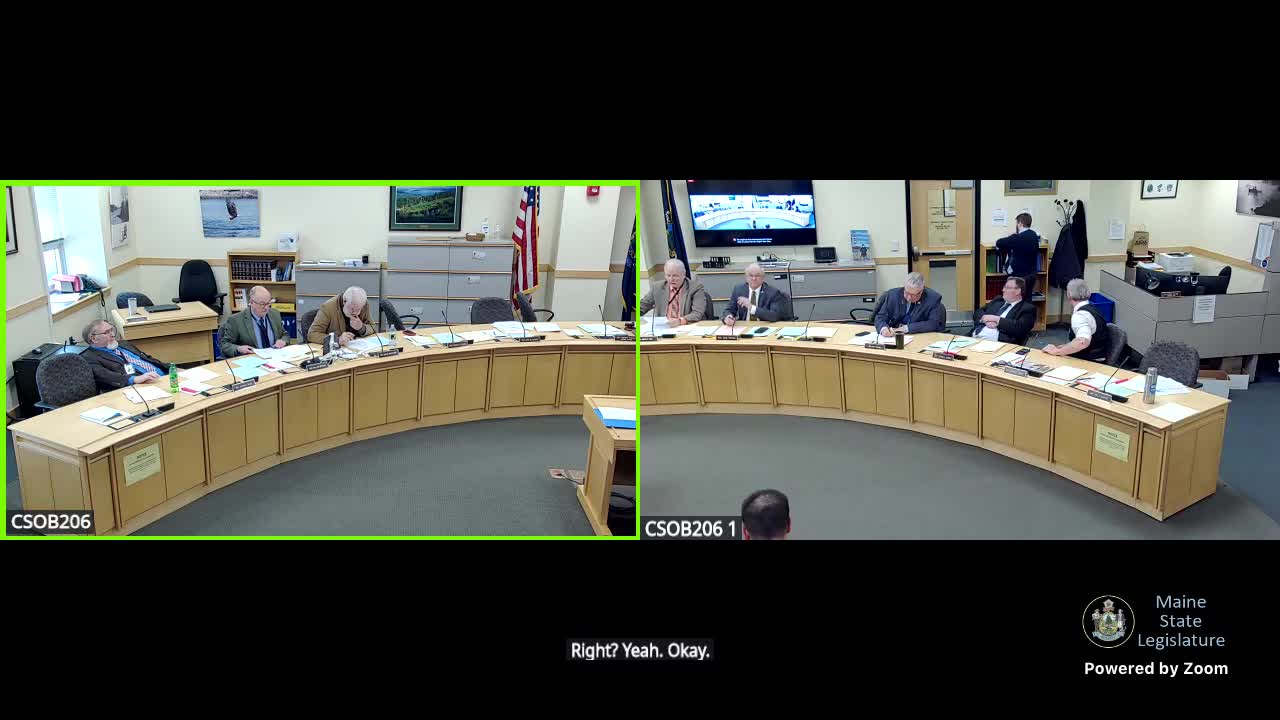
Representative Wood moved to pass the bill as amended to allow a 21‑day maximum between checks during the November–April period, retain seven‑day checks during the warmer season, and direct the department to report back in three years; Representative Thorn seconded. The committee voted unanimously among members present (the clerk recorded “Unanimous of those present, 3 absent”).
Committee discussion emphasized the amendment was intended to reduce winter safety risks for fishers traveling in hazardous conditions while maintaining harvest and conservation protections through a multi‑year review and departmental reporting. Members said commercial and recreational bait dealers supported the 21‑day winter interval and that three‑year reporting would allow the department and wardens to assess biological impacts and any enforcement issues.
The committee closed the work session with the amendment to be included in the committee report and with direction for the department to provide follow‑up information after the trial period.