Get Full Government Meeting Transcripts, Videos, & Alerts Forever!
Get email alerts on the Agriculture Infrastructure Fund topic
No spam. Unsubscribe anytime.
Maine advisory board elects co-chairs, sets September target to define agriculture infrastructure fund priorities
Summary
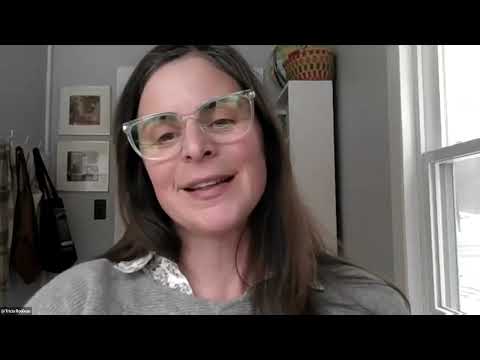
The advisory board to the Maine Agriculture, Food and Forest Products Infrastructure Fund elected Senator Craig Hickman and Tricia Rouleau as co-chairs and set a near-term target of September to decide priorities and instruments so staff can begin rulemaking, board members said at the group’s first official meeting, held virtually.
The advisory board to the Maine Agriculture, Food and Forest Products Infrastructure Fund elected Senator Craig Hickman and Tricia Rouleau as co-chairs and set a near-term target of September to decide fund priorities and instruments so staff can begin rulemaking, board members said at the group’s first official meeting, held virtually.
The board’s work will guide how the fund is structured and how the department distributes money once additional appropriations are available. Craig Lapine, director of the Bureau of Agriculture, Food and Rural Resources at the Maine Department of Agriculture, Conservation, and Forestry, opened the meeting by describing the board’s mandate and agenda and said the group should consider a consistent name for the fund. "We are functioning under, you know, a statutory mandate," Lapine said.
The board adopted draft working agreements presented by department staff to set expectations for meetings and decisionmaking. Jody, staff in the commissioner’s office at the Department of Agriculture, Conservation, and Forestry, summarized the draft principles, including starting and ending meetings on time, distributing materials 10 days in advance when possible, striving for equal airtime, and shifting to a more formal voting process once the board begins making funding decisions. "Ultimately what we're trying to get to sometime later this year...is a framework for funding projects," Jody said.
As required by statute, the board reviewed its legal charge. Lapine reviewed Title 7, Section 320, noting that the statute defines terms such as "infrastructure," establishes the fund, and sets the board’s composition and responsibilities, including the ability to contract out services and to oversee expenditures. He emphasized that the board is advisory and that department staff will administer grants and hire program staff. "You are not being asked to staff this fund. Your role is really to provide directional advice," Lapine said.
Board members heard a detailed case study of the state PFAS fund from Beth Valentine, director of the PFAS fund, intended as a model for planning and implementation. Valentine said the PFAS fund was established by the legislature in 2022, was allocated $60,000,000, and was structured around four program categories: financial assistance to impacted producers, land (including purchasing PFAS‑impacted property at fair market value as if it were not contaminated), research, and health (including access to blood serum testing and mental‑health services). She described a planning process that used four subcommittees, two public hearings, and subsequent rulemaking; distribution of PFAS funds began in March 2024. "The advisory committee adopted the plan and recommended that the department begin implementation," Valentine said.
Consultants and partners described near‑term staff work and research to support the board. Erica Campbell, principal at InCommon Group, said her team is compiling an existing‑resources report and benchmarking state funds in Massachusetts, Michigan and Vermont. Campbell described interviews and an upcoming short survey for producers and technical‑assistance providers to inform the board’s decisions.
Lapine and staff proposed a tentative timeline and meeting cadence: monthly 90‑minute Zoom meetings on the last Wednesday of each month, with the board using June and July to dig into existing resources and possible instruments (grants, contracts, other mechanisms), August to synthesize work, and a target of making instrument and priority decisions by September so staff can begin rulemaking. Lapine said the AFPIF process differs from the PFAS experience because AFPIF has only partial appropriations; he told members that "not all the money...is there" yet but that the board should build the architecture now so funds can be deployed when they become available.
Members discussed meeting formats and agreed there is value in both regular virtual meetings and a small number of in‑person sessions spread across the state to improve relationship building and accessibility. Board members suggested two to three in‑person meetings, regional meeting locations, and advance scheduling to accommodate agriculture schedules. The board set Wednesday, June 25 as a date for a focus‑group style meeting tied to consultant work.
Votes at a glance - Senator Craig Hickman — elected chair (motion made and seconded; outcome: majority in favor, carried). - Tricia Rouleau — elected co‑chair (motion made and seconded; outcome: majority in favor, carried).
The meeting closed after a five‑minute public‑comment period; staff said future packets will include the working agreements and statute text and that co‑chairs and staff will debrief after each full meeting to refine agendas and deliverables.
(Reporting note: meeting materials and slide decks referenced at the meeting were not included in the transcript.)