Get Full Government Meeting Transcripts, Videos, & Alerts Forever!
Get email alerts on the Gaza Humanitarian Crisis topic
No spam. Unsubscribe anytime.
UN warns Gaza faces mass starvation as crossings remain closed
Summary
The United Nations warned that more than 2.1 million people in Gaza face severe shortages of food, medicine and fuel after more than a month with no sustained humanitarian deliveries; the UN urged immediate reopening of crossings and called for unconditional release of hostages.
The United Nations spokesperson warned Tuesday that more than 2,100,000 people in the Gaza Strip are “trapped, bombed, and starved again” after more than a month in which commercial and humanitarian supplies largely failed to enter the territory.
The spokesperson said the Office for the Coordination of Humanitarian Affairs (OCHA) and other UN agencies have reported that food, medicine, fuel and shelter supplies are piling up at crossings and that “assertions that there is now enough food for all Palestinians in the Gaza Strip are far from the reality on the ground.” The UN said vital equipment and commodities are running extremely low.
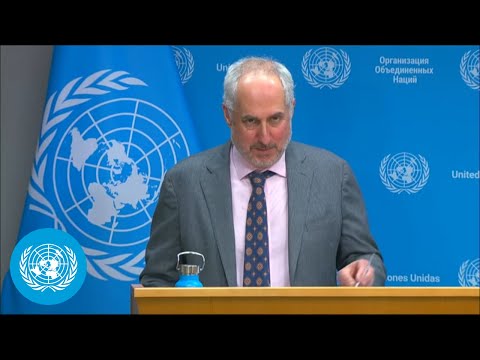
The warning came during the daily UN press briefing at UN headquarters in New York, where the spokesperson said that while the latest ceasefire enabled some deliveries, repeated denials of coordinated movements have prevented aid from reaching large parts of Gaza. “OCHA says all attempts to pick up commodities brought in and dropped at the crossings have been denied,” the spokesperson said, adding that Israeli authorities denied five of nine coordination attempts by UN workers the previous day.
UN agencies reported specific shortages, including severe shortfalls of medical equipment, oxygen pumps and routine childhood vaccines. The spokesperson cited an estimate that 80,000 doses of routine childhood vaccines were in Gaza but could not be distributed. The UN also said nearly 400,000 people — about 18% of Gaza’s population — have been displaced again since the breakdown of the ceasefire.
The UN reiterated calls for the immediate, sustained reopening of crossings for humanitarian goods and equipment, saying access is essential to survival. The spokesperson added that survivors in Gaza are being repeatedly displaced into ever-shrinking areas where basic needs cannot be met, and that civilian casualties continue to occur across the territory.
On hostages, the spokesperson said dozens remain in captivity with “extremely concerning reports on mistreatment” and repeated the UN position that all hostages “must be released unconditionally and immediately” and must be allowed visits by the International Committee of the Red Cross.
Reporters at the briefing raised three related developments: a leaked video of emergency workers being killed, which the spokesperson said had shocked UN staff; reports that polio vaccine shipments had been prevented from entering Gaza, which the spokesperson said they were not aware of any exception; and a separate Associated Press report that the U.S. had notified some UN partners that it had terminated contracts. On the AP report, the spokesperson said the UN had seen the story and was seeking details and encouraged inquiries to the agencies directly.
The UN also noted related regional security concerns: recent Palestinian rocket fire into Israel followed by a new Israeli displacement order covering more than 3 square kilometers in the Dar El Bala area, and ongoing incidents in southern Lebanon that UNIFIL described as violations of Security Council resolution 1701. The spokesperson named UN peacekeeping officials who briefed the Security Council and discussed the need to uphold obligations under resolution 1701.
Why it matters: the UN framed the situation in Gaza as an immediate humanitarian emergency with large-scale displacement, collapsing supplies and acute medical shortages. The briefing emphasized that ensuring safe, sustained humanitarian access — through crossings and coordination with Israeli authorities — is critical to avert further civilian suffering.
The UN said the secretary-general was expected to brief reporters around noon local time and that UN agencies had issued coordinated appeals and statements calling for urgent action to save civilians in Gaza.