Get Full Government Meeting Transcripts, Videos, & Alerts Forever!
Get email alerts on the Public Safety Emergency Services topic
No spam. Unsubscribe anytime.
Rankin County officials raise alarm over rise in nonemergency 'lift assists'; staff to examine alternatives
Summary
Fire and emergency services officials told supervisors an increase in repeat nonemergency calls for 'lift assists' is straining resources; speakers recommended exploring community paramedicine, social-work referrals and outreach to reduce repeated nonurgent responses.
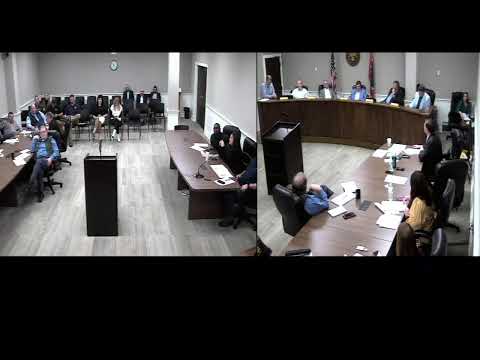
Rankin County fire chiefs and emergency management staff briefed the Board of Supervisors on April 7 about an apparent increase in nonemergency “lift assist” calls — repeated requests to help residents who cannot transfer from bed to wheelchair or vice versa — and outlined options to reduce repeat, nonurgent uses of emergency responders.
Emergency management staff and local fire chiefs described several illustrative cases where single addresses accounted for dozens of responses over a multi-year period. Staff cited one address with 66 recorded calls dating back to early 2023, and reported 23 responses to that address in a recent three-and-a-half-week period; staff also said one address had about 30 calls in the current year. Chiefs said those repeated nontransport, nonemergency responses reduce availability for true emergencies because, once responders make patient contact, they generally must remain until the situation is resolved or the patient is transported.
Chiefs and emergency managers told the board the county does not have a ready social-service referral process to link repeat callers to alternatives such as home health aides, personal-care attendants, community paramedic programs, or assisted-living placement. Speakers noted that Medicare/Medicaid will not typically reimburse an ambulance for a lift assist alone, which limits options for third-party billing to deter repeated use of emergency responders.
Possible approaches discussed included: a community paramedic program paired with social-work follow-up to connect repeat users to available services; a targeted education and referral protocol (staff or a social-service partner making a home visit and outlining alternative care options); and using existing 911-abuse tools where callers are clearly abusing emergency systems. Staff and chiefs cautioned that 911-abuse ordinances may not apply where residents call a department direct (not through the 911 dispatcher), which complicates enforcement when repeat requests come via a direct department number.
No formal policy or ordinance change was adopted at the meeting. County staff said they will collect model policies and program descriptions used in other jurisdictions (including community-paramedic models) and return with proposals, including potential funding, implementation considerations and any needed legislative or regulatory changes.
Why this matters: repeated nonemergency calls use trained emergency personnel and vehicles for tasks that, if routed to appropriate social or nonemergency providers, could free emergency resources for time-sensitive medical and public-safety calls. Staff said community paramedicine and social-service referral programs used elsewhere produced measurable reductions in repeat calls in other jurisdictions.
Ending: Supervisors asked staff to gather policy examples, cost estimates and descriptions of how other jurisdictions perform social-service follow-up so the board can consider a formal approach at a future meeting.