Get Full Government Meeting Transcripts, Videos, & Alerts Forever!
Get email alerts on the Tourism Outlook topic
No spam. Unsubscribe anytime.
Tourism director warns Canadian cancellations and tariff-driven uncertainty could cut inbound visits; domestic demand may partially offset losses
Summary
The Maine Office of Tourism told Appropriations it is watching a sharp drop in anticipated Canadian visitors after recent tariff announcements and that the agency is shifting marketing and targeting to shore up domestic drive markets and air-connected markets.
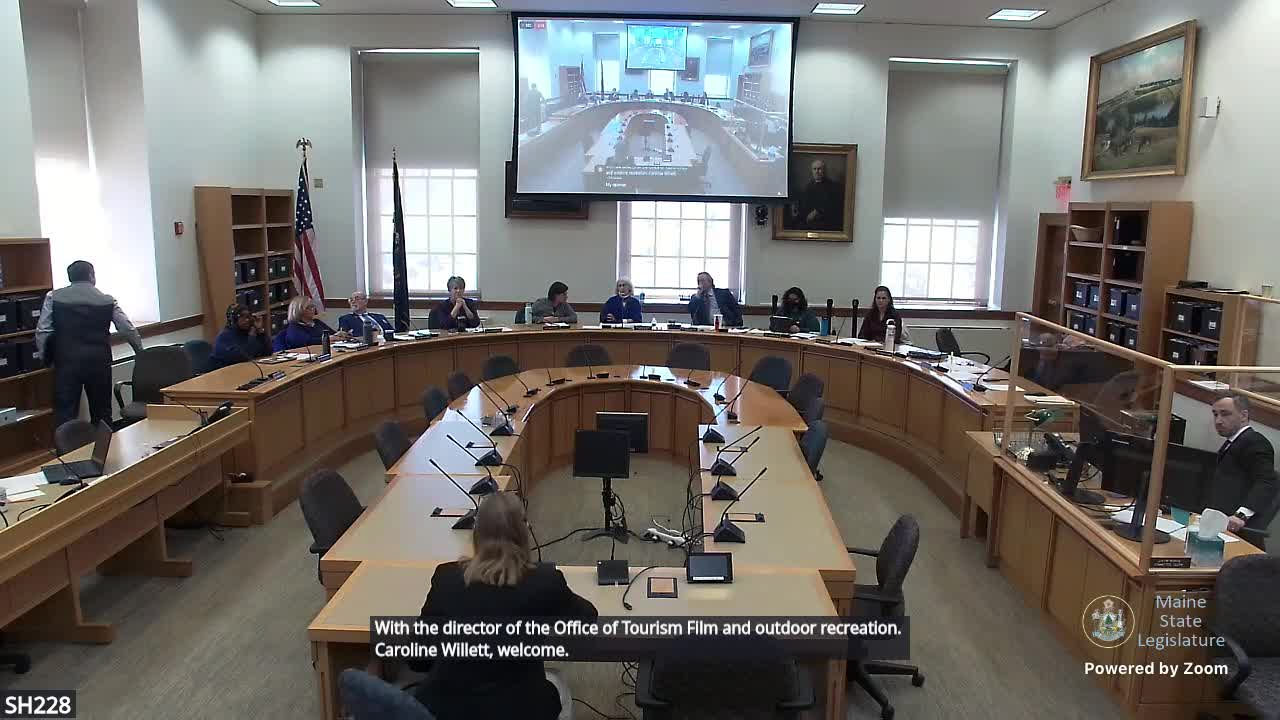
The Maine Office of Tourism told the Appropriations Committee that recent trade tensions and tariff announcements have created a downside risk to international and Canadian tourism to Maine, and the office is shifting marketing strategies to protect the summer season.
“We're looking at about a 20% to 25% decrease in that visitation right now,” Carol Ann Walletta, director of the Maine Office of Tourism, said of Canadian visitors to Maine. She told the committee that Canada accounts for roughly 5% of Maine’s visitation—about 900,000 travelers—and that national tourism forecasters revised international visitation projections downward following tariff and trade announcements.
Walletta said the Office of Tourism is maintaining a presence in Canada but is increasing domestic marketing to New England and Mid‑Atlantic drive markets and to U.S. cities with new air service into Portland and Bangor. She noted that Maine’s brand strength remains high—recent visitor surveys show strong intent to return and high satisfaction—and the office has deliberately tried to spread visitation across seasons and regions to reduce summer overcrowding.
The agency also pointed to data from Tourism Economics and Longwoods International showing weaker inbound international demand and a rapid deterioration in consumer sentiment that could affect discretionary travel. Walletta said some destinations nationally and large private-sector travel partners have already trimmed near-term demand projections; Maine officials plan to monitor cancellations and adjust messaging and market priorities if conditions worsen.
Ending: The Office of Tourism said it will continue to monitor cancellations and consumer sentiment and shift marketing to higher‑value and more proximate domestic markets where appropriate. The agency noted that even if Canadian visitation falls, higher domestic drive traffic could provide partial backfill but will make the competitive marketing environment more intense.