Get Full Government Meeting Transcripts, Videos, & Alerts Forever!
Get email alerts on the Procurement Single Audit topic
No spam. Unsubscribe anytime.
State auditor flags procurement documentation gaps in 2024 single audit; DAS disputes some findings
Summary
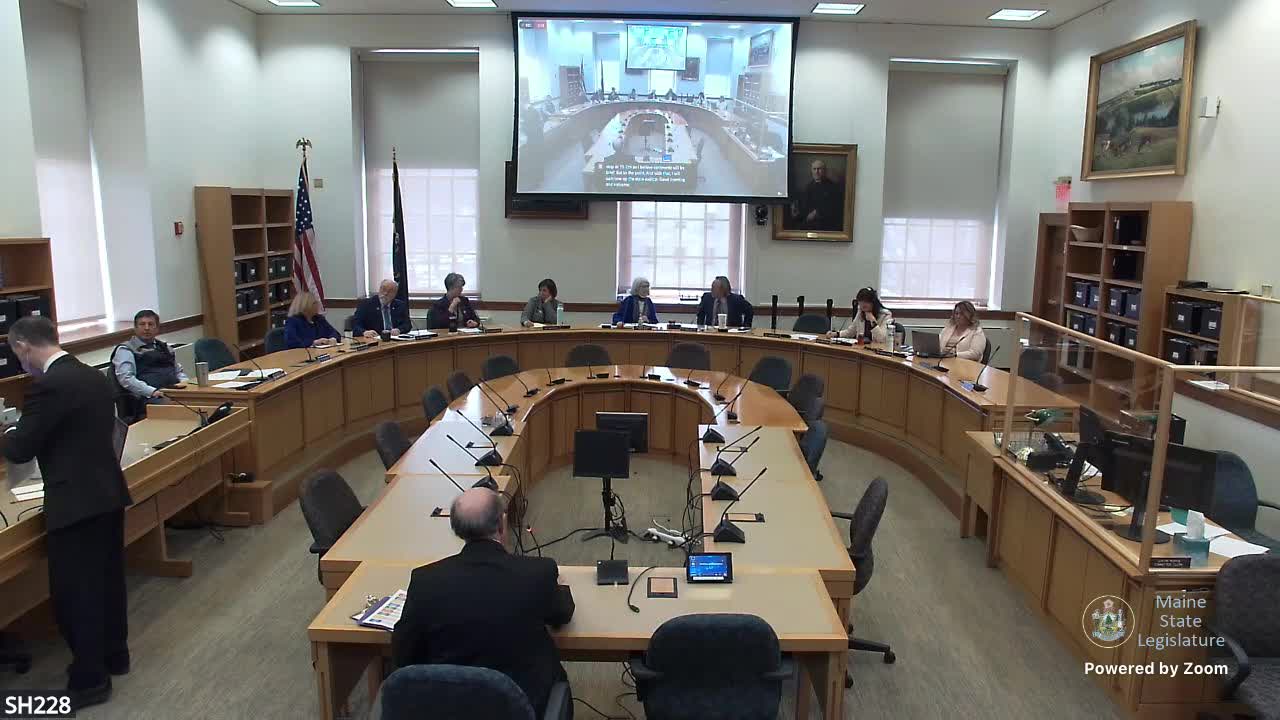
The state auditor told the Appropriations Committee the 2024 Single Audit found gaps in procurement documentation and internal controls; DAS leaders said they disagreed with some findings and described the report as the first step in a multi-stage federal review.
The state auditor told the Legislature’s Appropriations Committee that Maine’s 2024 Single Audit identified process and documentation shortfalls in contract-related payments but did not include immediate question costs.
“...we do not have any question costs involved here,” State Auditor Matt Dunlap told the committee as he summarized the report distributed to legislators. He said auditors focused on whether agencies documented compliance with federal criteria and that missing documentation, not necessarily improper spending, drove many findings.
The auditors flagged roughly $2.1 billion in contract-related payments and tested a sample of contracts; Dunlap said auditors tested 45 contracts and the audit included 76 discrete findings, down from about 92 the prior year. He described the work as a compliance audit that identifies conditions and recommends management responses rather than an enforcement action.
Commissioner Kirsten Figueroa of the Department of Administrative and Financial Services (DAS) responded that management disagreed in whole or in part with many of the procurement findings and that the Single Audit report is the first step in a formal, iterative process with federal cognizant agencies. “The audit did not indicate any evidence of wrongdoing, fraud, waste or abuse,” Figueroa told the committee, and she said management had documented additional procurement processes and cost analyses that were not recognized in the auditor’s centralized control review.
State Comptroller Doug Cottoner described the next steps: agencies and the controller’s office will prepare corrective action plans, engage in compliance testing, and respond to federal reviewers. “This is step 1 of a process,” Cottoner said, noting the audit is sent to federal partners who will evaluate agency responses before anything is finalized.
Committee members pressed for details about sampling and magnitude. Dunlap said his office’s sample sizes vary by program and are random rather than strictly statistical. Representative Ken Fredette and other members asked whether the $2.1 billion figure was unusually large compared with prior years; Dunlap said contract levels change year to year (for example, COVID- and ARPA-era spending affected recent years) and suggested the state controller could provide a multi‑year comparison.
Members also raised procurement specifics discussed in the auditor’s finding: the RFP threshold of $5,000 was noted as a control point for competitive procurement; the audit report describes risks from “circumvention of competitive bidding” and notes potential effects including voided contracts or legal exposure if procedures are not followed. Cottoner and Figueroa said central procurement relies on agency documentation of cost analyses and that further compliance testing—focused on agency files rather than just central office controls—was the logical next phase.
The auditor described the finding as a material weakness related to procurement internal controls in the Office of Procurement Services and emphasized the difference between control design at the central level and how controls are executed in agencies. Dunlap and committee members discussed “stacking” (breaking larger requirements into smaller low-cost contracts to avoid competitive processes) and whether central systems can detect multiple low-cost awards to a single vendor; Cottoner said the data exist but agreed that improving summary-level monitoring is part of DAS’s planned follow-up.
The committee and administration agreed to continue the conversations. Dunlap said the single audit file will be posted publicly after the office completes formatting and the federal clearinghouse processes the submission. Figueroa and Cottoner offered to return for a deeper review of the procurement finding and to share data—such as the multi-year contract totals and additional compliance testing results—with the committee.
Ending: The audit and the administration’s responses set the stage for a multi-month dialogue among the auditor’s office, DAS, the state controller’s office and federal reviewers. Committee members said they plan follow-up hearings to examine agency corrective actions, procurement monitoring improvements, and any federal determinations that emerge from the Single Audit process.