Get Full Government Meeting Transcripts, Videos, & Alerts Forever!
Get email alerts on the Wildlife Conservation topic
No spam. Unsubscribe anytime.
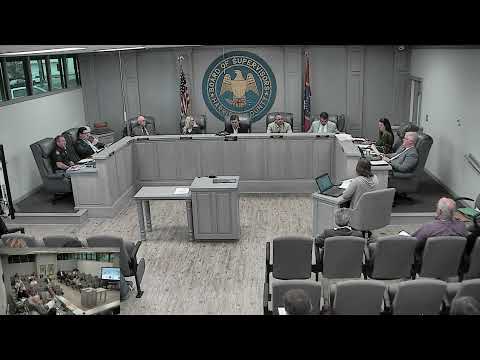
Harrison County board approves continued fox trapping to protect least tern colonies
Summary
The Board approved a motion to continue targeted trapping of foxes on county sand beach areas after Audubon Delta reported a sharp decline in least tern productivity linked to fox predation.
Abby Darrow, a representative of Audubon Delta, told the Harrison County Board of Supervisors that the county supports up to 20% of the northern Gulf population of least terns and asked the board to allow a continuation of targeted trapping after a pilot removal in 2024.
Darrow said Audubon Delta secured board approval in 2024 to remove a single male fox through contractor Wildlife Solutions and that the removal corresponded with higher fledgling production at two West Pass Christian colonies compared with lower productivity at sites where fox activity continued. “Certainly, a fox has the ability to completely wipe out a colony within a matter of days,” Darrow said.
Darrow asked for permission to contract again with Wildlife Solutions for up to three trapping sessions in 2025, depending on detection of fox activity. She described the capture method used as a nonlethal leg-hold device intended to allow safe removal and monitoring by trained personnel working nightly at identified sand-beach locations.
A board member moved to permit Audubon Delta and its contractor to proceed with the trapping plan as presented; the motion was seconded and approved with all members voting “aye” on the record. The motion recorded no further conditions in the transcript. The board did not specify a tally in the meeting record.
Why it matters: County sand beaches are a key nesting area for least terns, a species with declining productivity along parts of the Gulf Coast. The board’s authorization allows the conservation group to continue a field intervention that Audubon Delta says produced measurable improvements at monitored colonies in 2024.
Next steps: Audubon Delta said it will proceed to schedule trapping sessions and continue contractor monitoring; the board did not set additional conditions or a reporting requirement in the public record.