Get Full Government Meeting Transcripts, Videos, & Alerts Forever!
Get email alerts on the Motor Vehicle Tint topic
No spam. Unsubscribe anytime.
House passes bill raising penalties for repeated vehicle window tint violations
Summary
The Rhode Island House approved an act that increases civil penalties for repeated illegal vehicle window tinting after a debate about property rights and public safety; the measure was requested by the DMV and passed on a 52–9 vote.
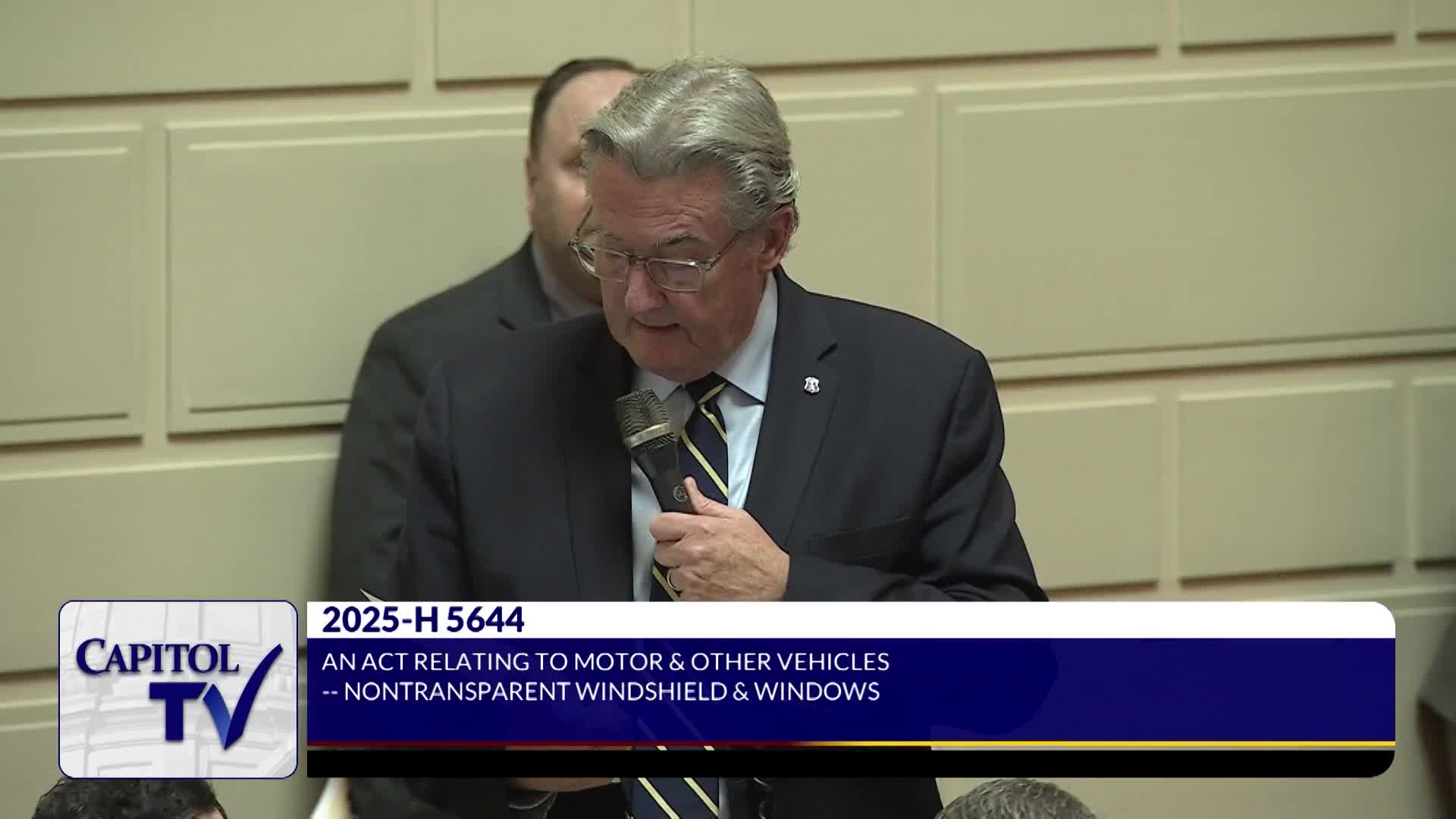
The Rhode Island House of Representatives on April 3 passed an act (No. 5644) that raises penalties for second and third violations of state restrictions on window tinting for vehicles.
The bill, sponsored by Representative Matt Dawson of East Providence, was approved 52–9 after floor debate that ranged from concerns about private-property rights to arguments that the measure improves officer and public safety. The Department of Motor Vehicles requested the change, supporters said.
Supporters told the House the measure is intended as a deterrent for motorists who repeatedly violate the state tint standard. Representative Dawson said the law allows window tint up to 30 percent and that the bill does not prohibit factory-installed tint but targets vehicles that effectively “black out” occupants. “You can have tint, just stay within the legal limits,” Dawson said on the floor.
Opponents questioned whether raising penalties unduly criminalizes residents. Representative Sanchez said the bill represents “a violation of private property” and argued increased fines and enforcement can disproportionately affect some communities. Sanchez also cautioned that escalating penalties over time could feel punitive to constituents.
Deputy Speaker Hall argued for the bill on safety grounds, saying the measure helps protect both officers and the public. “It’s actually for safety, not only for me as a law enforcement officer, but also for the safety of other people,” Hall said.
Under the bill as presented on the floor, the sponsor described the penalty schedule as: first offense — $250; second offense — $375; third offense — $500. The sponsor and floor discussion emphasized that the statute treats these matters as violations subject to civil penalties rather than criminal convictions; Dawson noted that first-time cases are often dismissed and do not create a criminal record.
Members asked and were told by the sponsor and the chairman that the bill was submitted at the request of the Department of Revenue/DMV. Floor exchanges included procedural clarifications about how the DMV enforces tint limits and how cases typically proceed, with some members noting many motorists remove tint when cited.
The motion to pass was made by Representative Matt Dawson and seconded on the floor; the clerk recorded the final vote as 52 in favor and 9 opposed and announced, “The act prevails.”
The bill text on the record did not supply a statute section number for the amended penalty amounts; lawmakers and staff on the floor identified the measure as a Department of Motor Vehicles request to increase fines to deter repeated noncompliance. The act will be transmitted for any remaining formal steps required before becoming law.
Votes at a glance: Moved by Representative Matt Dawson; seconded by Lita Blaszczewski; vote 52 yes, 9 no; outcome — approved.