Get Full Government Meeting Transcripts, Videos, & Alerts Forever!
Get email alerts on the Workplace Free Speech topic
No spam. Unsubscribe anytime.
Labor, civil-rights groups back bill to ban captive-audience employer meetings; business groups oppose
Summary
House Bill 5506 would prohibit employers from compelling employees to attend meetings that advocate political, religious, civic or labor positions and create a civil enforcement mechanism; unions and civil-liberties groups supported the bill, while business groups warned it could overreach.
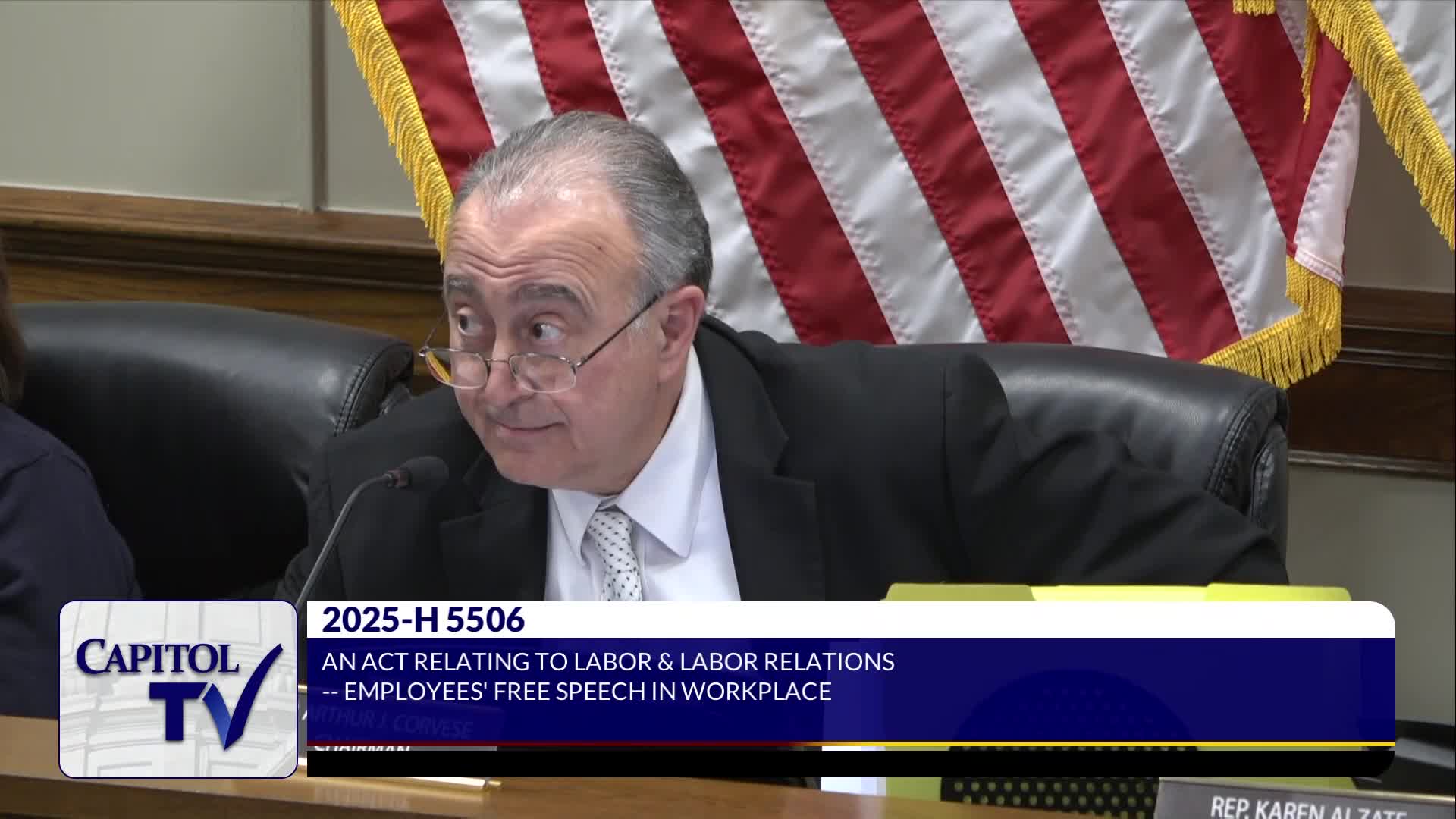
House Bill 5506, introduced by Chairman Craven, would create a civil cause of action for employees required to attend employer meetings that advocate political, religious, civic, fraternal or labor positions and would allow courts to award damages and attorney fees in enforcement actions. Proponents described the measure as a ban on “captive-audience” meetings that employers sometimes use during union organizing campaigns.
Matt Tavey of Teamsters Local 251 argued the bill protects employees’ rights and prevents employer coercion during divisive topics, including organizing campaigns. Erica Hammond of the Rhode Island AFL-CIO said captive-audience meetings are a common anti-union tactic and presented statistics showing that union elections without captive-audience meetings succeed far more often than those with them.
Madeline McGonigal of the ACLU said the bill balances employee and employer speech: employees may decline to attend and cannot be disciplined for leaving, while employers may still hold job-related or legally required trainings. Supporters said the bill has been revised to address suggestions from the Department of Administration and civil-rights advocates.
Business groups strongly opposed the measure. Bob Goldberg of the Greater Providence Chamber argued the bill would prevent employees from hearing “both sides” and could chill legitimate employer communications. Opponents also criticized the provision that would permit courts to award attorney’s fees and damages, calling it an unusually heavy enforcement mechanism that could deter beneficial employer programs.
Proponents and opponents also debated ambiguous language in the current draft about “casual conversations” and off-duty, off-site meetings; several lawmakers asked for clearer drafting to ensure the bill prohibits forced on-duty attendance while preserving voluntary off-duty informational events.
The committee heard extensive testimony and did not take a final vote.