Get Full Government Meeting Transcripts, Videos, & Alerts Forever!
Get email alerts on the Criminal Justice topic
No spam. Unsubscribe anytime.
State's Attorney says 5% cut would force deferral of deputy position and increase supervisory burden
Summary
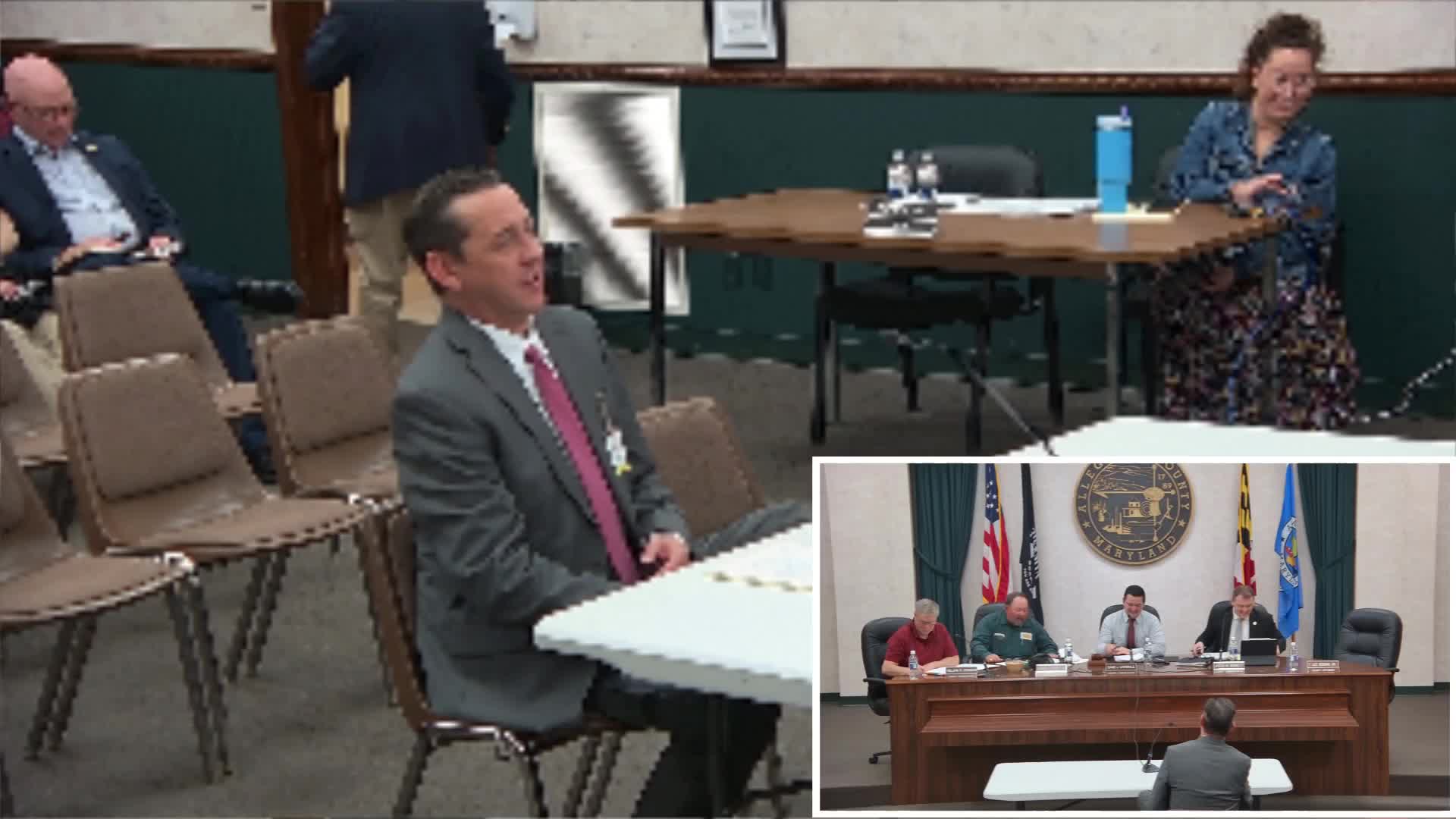
Allegany County State's Attorney James Elliott told commissioners a proposed 5% budget cut would require leaving a statutorily prescribed deputy position unfilled and would shift supervisory duties onto him, straining prosecutions amid rising violent crime and additional state mandates such as body‑camera processing.
James Elliott, Allegany County State's Attorney, told commissioners that meeting a proposed 5% budget reduction in his office would likely require deferring the statutory deputy state's attorney position and relying on internal elevations, which would increase supervisory burdens on him.
Elliott said his office is down personnel after a recent retirement and is prosecuting a high volume of serious felonies. He described the office as "overwhelmed" and said criminal filings and violent felonies remain high since the COVID period.
Elliott also described operational costs tied to a state mandate for police body cameras. "Body cams are fantastic ... It also makes our jobs as far as prosecutors much more difficult because we have to produce that, we have to play it, we have to explain it to the jury," he said, adding that video production requires redaction to protect unrelated individuals and sensitive data.
The office has four analysts handling camera footage; Elliott said Annapolis provided initial grant funding but did not continue to fund ongoing processing needs. He said the office has absorbed work for multiple local agencies and that the state has not reimbursed counties for related mandates.
Elliott proposed deferring filling a deputy position for most of the fiscal year as a way to meet the cut while noting that the approach is not sustainable long term because it increases his workload and supervisory responsibilities when he is trying cases.
Commissioners asked about how the office is managing body‑camera work; discussion noted a state promise of funding that did not materialize and urged continued work to seek reimbursement at the state level.