Get Full Government Meeting Transcripts, Videos, & Alerts Forever!
Get email alerts on the Long Term Care Workforce topic
No spam. Unsubscribe anytime.
Bill would let caregivers for adults with developmental disabilities join unions; supporters cite workforce and training benefits
Summary
House Bill 5228 would extend the right to collective bargaining to family and friends who are self-directed caregivers for adults with developmental disabilities. Supporters said unionization could improve recruitment, training and retention without changing clients’ self-direction over hiring and firing.
House Bill 5228, introduced on behalf of Representative Shanley, would extend collective-bargaining rights to self-directed caregivers who provide in-home services for adults with developmental disabilities under a Medicaid waiver program. The sponsor’s representative and union advocates said the proposal builds on a 2023 law that extended similar rights to personal care attendants in the Personal Choice program.
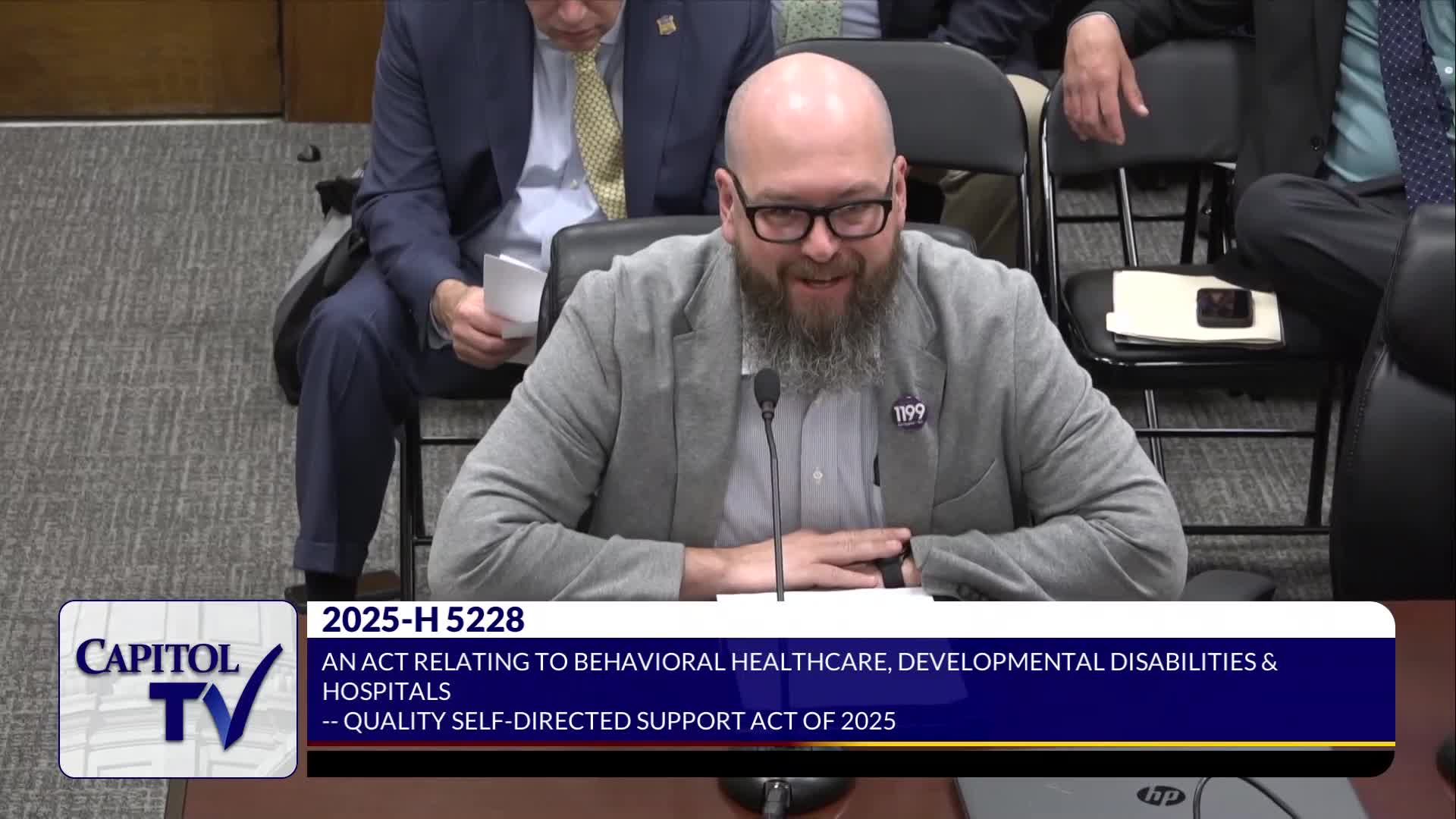
Jesse Martin of SEIU 1199 said the bill would preserve self-direction (clients would keep hiring and firing authority) while allowing caregivers to organize, seek training and bargain over wages and benefits. He told the committee that more than 1,700 personal care attendants organized recently after a 2023 law and that unionization helped secure paid, real-time training (first aid, CPR and advanced supports) for more than 300 workers in a two-month period.
Supporters from the Developmental Disabilities Council and family caregivers said recruitment is a persistent problem for self-directed clients because there is no centralized registry or staffing list; caregivers often must build a list from scratch. Bob Marshall of the Rhode Island Developmental Disabilities Council said a union could provide recruitment support, basic training and a registry to help clients match with caregivers, but emphasized participation should be voluntary for both clients and caregivers.
Caregivers who testified described demanding work and said union rights would help secure pay, benefits and protections to sustain long-term care in the community. Emmanuel Rodriguez and other caregivers said organizing improves conditions and the quality of care clients receive.
The committee took testimony and did not vote on the bill at the hearing.