Get Full Government Meeting Transcripts, Videos, & Alerts Forever!
Get email alerts on the Student Transportation topic
No spam. Unsubscribe anytime.
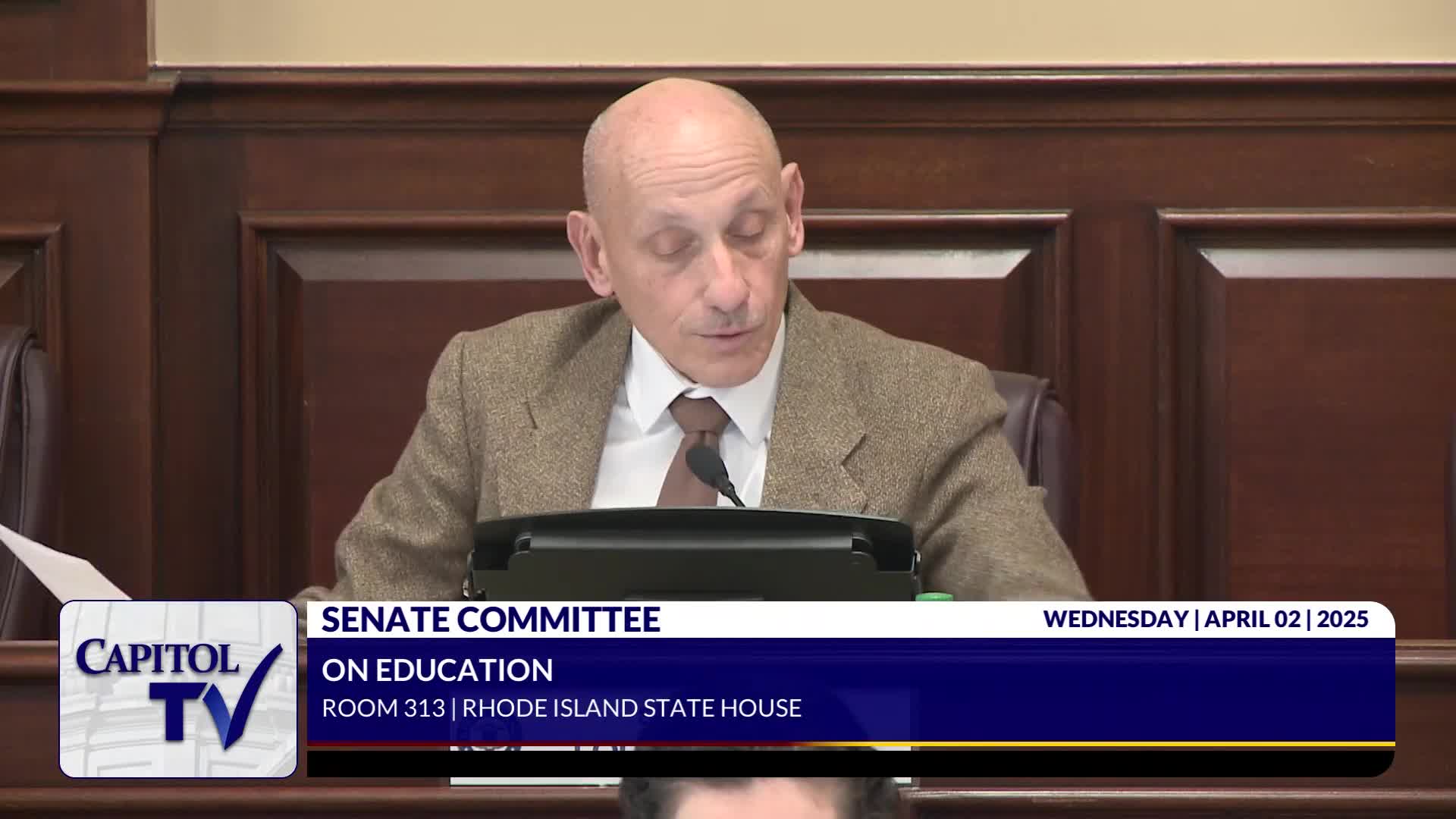
Committee considers two school‑transportation bills; both held after testimony on driver shortage and cost savings
Summary
S.B. 397 would shorten required training for out‑of‑state school bus drivers with valid commercial credentials; S.B. 636 would raise passenger limit in vans from 8 to 10 to mirror Massachusetts. Witnesses said both would save money and help address driver shortages; the committee held both bills.
The Senate Education Committee heard two bills addressing student transportation: S.B. 397, which would reduce course time for bus‑driver applicants who already hold a valid commercial driver's credential from another state, and S.B. 636, which would allow vans used for student transport to carry up to 10 passengers (currently limited to 8) — aligning Rhode Island with Massachusetts practice.
Senator Ujafusa described the bills as outcomes of a joint legislative commission studying student transportation. He told the committee that Rhode Island's uniform 10‑hour bus driver course has limited competition, contributing to route‑bid shortages and higher costs. He said an abbreviated three‑hour course for experienced Massachusetts and Connecticut drivers would let neighboring drivers operate in Rhode Island without requiring the full course again. The sponsor noted that, had the bill been in place this year, statewide transportation could have saved about $1,500,000 by enabling more competitive bids.
Witnesses including Paul McDonald (transportation operator), Tim Duffy and RIDE representatives supported S.B. 397, citing an incident where an out‑of‑state vendor was not able to operate because drivers lacked temporary certification and students missed service at the start of a school year. Paul McDonald and others said the shortened reciprocity training would ease hiring and reduce disruptions.
On S.B. 636, witnesses including Andy Andrade (Rhode Island Department of Education), Rudy Houser (former school bus driver and trainer) and district representatives said allowing 10‑passenger vans would reduce operating costs, allow consolidation of routes, and help mitigate the driver shortage because such vans do not require a commercial (CDL) license and are easier for vendors to staff. The sponsor estimated converting 30 minibuses to 10‑passenger vans could save approximately $780,000 per year based on current ridership.
Committee action Both S.B. 397 and S.B. 636 were moved, seconded and held by the committee for further consideration; the transcript records the holds but does not provide a roll‑call tally or named movers for the hold motions.
Clarifying details recorded in testimony • S.B. 397 would create an abbreviated 3‑hour course for Massachusetts and Connecticut drivers who previously completed another state's required training, and permit temporary certification to prevent service disruptions. • S.B. 636 would increase allowable passengers in a van from 8 to 10, matching Massachusetts law, and the sponsor and witnesses reported an estimated potential annual statewide savings of about $780,000 from converting certain routes and vehicles.
The committee adjourned after holding both bills.