Get Full Government Meeting Transcripts, Videos, & Alerts Forever!
Get email alerts on the Agriculture Funding topic
No spam. Unsubscribe anytime.
Farmers, food groups urge creation of agricultural restricted receipt account after federal cuts
Summary
A coalition of farmers, land trusts and food‑system organizations told the Senate Finance Committee that a restricted receipt account within DEM for agricultural fees would help Rhode Island respond quickly to sudden federal funding changes and support local food purchases and farm services.
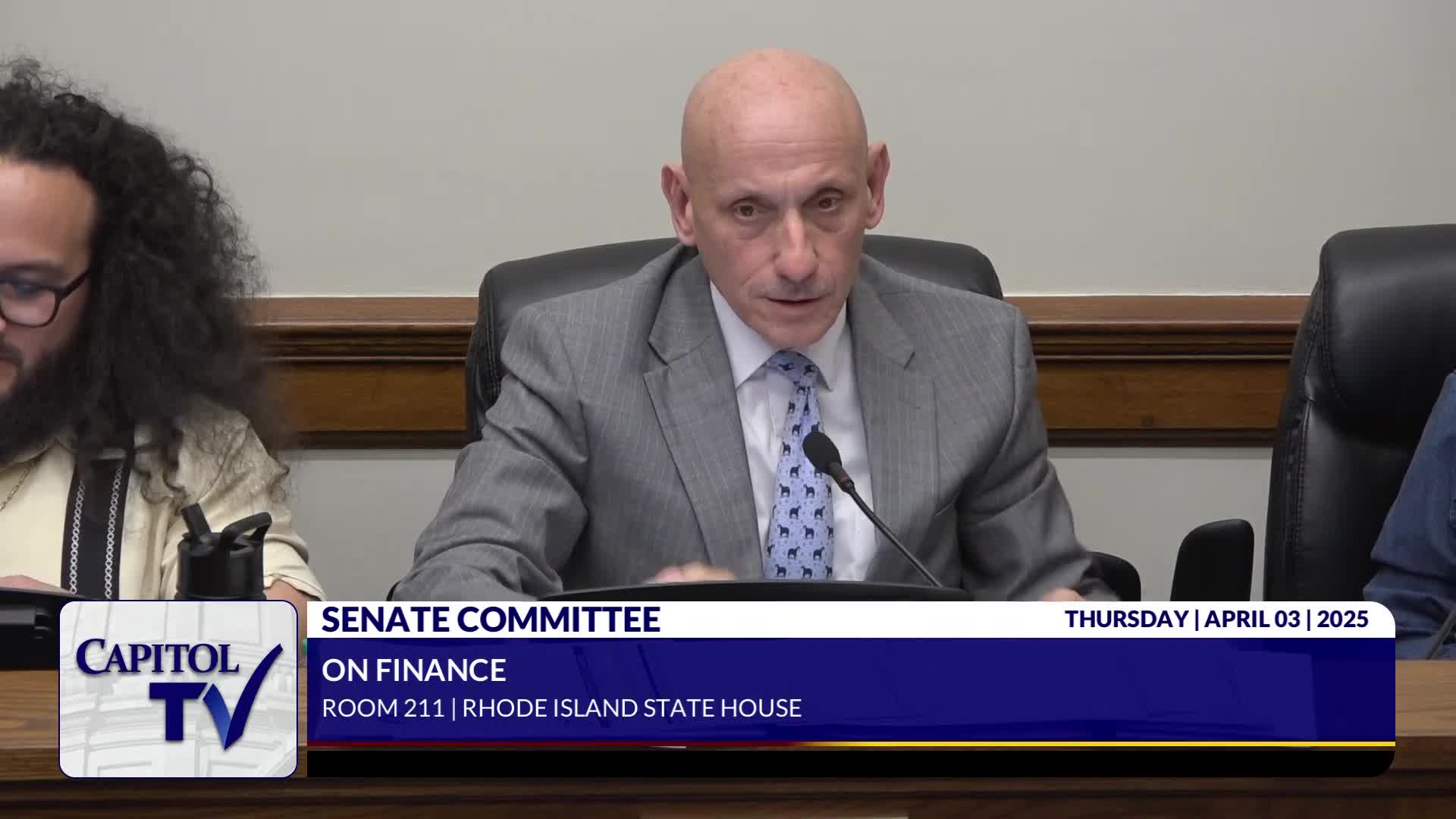
Dozens of farmers, food‑security nonprofits and land‑trust representatives urged the Senate Finance Committee on April 3 to support legislation establishing an agricultural restricted receipt account in the Department of Environmental Management to retain certain agricultural fee revenues for farm programs.
Why proponents want the account: witnesses said the change would let Rhode Island retain user and licensing fees to respond quickly if federal programs are reduced or terminated and to fund predictable, state‑level agricultural needs such as pesticide disposal, fertilizer inspections, technical assistance and Local Food Purchase Assistance (LFPA) purchases for food banks. Several speakers told the committee the LFPA program and other USDA funding streams have been suspended or cut, and that a state account would provide timely, local replacement capacity.
Testimony highlights: witnesses who testified in support included the New England chapter of Backcountry Hunters and Anglers, the Rhode Island Food Policy Council, the RI Community Food Bank, NOFA‑RI, small and mid‑sized farmers and nursery operators. Testimony described practical farm uses of such a fund (equipment, technical assistance, emergency pesticide disposal) and cited agriculture’s statewide economic contribution.
Farmer perspective: multiple farmers said state funding could be small but transformational for small and beginning producers, enabling purchases of equipment, supporting food donations to pantries and funding other short‑term needs when federal grants are delayed or rescinded. Several witnesses emphasized high land costs and an aging farmer population; they urged targeted support for young and beginning farmers.
Committee action and next steps: after testimony the committee moved to hold the bill for further consideration and evidence‑gathering; members requested follow‑up materials from DEM and said they would evaluate fund design, governance and account triggers. Supporters urged a governance committee with farmer representation to steward the funds.
This article summarizes public testimony and committee discussion; quoted speakers are listed in the registry below and reflect the hearing record.